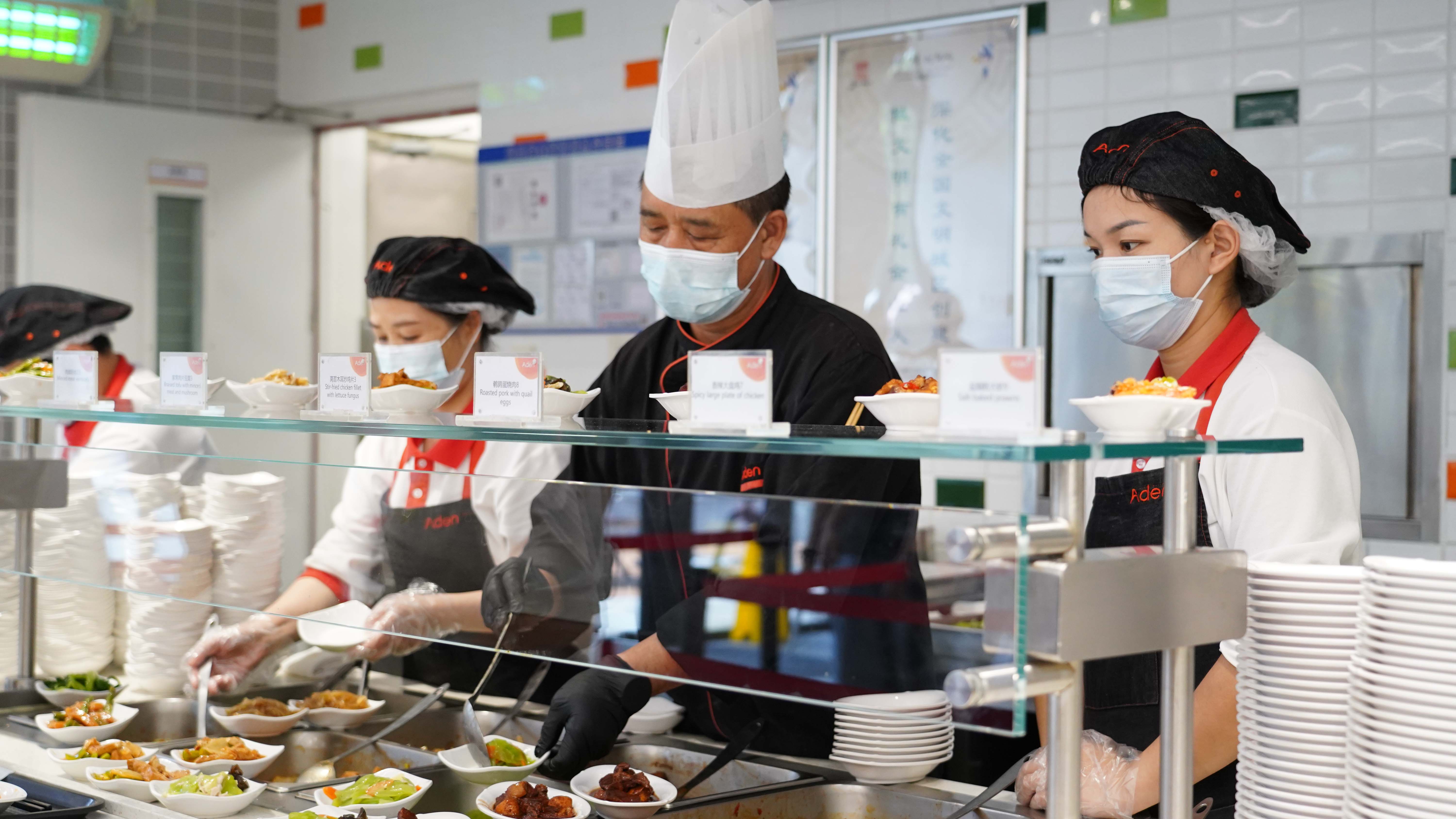
Industrial dining facilities looks simple from the outside. Meals need to be prepared, served on time, kept safe and delivered within budget.
In reality, cafeteria operations can quickly become a daily source of disruption if the wrong provider is selected. Long queues affect meal breaks. Poor planning creates congestion. Weak hygiene systems create compliance risk. Limited menu variety affects employee satisfaction. Unreliable equipment or supply chains can interrupt service when the workforce needs it most. These daily disruptions often stem from one root cause: inefficient design and workflow layout that fail to support real-world industrial demands.
For manufacturers, the question is not only whether a provider can serve food. The question is whether they can run a high-volume food service operation inside a real factory environment, effectively taking the operational and compliance burden entirely off the client’s shoulders.
With nearly 30 years of experience supporting industrial clients across Asia, Aden Services understands that factory cafeterias need to be planned around people, production schedules, Hygiene & safety requirements, technical infrastructure (facility?) and long-term operational control.
What should manufacturers check before contracting a factory cafeteria provider?
Before selecting a factory cafeteria partner, manufacturers should check whether the provider can manage high-volume catering, reduce queue times, support menu variety, control food safety and procurement, plan around factory infrastructure, use digital tools to improve operations, measure sustainability performance and respond to employee feedback.
The strongest cafeteria providers are those that understand both food service and industrial operations.
1. Can the provider handle high-volume catering without daily disruption?
The first question is simple: can the provider serve a large workforce every day without creating operational problems?
Factory catering is different from office food service, hospitality catering or small-site meal delivery. A factory cafeteria often needs to support large employee volumes, fixed break times, multiple shifts and short service windows. The provider must be able to keep meals moving without delays, shortages, confusion or inconsistent quality.
Manufacturers should look for a partner that can show experience across different types of industrial sites. A high-volume automotive plant, a pharmaceutical facility, a semiconductor site, a new energy factory and a mixed-use R&D/manufacturing campus may all need very different cafeteria models.
Important questions include:
- Has the provider worked in factories similar to ours?
- Can they support different shift patterns and workforce profiles?
- Do they have trained teams for high-volume service?
- Can they maintain consistency during peak meal periods?
- Do they have a strong local supply chain and distribution network?
- Can they keep service stable if demand changes or supply issues occur?
A good cafeteria provider should not offer a one-size-fits-all model. They should be able to adapt the operating model to the factory’s workforce, production rhythm, site layout and compliance requirements.
2. Can they reduce queues and protect meal-break efficiency?
In a factory, queue time is an operational issue.
If employees spend too much of their break waiting to pay, collect food or find a seat, the cafeteria becomes a source of frustration. Over time, this can affect morale, shift efficiency and employee satisfaction.
Manufacturers should ask how the provider plans to manage service flow. This includes serving-line design, payment processes, peak-time staffing, food replenishment, seating turnover and employee communication.
This was one of the key issues in Aden’s work with Autoliv in Nantong and Suzhou. The previous cafeteria setup faced long settlement queues, limited menu variety and inconsistent dining satisfaction. Aden’s response focused on high-volume catering, operational optimization, more flexible dining options and improved communication with employees, resulting in a significant increase in employee satisfaction and a fundamentally smoother service flow.
3. Can they offer menu variety without losing operational control?
Employees do not want to eat the same meal every day. But menu variety has to be managed carefully in a factory setting.
Too little variety can affect satisfaction. Too much unmanaged variety can increase cost, waste, procurement complexity and service inconsistency. The right provider needs to balance employee expectations with the realities of budget, kitchen capacity, ingredient supply, nutrition planning and daily execution.
Manufacturers should ask how the provider manages menu rotation, employee preferences, nutrition, sourcing, cost control and waste. They should also ask how menus can be adapted across different employee groups—including production workers, office teams, R&D staff, visitors or executives where relevant—as well as specialized nutritional care, such as tailored meal options for pregnant employees.
4. Can they manage food safety, traceability and procurement properly?
Food safety cannot be treated as a basic promise. It needs to be managed through systems.
In factory cafeterias, especially those serving large numbers of employees every day, manufacturers need clear visibility over sourcing, storage, cold chain control, kitchen hygiene, staff training, incident response and audit readiness.
Manufacturers should ask:
- Where are ingredients sourced from?
- How are suppliers selected and checked?
- How is cold chain logistics managed?
- What food safety standards are followed?
- How are kitchen staff trained?
- How are incidents reported and corrected?
- Can the provider support audits and compliance documentation?
Aden’s food service operations are supported by ISO-based operational standards, continuous staff training and centralized procurement systems. In China, Aden also operates a dedicated distribution center in Shanghai to support consolidated procurement and cold chain logistics across East China.
For manufacturers, this kind of supply chain control matters. A cafeteria provider that relies on fragmented sourcing or weak local logistics may struggle to deliver consistent quality, safety and traceability over time.
5. Can they plan the cafeteria around the real factory environment?
A cafeteria should not be designed only as a dining room. It should be planned as part of the factory’s operating environment.
Many cafeteria problems begin before service even starts. If kitchen workflow, serving lines, drainage, ventilation, lighting, signage, storage, cleaning access and employee movement are not considered early, the site may face long-term inefficiencies that are expensive to fix later.
Manufacturers should ask whether the provider can contribute to the technical planning of the space, not only the daily food service.
This is especially important for new factories, renovations or cafeteria upgrades. The provider should understand how the space will actually be used: where employees enter, where they queue, how food is prepared, how waste is removed, how equipment is maintained and how the area will perform during peak meal periods.
Aden’s value in this area is not limited to food delivery. Its teams can support technical design and operational planning across areas such as digital rendering, BIM coordination, MEP considerations, equipment layout, people flow, lighting, signage, ventilation and compliance.
That matters because a cafeteria that looks good on paper can still fail in daily operation. The best results come when operational experience and technical planning are connected from the beginning.
6. Can they use digital tools to solve practical cafeteria problems?
Digital tools should not be added just because they sound modern. They should solve real operational problems.
For factory cafeterias, the most useful digital capabilities are often connected to maintenance, energy, equipment performance, resource consumption and operational visibility.
Kitchens are energy-intensive, water-intensive and equipment-heavy spaces. Refrigeration, ventilation, cooking equipment, water systems and waste systems all affect operating cost and service reliability. If these systems are not monitored properly, small issues can become breakdowns, service interruptions or unnecessary energy waste.
Through Akila, Aden can connect cafeteria and kitchen operations into a wider digital view of the building. This allows manufacturers to monitor energy use, equipment performance, maintenance needs and operational patterns across the kitchen and the broader facility.
For manufacturers, the question should be:
- Can the provider help identify high-consumption areas?
- Can they monitor critical kitchen equipment?
- Can they support more targeted maintenance?
- Can they reduce the risk of breakdowns?
- Can they connect kitchen operations to wider building performance?
This is where digital technology becomes useful. It gives the manufacturer better visibility into cost, consumption and reliability.
7. Can they make sustainability measurable?
Sustainability should not remain a general statement in a cafeteria contract. It should be measurable.
Factory cafeterias consume energy and water, generate waste and depend on complex sourcing and logistics. Manufacturers should ask how the provider will track and improve performance in areas such as food waste, kitchen energy use, water consumption, packaging, procurement and waste handling.
This is also where digital systems can support better decision-making. When energy, water, waste and maintenance data are tracked clearly, manufacturers can identify where resources are being used, where costs are rising and where improvements can be made.
Useful questions include:
- How will food waste be tracked?
- How will energy and water consumption be monitored?
- Can kitchen performance be included in wider facility dashboards?
- What sustainability metrics will be reported?
- How will improvements be reviewed over time?
A provider should be able to turn sustainability from a vague ambition into a managed part of cafeteria operations.
8. Can they communicate with employees and respond to feedback?
A factory cafeteria serves employees every day. That makes communication essential.
Even a well-designed cafeteria will need adjustment over time. Employee preferences change. Shift patterns change. Production volumes change. Menu satisfaction may rise or fall. Queues may appear at unexpected times. Small frustrations can become bigger workplace issues if nobody is listening.
Manufacturers should ask how the provider collects feedback, handles complaints, communicates menu changes and reports satisfaction trends.
In Aden’s work with Autoliv, improved employee communication was part of the cafeteria upgrade. This matters because food service is not only a technical operation. It is also a daily employee experience.
A strong provider should have a clear process for listening, responding and improving.
Case insight: Autoliv’s factory food service upgrade
Autoliv, the world’s largest automotive safety supplier, worked with Aden Services to improve food services at its manufacturing facilities in Nantong and Suzhou.
When Autoliv sought to upgrade its dining experience, the primary goal was to eliminate bottleneck queues and elevate employee well-being. The client needed a solution that could improve both service flow and employee experience while supporting large daily meal volumes.
Aden implemented a high-volume catering solution focused on menu diversification, balanced nutrition planning, operational optimization and improved employee communication. The project also introduced more flexible dining options and service improvements designed to reduce queue times and improve the overall dining experience.
The project shows why factory cafeteria management should not be treated as simple meal delivery. It requires a combination of industrial-scale execution, food safety control, technical planning, employee experience and continuous operational improvement.
Final checklist: what to ask before choosing a factory cafeteria provider
Before contracting a factory cafeteria provider, manufacturers should ask:
- Can they support high-volume catering across our workforce and shift patterns?
- Have they worked across different types of manufacturing environments?
- Can they reduce queues and protect meal-break efficiency?
- Can they provide menu variety while controlling cost, waste and complexity?
- Do they have strong food safety, procurement and traceability systems?
- Can they support technical planning for kitchen and dining spaces?
- Do they understand ventilation, drainage, equipment layout, MEP and compliance needs?
- Can they use digital tools to monitor energy, equipment and maintenance performance?
- Can they make sustainability measurable through real operating data?
- Do they have a clear process for employee feedback and service improvement?
The right cafeteria partner should help manufacturers create a safer, smoother and more reliable food service environment. The goal is not only to feed employees. The goal is to support daily factory operations, workforce satisfaction and long-term site performance.
About Aden Services
For nearly 30 years, Aden Services has supported manufacturers, industrial parks, hospitals, schools and multinational companies across Asia through integrated food services, facility management, technical services and digital solutions. With a robust global presence, Aden Services manages more than 400 catering sites, providing high-quality dining solutions on an international scale.
Aden’s food service operations combine high-volume catering experience, hospitality expertise, technical planning and digital operational support to help clients create safer, smarter and more people-focused workplace dining environments.
Through its regional supply chain capabilities, operational teams and digital technologies supported by Akila, Aden helps manufacturers improve food safety, service efficiency, employee experience, sustainability performance and long-term cafeteria reliability.