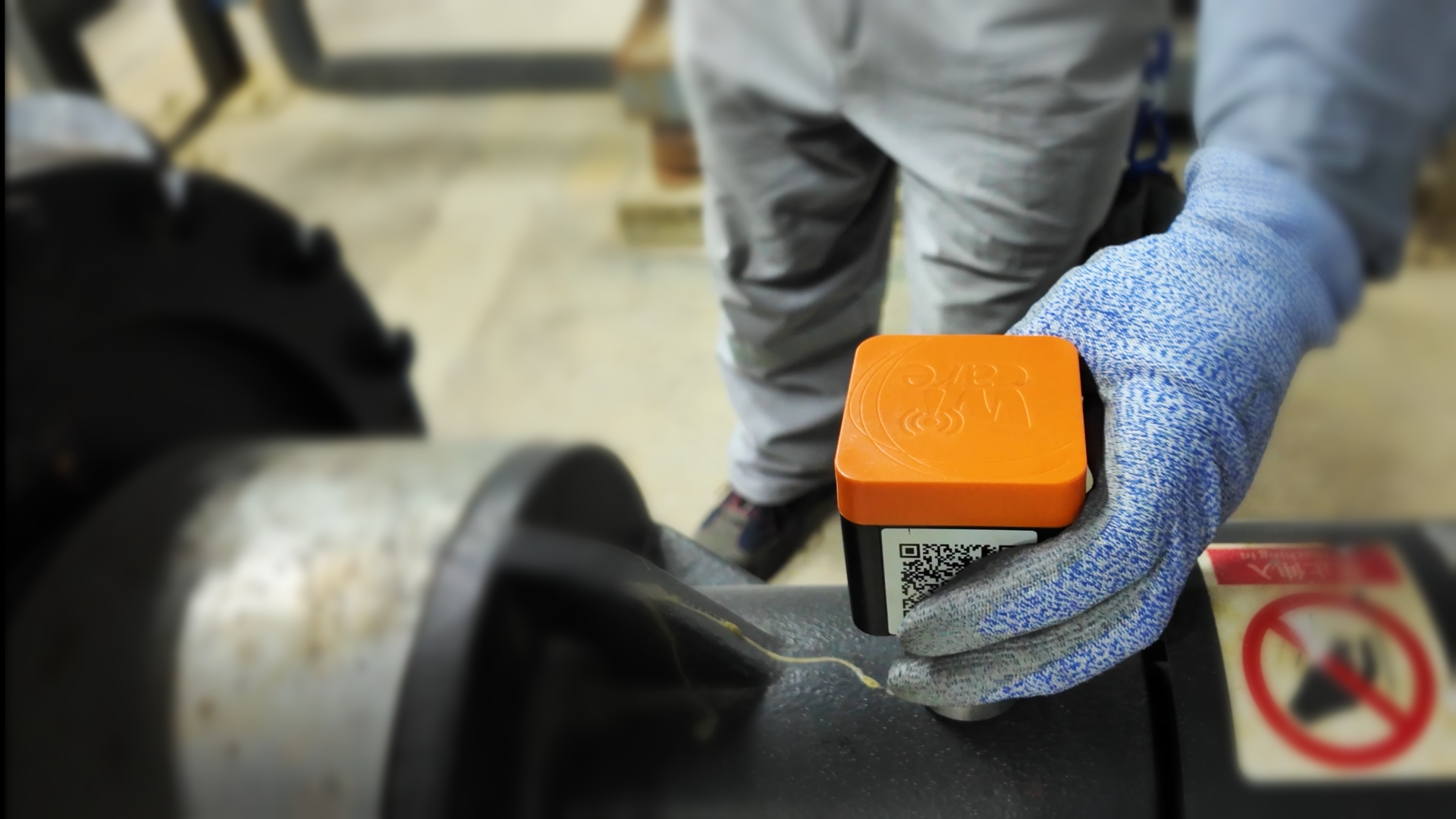
In modern industrial facilities and building management, ensuring the 24/7 stable operation of core rotating equipment, such as motors and water pumps, is essential to mitigating operational risks. Before a major breakdown occurs, equipment typically exhibits abnormal vibration patterns during operation. If these warning signs are left unaddressed, they can escalate into costly emergency downtime and repair expenses.
Aden’s predictive maintenance services utilize advanced diagnostic technologies to detect subtle anomaly signals at an early stage. This second installment of our series focuses on vibration analysis technology. Through routine condition monitoring of rotating machinery, it accurately identifies hidden risks before damage occurs, ensuring continuous and stable production and operations.
Vibration analysis: Accurately revealing the operating status and underlying wear of rotating machinery
In industrial production and commercial buildings, rotating machinery—including motors, fans, water pumps, and compressors—operates continuously. Changes in the mechanical movement patterns generated during operation carry vital information regarding the internal structural health of the equipment.
Aden’s vibration analysis technology collects real-time vibration signals from mechanical equipment using precision sensors. Combined with techniques like spectrum analysis, it accurately locates internal defects in rotating machinery and assesses their severity:
- Identifying structural unbalance and misalignment: Uneven mass distribution in rotating components or axial misalignments in couplings produce distinct vibration frequencies. Vibration analysis pinpoints these discrepancies, guiding technicians to perform precise dynamic balancing and alignment corrections before worsening vibrations cause further equipment damage.
- Diagnosing mechanical wear in bearings and gears: Rolling element bearing wear, cage damage, or gear spalling trigger faint impact vibration signals. By capturing and analyzing energy variations within these specific frequency bands, mechanical degradation can be detected early, preventing catastrophic equipment failure.
- Eliminating mechanical looseness and resonance: It identifies systemic issues in a timely manner—such as loose equipment foundations, improperly tightened foot bolts, and resonance within piping systems—ensuring equipment operates smoothly within safe design frequencies.
Through professional on-site inspections and continuous data tracking, Aden helps enterprises monitor power system degradation trends in real time, enabling proactive prevention of mechanical failures.
Integrating the Akila digital twin platform: Enabling trend management for vibration data
Vibration monitoring generates large volumes of continuous time-series data, requiring robust data processing capabilities and intelligent analytics.
Within Aden’s digital operations and maintenance framework, dynamic vibration signals captured on-site are uploaded in real time or periodically to the Akila digital twin platform. The platform processes and manages complex time-series vibration data using intelligent algorithms:
- True condition assessment: Evaluates equipment condition based on actual health metrics to avoid unnecessary over-maintenance.
- Precise task prioritization: Prioritizes maintenance tasks based on real-time equipment status to optimize the allocation of operations and maintenance resources.
- Closed-loop workflow management: Automatically assists in scheduling maintenance plans based on diagnostic data, completing the loop from threat detection to issue resolution.
Proactive maintenance: Optimizing total lifecycle asset costs
By implementing proactive maintenance centered around vibration analysis, organizations can significantly improve operational metrics for rotating assets:
- Significantly reducing the risk of unexpected downtime: By tracking fault signals in rotating equipment and identifying the type and severity of mechanical issues, emergency repairs are transformed into planned preventive tasks, maintaining uninterrupted production lines.
- Lowering spare parts inventory and maintenance costs: Relying on accurate fault diagnosis allows companies to shift away from broad spare parts stocking strategies to on-demand purchasing, reducing capital tied up in high-value spare parts.
- Maintaining equipment operational efficiency: Reducing energy dissipation caused by abnormal vibrations ensures electromechanical equipment consistently operates within its optimal efficiency range, lowering overall system energy consumption.