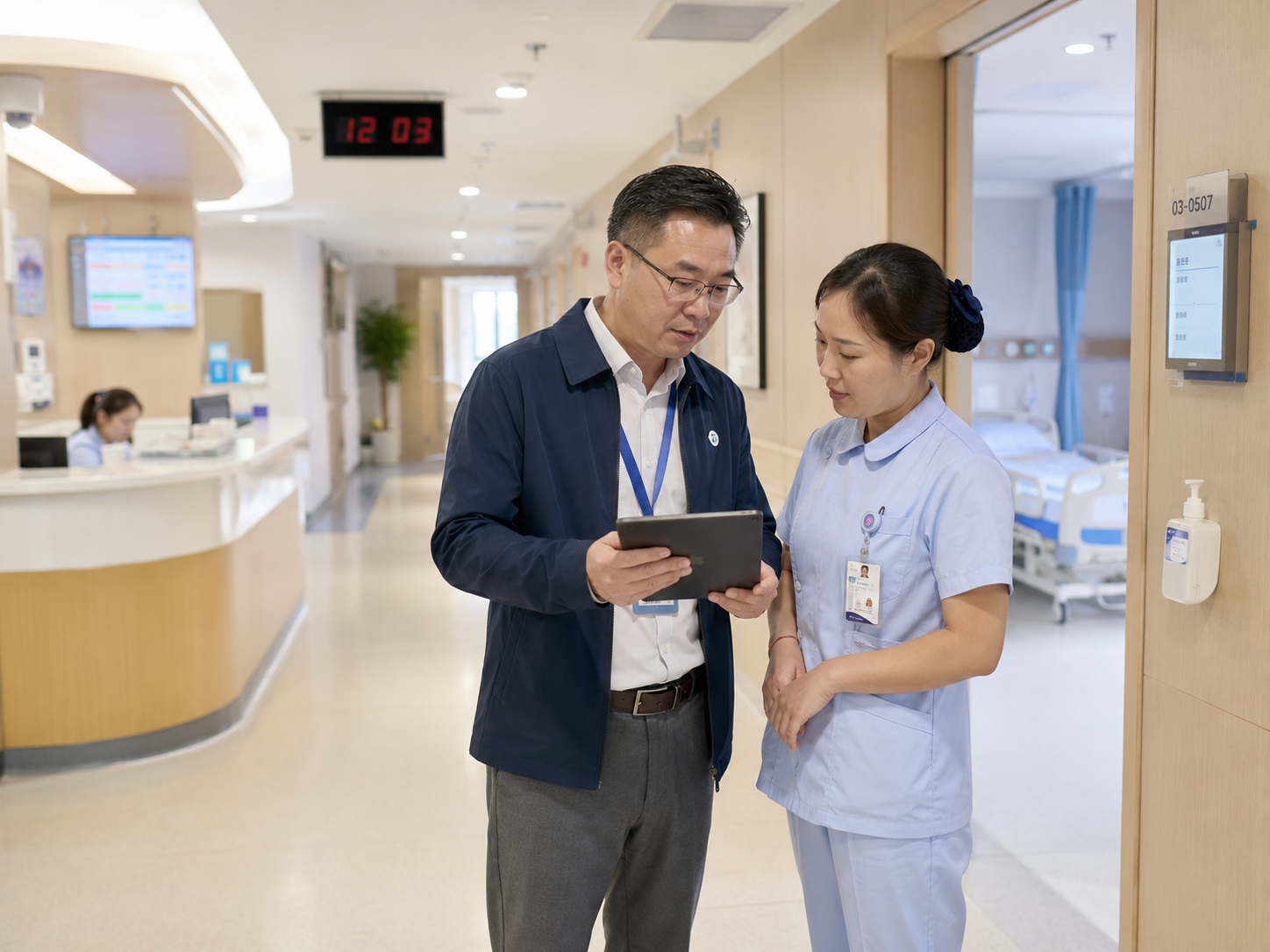
Maintaining a clean hospital environment is essential to delivering safe, high-quality healthcare. Effective hospital cleaning supports infection prevention, protects patients and staff, and helps healthcare facilities operate smoothly every day.
Unlike most commercial buildings, hospitals operate around the clock while caring for people with different medical conditions and varying levels of vulnerability. Outpatient clinics, inpatient wards, diagnostic departments, treatment rooms, and public spaces all have distinct operational requirements. As a result, hospital cleaning must be planned as an integral part of daily operations rather than treated as a standalone support service.
An effective hospital cleaning program combines risk-based planning, standardized procedures, and close coordination with clinical and operational teams. The goal is not simply to keep facilities clean, but to maintain safe, hygienic environments that support the continuous delivery of healthcare.
Cleaning requirements should reflect clinical risk
Hospitals cannot rely on a single cleaning standard across the entire facility. Different departments present different levels of clinical risk, requiring cleaning procedures, frequencies, and quality controls that are appropriate for each environment.
Public areas accommodate a constant flow of patients and visitors throughout the day, while outpatient consultation rooms experience frequent patient turnover. Inpatient wards must provide environments that support both patient recovery and routine clinical care. Treatment rooms, isolation areas, and other high-risk clinical spaces typically require more rigorous cleaning and disinfection protocols.
Developing cleaning programs based on clinical risk allows hospitals to deploy resources where they have the greatest impact. High-risk areas may require more frequent disinfection, enhanced verification procedures, or closer supervisory oversight. Lower-risk areas can often be maintained through routine cleaning schedules without compromising hygiene standards.
Risk-based planning also gives hospitals greater operational flexibility. During periods of high patient volumes, seasonal outbreaks of infectious diseases, or changes in clinical activity, environmental services teams can adjust cleaning priorities according to operational needs instead of applying the same response across the entire facility.
This approach helps hospitals maintain consistent hygiene standards while making more efficient use of manpower, equipment, and operational resources.
High-touch surfaces require continuous attention
The effectiveness of hospital cleaning is not determined by how often floors are mopped or corridors are cleaned. It depends on whether cleaning activities focus on the areas that present the highest risk of contamination.
High-touch surfaces remain one of the highest priorities for environmental services teams. Bed rails, bedside tables, nurse call buttons, door handles, elevator buttons, registration counters, waiting-area seating, handrails, and self-service kiosks are touched repeatedly throughout the day by patients, visitors, and healthcare professionals.
Because these surfaces are in constant use, they require cleaning and disinfection schedules that differ from surrounding areas. Clearly defined responsibilities, documented cleaning frequencies, and routine quality inspections help ensure they receive consistent attention across every shift.
Managing high-touch surfaces is also closely linked to patient flow. Registration areas, waiting spaces, consultation rooms, and diagnostic departments often experience predictable peaks in activity. Cleaning schedules should reflect these operational patterns so that hygiene standards can be maintained without disrupting clinical services.
Rather than increasing cleaning efforts across the entire hospital, successful healthcare facilities concentrate resources where operational and clinical risks are greatest.
Cleaning should follow hospital operations, not the other way around
Hospital cleaning is most effective when it is integrated into the daily rhythm of healthcare operations.
Before the first outpatient appointments begin, environmental services teams are often already preparing consultation rooms, waiting areas, restrooms, and public spaces. Throughout the day, cleaning activities continue alongside outpatient services, inpatient care, diagnostic procedures, and emergency response, requiring teams to adapt as operational priorities change.
Patient discharge introduces another important operational requirement. Before a room can accommodate its next patient, environmental services personnel may need to complete cleaning and disinfection procedures, replace bed linens, remove waste, and prepare the space for clinical use. Delays in any part of this process can affect bed availability, patient flow, and overall operational efficiency.
Hospitals must also be prepared for unexpected events. Water leaks, accidental spills, emergency admissions, or infectious disease incidents often require immediate coordination between environmental services, engineering teams, nursing staff, and hospital operations personnel. In these situations, cleaning becomes part of a broader operational response rather than a standalone task.
For this reason, many healthcare organizations increasingly view hospital cleaning as a critical operational function that supports continuity of care. Cleaning schedules are planned around clinical activities, patient movement, and service availability, helping hospitals maintain hygiene standards while minimizing disruption to patient care.
Standardized procedures create consistent outcomes
Consistency is one of the defining characteristics of effective hospital cleaning.
Healthcare facilities cannot rely on individual experience or personal working habits to maintain hygiene standards across departments, shifts, and service teams. Instead, cleaning activities should follow standardized operating procedures that define how work is performed and how quality is measured.
Standardization begins with clearly documented workflows. Cleaning sequences, approved products, equipment requirements, and inspection criteria should all be established in advance so that the same procedures can be applied consistently throughout the facility. This reduces variation between teams, simplifies training, and helps maintain service quality over time.
Quality assurance is equally important. Supervisors conduct routine inspections to verify that cleaning activities meet established standards rather than simply confirming that tasks have been completed. Inspection records, corrective actions, and regular performance reviews provide hospitals with greater visibility into service quality while identifying opportunities for continuous improvement.
Training plays a central role in this process. Environmental services personnel should understand not only the procedures they follow, but also the reasons behind them. For example, staff need to understand why different departments require different cleaning protocols, why certain surfaces require more frequent disinfection, and how their work contributes to infection prevention and patient safety.
A standardized operating model makes hospital cleaning more predictable, easier to manage, and better equipped to handle changes in staffing levels or patient volumes.
Effective hospital cleaning depends on cross-functional coordination
Hospital cleaning does not operate in isolation. Maintaining safe healthcare environments requires continuous collaboration between multiple departments and service teams.
Routine maintenance provides a simple example. If an engineering team repairs a leaking pipe in an inpatient ward, environmental services personnel may need to clean and disinfect the affected area before it can be returned to clinical use. Similarly, preparing a room following patient discharge often requires coordination between nursing teams, housekeeping staff, environmental services personnel, and bed management teams to ensure the room is available for the next admission as quickly as possible.
The same principle applies during unexpected operational events. Water leaks, infectious disease incidents, accidental spills, or equipment failures require rapid communication between environmental services, engineering, clinical teams, and hospital operations personnel. Clearly defined responsibilities help reduce response times while ensuring patient care can continue safely.
Case study: supporting daily operations at Shanghai Bright Eye Hospital
Since September 2024, Aden has provided environmental cleaning services for Shanghai Bright Eye Hospital, supporting the daily operation of an 8,000 square meters specialist healthcare facility with a dedicated on-site team of seven professionals.
The daily cleaning program begins before outpatient services reach peak activity. A standardized workflow is followed each morning, with work progressing from restrooms to patient rooms and inpatient wards before concluding in corridors and other public circulation areas. Organizing the work in this sequence helps reduce the potential for cross-contamination while ensuring that patient-facing areas are prepared before visitor numbers increase.
The team’s responsibilities include floor cleaning and disinfection, cleaning and sanitizing hospital beds and bedside furniture, changing bed linens, maintaining restroom hygiene, cleaning windows, and keeping public areas clean and orderly throughout the day. The complete morning program is typically completed within approximately two hours, after which routine environmental services continue according to operational requirements.
Beyond the individual cleaning tasks, the project demonstrates the importance of standardized workflows, defined responsibilities, and close coordination with hospital operations. Daily environmental cleaning supports infection prevention measures while helping maintain a healthcare environment that is ready to support clinical activities throughout the day.
About Aden Services
Aden Services provides integrated facilities management solutions for healthcare organizations across Asia, supporting hospitals with environmental cleaning, technical asset management, energy management, and digital facility operations.
Our healthcare teams combine standardized operating procedures, experienced on-site personnel, and digital management tools to help hospitals maintain safe, reliable, and efficient environments. By integrating environmental services into broader hospital operations, Aden supports healthcare providers in improving operational performance while maintaining high standards of hygiene and patient safety.
Conclusion
Environmental cleaning is a core operational function within modern hospitals. Its value is measured not only by cleanliness, but by its contribution to infection prevention, patient safety, operational continuity, and the efficient delivery of healthcare services.
Effective programs are built on risk-based planning, targeted management of high-touch surfaces, cleaning schedules aligned with hospital operations, standardized procedures, and close coordination across multiple hospital departments. Together, these practices help create environments that support both clinical teams and the patients they serve.
As hospitals continue to face increasing operational complexity, environmental cleaning will remain an essential component of healthcare facility management—supporting safe, resilient, and well-managed healthcare environments every day.