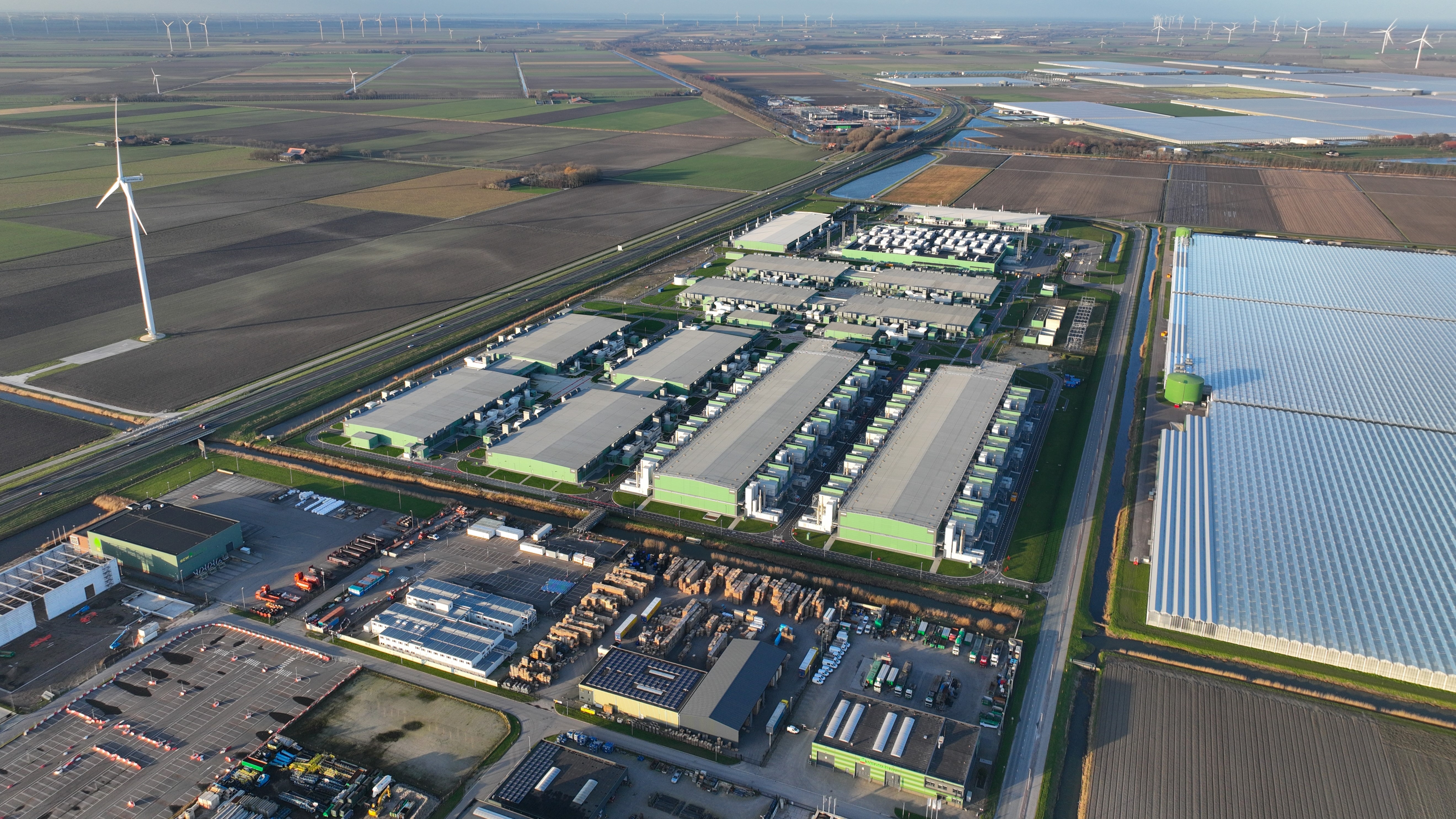
Industrial park facility management is the operating control layer that helps park owners protect their assets, infrastructure, tenants, compliance position and long-term commercial value.
For an industrial park owner, the priority is not only whether individual services are being delivered. The priority is whether the park as a whole is safe, reliable, insurable, compliant, attractive to tenants and operating without unnecessary risk.
That makes industrial park FM different from managing a single factory, office building or commercial site. A park owner may not control everything inside each tenant’s unit, but they remain responsible for the shared environment in which those tenants operate: the structures, roads, common areas, utilities, access points, safety systems, external spaces, contractor activity and operational standards that define the park.
In this context, integrated facility management is not just a way to outsource tasks. It is a way to maintain control over the operating condition of the park.
A strong IFM partner helps owners answer practical questions:
- How do we keep our assets reliable?
- How do we reduce breakdowns and incidents?
- How do we prove compliance?
- How do we control contractors and service quality?
- How do we reduce risk exposure?
- How do we give tenants a safe and well-managed operating environment?
- How do we protect the value and reputation of the park over time?
Facility management and the owner’s real concerns
Industrial park owners are responsible for more than leasing space. They need to protect the physical and operational value of the park.
That includes the condition of buildings, shared infrastructure, access roads, drainage, lighting, fire systems, utility interfaces, security systems, external areas and common facilities. It also includes the systems of control around the park: maintenance records, inspection routines, contractor management, tenant coordination, safety procedures, emergency response and compliance documentation.
These are not minor operational details. They affect asset life, tenant satisfaction, regulatory exposure, insurance risk and commercial attractiveness.
A poorly maintained building structure, weak fire-safety routine, unmanaged contractor, missing inspection record or unresolved infrastructure problem can become much more than an FM issue. It can become a compliance issue, an insurance issue, a tenant-retention issue or a reputational issue for the owner.
This is why industrial park FM should be understood as part of owner risk control. The goal is not simply to keep the park clean or staffed. The goal is to keep the owner’s assets, obligations and operating environment under control.
The core challenge: coordination, risk and accountability
Industrial parks operate as connected systems. Buildings, roads, utilities, energy, drainage, waste, access, tenants, contractors, security, safety and local compliance obligations all interact.
A problem in one area can quickly affect another.
- A security issue can become a safety issue.
- A maintenance delay can become a continuity issue.
- A contractor problem can become a compliance issue.
- A missing inspection record can become an insurance issue.
- A drainage or waste issue can become an environmental issue.
- A badly managed common area can become a leasing and tenant-satisfaction issue.
This is why industrial parks require strong operational coordination. The owner’s risk often sits between service scopes, between tenants and between contractors.
A capable FM partner changes the equation by giving the owner one coordinated management framework across the park. Instead of the owner’s team having to chase each supplier, interpret different reports and resolve service gaps alone, an IFM partner can coordinate delivery, monitor performance, escalate issues, document actions and support continuous improvement.
Compliance, HSE and insurance: why FM matters to owner risk
For industrial park owners, compliance is central.
Industrial parks are exposed to fire-safety requirements, environmental rules, HSE expectations, contractor controls, emergency-response obligations, building-maintenance standards, tenant rules and government inspections. Depending on the park, there may also be specific requirements around wastewater, waste handling, hazardous materials, utilities, worker accommodation, food service or logistics activity.
FM has a direct role in keeping these responsibilities under control. A strong IFM partner can support:
- Fire-safety inspections and corrective actions
- HSE routines and reporting
- Contractor access and permit controls
- Emergency response readiness
- Environmental service coordination
- Maintenance records and inspection logs
- Incident documentation
- Audit trails
- Tenant compliance with park rules
- Evidence for insurers, regulators, investors and authorities
This matters because owners need to prove control. It is not enough to say that maintenance was done, a risk was checked or an incident was handled. The owner needs records, reporting, follow-up and accountability.
The problem with fragmented service delivery
Many industrial parks are managed through separate contracts for maintenance, security, cleaning, landscaping, waste, utilities, HSE and technical support. This can appear cheaper or simpler at first.
The problem is that separate contracts often create separate operating realities.
Each provider focuses on its own scope. Each reports in its own way. Each escalates issues through its own process. When a problem crosses boundaries, responsibility can become unclear.
That leaves the owner or park management team coordinating the gaps.
Common issues include inconsistent reporting, slow escalation, unclear responsibility, scattered compliance evidence, missed preventive maintenance, weak contractor control, poor visibility over asset condition and tenant complaints being passed between providers.
The risk is not that individual contractors cannot perform their tasks. The risk is that no one is managing the whole system.
Managing technical infrastructure and asset reliability
The technical foundation of an industrial park is its infrastructure.
This may include building structures, electrical systems, pumps, water systems, wastewater systems, fire systems, lighting, roads, drainage, mechanical systems, utility interfaces and other shared assets.
For the owner, the priority is asset reliability. Buildings and infrastructure need to be safe, functional, well-maintained and supported by a clear maintenance strategy.
That means keeping corrective maintenance to a minimum and maximising continuity through the right balance of preventive maintenance, trackable maintenance records and smart use of predictive maintenance where it makes sense.
Not every asset needs advanced predictive monitoring. The point is to apply the right level of maintenance to the right asset, based on risk, criticality, cost and operational impact.
A strong FM partner can help classify assets, plan preventive maintenance, track work orders, identify recurring failures, manage repairs and use data to decide where predictive maintenance can add value.
This is especially important in industrial areas where specialised technical labour may be difficult to recruit, train and retain. Park owners do not always want to build their own full in-house capability across MEP, utilities, fire systems, HSE, security, maintenance planning and digital reporting.
Energy, utilities and resource performance
Energy and utilities are major concerns for industrial parks. Even when tenants are billed directly for their own consumption, the owner may still need visibility over common-area consumption, shared infrastructure, metering accuracy, abnormal usage, power reliability, renewable energy, storage, water consumption and ESG reporting.
For the owner, energy is not only about cost. It is also about reliability, transparency, tenant confidence and long-term asset performance. Aden can support this through utility monitoring, energy-performance visibility, maintenance of energy-related assets and integration with broader operational data. Where renewable energy, storage or energy optimization projects are involved, the FM partner can also help connect daily operations with long-term efficiency goals.
Security, access control and site movement
Security service in an industrial park is not only guarding. It is part of the park’s operational control system.
Industrial parks need to manage people, vehicles, goods, contractors, visitors and emergency access. They also need perimeter control, gate management, CCTV, patrols, incident response and clear escalation procedures.
This matters because access control connects directly to safety, HSE, tenant confidence, insurance exposure and regulatory readiness.
New capabilities such as vision AI can also support stronger monitoring in the right contexts. For example, camera systems can increasingly help detect unusual activity, support perimeter monitoring, identify safety risks, improve incident review and turn visual monitoring into usable operational data.
HSE, fire safety and emergency readiness
Industrial parks need consistent HSE management across a multi-tenant environment.
Different tenants may have different processes, contractors, working hours, vehicles, materials and risk profiles. Without strong coordination, the park owner can be exposed to inconsistent safety practices across the site.
An IFM partner can support fire-safety checks, emergency planning, contractor safety control, inspection routines, incident reporting, corrective-action tracking and coordination with tenants.
Environmental services, waste and wastewater coordination
Environmental services can create significant owner-level exposure.
Industrial parks may need to manage waste collection, recycling, external cleanliness, drainage areas, environmental monitoring support and coordination around wastewater or regulated waste where applicable.
In many cases, specialist providers may be required for technical wastewater treatment or hazardous waste handling. The IFM partner does not need to perform every specialist function directly. But it can help the owner coordinate providers, monitor service performance, maintain records, escalate issues and ensure that environmental services are managed within the park’s operating framework.
Common-area cleaning, landscaping and external upkeep
The visible condition of an industrial park matters.
Roads, entrances, signage, landscaping, green areas, shared facilities, outdoor spaces, parking areas and external cleanliness all shape how tenants, visitors, authorities and prospective occupiers perceive the park.
For owners, this is not just cosmetic. A well-maintained park supports tenant satisfaction, leasing attractiveness, brand image and long-term asset value.
This is especially relevant for industrial parks that want to attract advanced manufacturing, international tenants, R&D activity or higher-value occupiers. The physical environment needs to match the commercial positioning of the park.
Optional tenant-level services as a value add
Some services may sit mainly inside the tenant’s own space. These can be offered flexibly depending on the park model and tenant needs.
Examples may include internal cleaning, tenant-specific technical maintenance, pantry or workplace services, canteen or food service, dormitory support, pest control, reception support, indoor waste handling or office services.
For large manufacturing parks or worker-intensive campuses, shared food service, dormitories or employee amenities may form part of the park’s offer. In other parks, tenants may prefer to manage these services themselves.
What to look for in an industrial park IFM partner
The right IFM partner should help the owner manage the park as one operating environment.
That requires more than manpower. It requires technical capability, compliance awareness, HSE discipline, security management, environmental-service coordination, energy visibility, reporting systems, quality assurance and the ability to manage both self-delivered teams and specialist subcontractors.
A strong partner should also bring digital capability where it improves control.
For Aden, this includes using Akila to support operational visibility across assets, maintenance, energy, incidents, work orders and reporting. This gives park owners more than periodic updates. It gives them structured information they can use to track performance, manage risk and support compliance.
The right partner should help the owner answer three questions:
- Are our assets being maintained properly?
- Are our risks being controlled and documented?
- Do we have visibility across the whole park?
Case insight: Chinese-French Wuxi Industrial Cooperation Park
The Chinese-French Wuxi Industrial Cooperation Park is a large-scale industrial environment designed to support advanced manufacturing, R&D and logistics operations. The park forms part of a broader green and smart industrial ecosystem led by NXpark and developed in collaboration with the Wuxi municipal government.
The project brings together industrial facilities, shared infrastructure and international manufacturing tenants, including major French companies such as Schneider Electric, Air Liquide and other industrial partners.
In an environment like this, facility management cannot be limited to routine maintenance or isolated service delivery. The task is to support a coordinated industrial ecosystem where infrastructure, safety, utilities, tenant needs, environmental services and daily operations must work together.
Aden supports this type of environment through integrated facility management services including technical maintenance, HSE support, security management, environmental services and digitalized operational oversight.
This approach helps support operational continuity, infrastructure reliability, safe working environments and more transparent park operations.
Conclusion: IFM protects the operating value of the park
Industrial park owners are responsible for protecting more than physical space. They need to protect the assets, infrastructure, compliance position, tenant environment and commercial value of the park.
That requires reliable maintenance, strong HSE, security, environmental coordination, energy visibility, common-area upkeep, reporting discipline and clear accountability.
Separate service contracts may deliver individual tasks, but they do not always give the owner the coordination and visibility needed at park level.
Integrated facility management gives industrial park owners a central partner to manage the operating layer of the park: protecting assets, reducing risk, supporting compliance, improving tenant experience and maintaining long-term value.