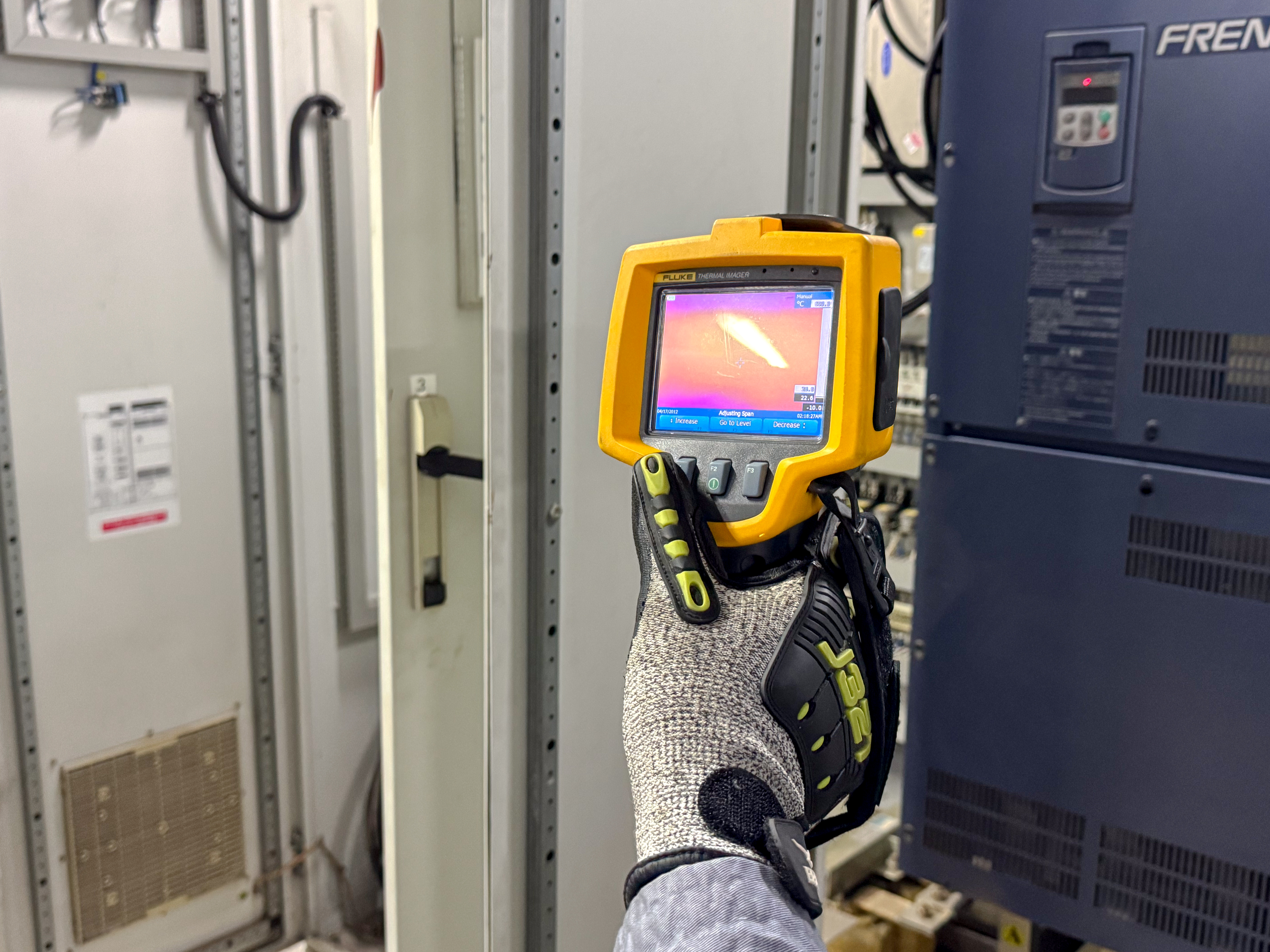
In the daily operations of industrial plants and commercial buildings, electrical panels, transformers, busbars, and large-scale electromechanical equipment operate under heavy loads. This continuous activity involves constant energy conversion and heat dissipation. When electrical connections loosen, wiring oxidizes or overloads, or mechanical components experience abnormal friction, localized temperatures rise—often while the equipment’s exterior looks completely normal.
Aden’s Predictive Maintenance Services utilize advanced inspection techniques to capture faint, early-stage anomaly signals from equipment. This article focuses on the third technology in our series: Infrared Thermography. By delivering non-contact imaging of a machine’s surface heat distribution, this technique identifies thermal defects before they trigger electrical fires or power outages, ensuring total operational safety and system stability.
Infrared thermography: targeting typical thermal defect scenarios
Internal equipment failures almost always manifest first as abnormal heat accumulation. Operating without interrupting normal equipment activity, Aden’s O&M teams use high-sensitivity infrared thermal cameras to conduct rapid scans and temperature evaluations across critical areas:
- Electrical contact loose points & line overloads: Loose connections, poor contact, or corrosion at busbar joints and circuit breaker terminals in distribution cabinets significantly increase contact resistance, generating intense heat. Infrared thermography instantly generates clear thermal images that pinpoint concealed hot spots, preventing electrical fires and unexpected trips.
- Three‑phase unbalance & transformer overheating: Real-time monitoring detects temperature variations across three-phase circuits, quickly identifying single-phase overheating caused by uneven load distribution, as well as abnormal temperatures in transformer tanks and radiators to ensure power supply stability.
- Insulation failures & pipeline heat loss: Applied to steam pipelines, valves, kilns, and cold storage insulation walls, thermography visually identifies damaged insulation or thermal breakdown, preventing invisible energy waste.
Through routine thermal inspections and temperature trend analysis, Aden helps enterprises uncover overheating hazards before physical damage occurs, delivering true risk prevention for hard-to-see issues.
Integrating with the Akila digital twin platform: visualized early warnings
Infrared thermography provides more than just intuitive thermal images—it yields precise temperature data. Within Aden’s digital O&M framework, field-captured thermal images and key temperature readings are uploaded in real time to the Akila digital twin platform. Powered by intelligent algorithms, the platform enables dynamic thermal monitoring across facility assets:
- Temperature rise trends & differential warnings: The platform automatically compares operating temperatures against international electrical inspection standards. If a temperature exceeds preset thresholds or demonstrates abnormal relative differentials, the system triggers an automatic alert.
- Direct thermal mapping on 3D models: Thermal inspection results map directly onto 3D equipment models within Akila. Facility managers and O&M engineers can pinpoint overheating components on a digital interface without needing blind, trial-and-error physical inspections.
- Preventive maintenance planning: Based on severity levels of detected hot spots, the system prioritizes maintenance work orders, ensuring O&M resources target high-risk areas first.
Core value of proactive O&M for facility safety
Adopting infrared thermography within a predictive maintenance strategy yields multi-dimensional safety and financial benefits:
- Higher electrical safety standards: Inspecting hazards without de-energizing or contacting equipment significantly reduces safety risks for field technicians while eliminating fire hazards early.
- Reduced unplanned downtime: Timely repairs on overheating terminals and aging wiring prevent breaker trips or equipment burnouts, preserving continuous production.
- Lower facility energy consumption: Fixing damaged pipeline insulation and high-resistance electrical heating eliminates unnecessary power and thermal energy loss, helping enterprises optimize overall energy efficiency.
Aden’s Predictive Maintenance Services:
How vibration analysis enables effective predictive maintenance
The practical value of ultrasonic detection in predictive maintenance