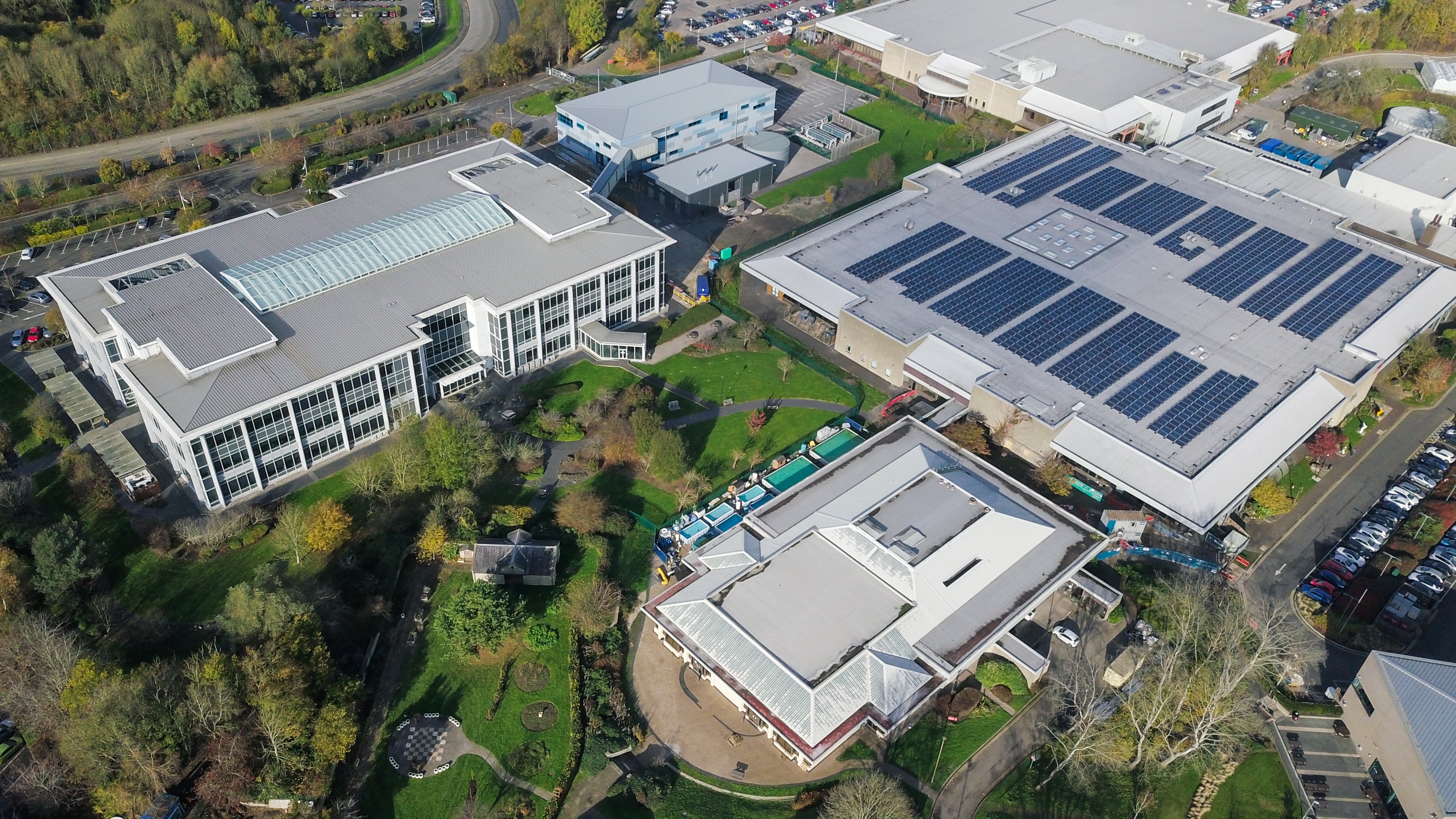
Industrial parks are complex operational environments. This complexity manifests in daily activities: the movement of people and vehicles, production requirements for uninterrupted utilities, and equipment running continuously under pressure. Many sites include dormitories, canteens, and logistics zones, which adds layers of coordination that increase management difficulty.
The challenge is not any single issue, but the cumulative effect of minor operational problems. Delays at access points, inconsistent service standards, and reactive maintenance can quickly create operational inefficiency. Over time, this affects both productivity and perception.
In many parks, these issues are intensified by fragmented service models. When security, cleaning, and maintenance are handled by separate vendors, operational teams must coordinate across multiple layers. This increases workload while making accountability difficult to define.
This is where Integrated Facility Management (IFM) provides a solution. By introducing a single operating framework, IFM aligns standards, reporting, and responsibilities under one structure. The result is improved management clarity, consistent service delivery, and reduced administrative costs for clients.
From fragmented services to one operating framework
IFM is not simply about bundling services. It is about creating a single operating framework across the site, with aligned standards, shared reporting systems, and centralized accountability.
Instead of managing multiple vendors, clients work with one strategic partner responsible for site performance. This reduces the coordination burden on internal teams and ensures consistent service levels. More importantly, it brings predictability. When roles are defined and processes are aligned, issues are easier to identify and resolve. Management teams can spend less time addressing immediate failures and more time focusing on core operations.
What IFM looks like in practice
On site, IFM synchronizes services that are often already in place but lack coordination.
- Security and Access Control: Operated under consistent procedures with improved data visibility.
- Cleaning and Housekeeping: Following standardized protocols across production and shared areas.
- Technical Maintenance: Moving from reactive fixes to structured asset management.
- Support Services: Groundskeeping, waste management, and canteen operations are all integrated into the same management system.
The difference lies in management methodology. A strong IFM setup utilizes clear SOPs, measurable KPIs, and standardized escalation paths. Contractors are managed under the same framework, and HSE practices are applied consistently across the entire site. This reduces variability and gives clients an accurate assessment of site performance.
Why HSE and operational control matter
In industrial environments, safety is closely tied to operational continuity. An incident rarely stays isolated. It can disrupt production, trigger audits and create reputational risk. Maintaining strong HSE performance therefore depends on consistent standards across the whole site.
Fragmented service models make this more difficult. Different vendors may follow different procedures, and responsibility can become unclear.
Under an IFM model, safety is managed as part of a unified system. Procedures are standardised, reporting lines are clearer, and supervision is more consistent. While this does not eliminate risk, it makes it easier to manage. At the same time, stronger operational control helps address issues earlier. Equipment failures, access bottlenecks or service gaps can be identified and resolved before they escalate into larger problems.
Creating a foundation for improvement
Once a site is stable and well managed, further improvements become easier to implement.
Energy management is one example. With better visibility over utilities and operations, it becomes possible to identify inefficiencies and control costs more effectively. Maintenance can also evolve from reactive to predictive approaches, helping reduce downtime and extend the life of critical assets. Digital tools, from video analytics to integrated platforms, are more effective when applied within a coherent operating model rather than across disconnected systems.
In this sense, IFM is not the end goal. It is the foundation that makes ongoing optimisation possible.
A practical view from Aden Services in Xi’an High-Tech Industrial Park
The value of this integrated approach is perfectly illustrated by the NXpark high-end auto parts industrial base in Xi’an. Located in the Xi’an High-tech Zone, this flagship project for Aden’s Industrial New Infrastructure brand spans 82,000 square meters.
At Xi’an High-Tech Industrial Park, Aden Services provides a comprehensive IFM solution that serves as a blueprint for modern industrial management:
- Technical Asset Management (TAM): Through rigorous daily inspections, annual maintenance, and spare parts management, the team ensures all facilities operate at peak efficiency with zero friction for tenants.
- Digitalized Security & Safety: The site utilizes a comprehensive digital system covering CCTV monitoring, visitor management, and fire/emergency response to provide 24/7 protection and compliance.
- Environmental Excellence: By integrating groundskeeping and green space management into the core program, the project enhances both the site’s aesthetic professional environment and its long-term sustainability.
Rethinking industrial management
Industrial parks will continue to grow in scale and complexity. As expectations around safety and efficiency increase, the way these environments are managed becomes more important. For many organizations, the question is how support functions should be managed to maximize efficiency.
IFM offers a practical answer. By bringing structure, accountability, and visibility to site operations, it helps reduce inefficiency and improve consistency. From there, better energy performance, stronger digital oversight, and ongoing operational improvements become attainable.