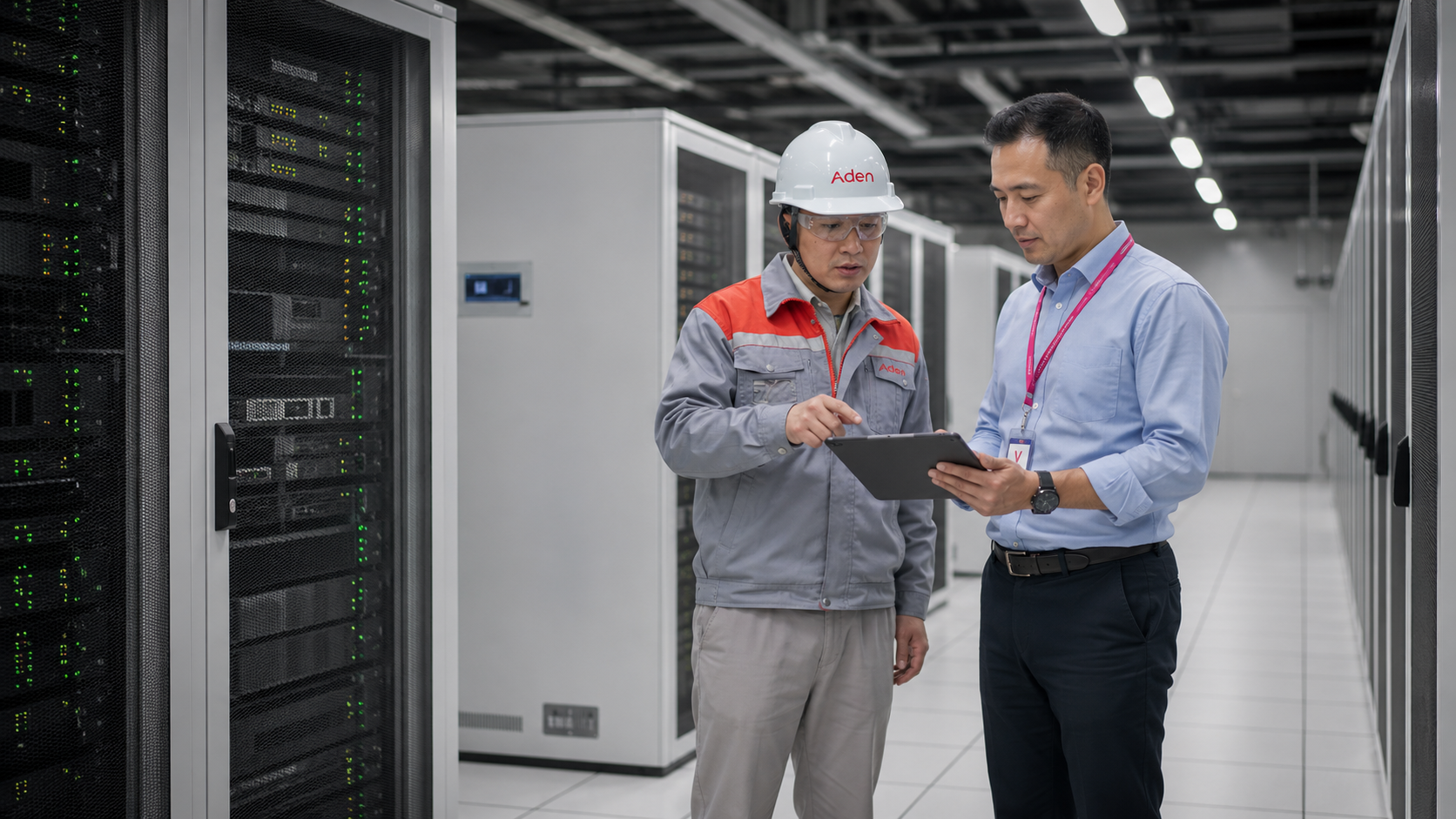
Data centers are often described as the backbone of the digital economy. They support cloud platforms, financial transactions, enterprise applications, AI workloads, and countless digital services that businesses and consumers rely on every day.
Yet despite the sophisticated technology housed within them, many of the greatest operational risks facing a data center are not inside the servers themselves. A cooling failure, an electrical fault, an untested backup generator, a missed maintenance step, or an unclear incident response process can all threaten uptime as quickly as an IT issue.
This is why facilities management plays a strategic role in data center performance. A data center is not an office building with servers inside. It is critical infrastructure, and the physical operating environment must be managed with the same discipline as the digital systems it supports.
Facilities management connects the infrastructure layer around a single objective: continuous operation. That means coordinating technical services, MEP maintenance, cooling performance, backup power readiness, physical security, access control, emergency response, documentation, and vendor interfaces through one controlled operating model.
For operators, the value of this model is not simply that more services are outsourced. The value is that fewer gaps are left between systems, teams, procedures, and accountability.
Uptime is the ultimate KPI
For data center operators, uptime is the central measure of performance. Every operational decision ultimately supports continuous availability.
But uptime is not protected by design alone. Redundant power, cooling, and network infrastructure only create resilience if those systems are operated, maintained, tested, and documented consistently over time.
Power systems must remain stable under changing load conditions. Cooling systems must respond reliably to fluctuations in demand. UPS systems and backup generators must be tested under disciplined schedules. Environmental thresholds must be monitored. Maintenance windows must be planned carefully. Incident escalation procedures must be understood across every shift.
In this environment, small operational gaps can create disproportionate risk. A generator that has not been properly tested, a cooling asset operating outside its expected range, an unclear change-control process, or a delayed escalation can all affect the wider facility.
This is where facilities management becomes an operating discipline that protects the physical conditions required for digital continuity.
What data center operators should expect from an FM partner
Not every facilities provider is equipped to support a critical environment. Data center operators need a partner that understands the relationship between infrastructure reliability, maintenance discipline, energy performance, security, compliance, and operational continuity. The right FM partner should be able to answer practical operating questions:
- Can they maintain critical MEP systems, including UPS, generators, switchgear, HVAC, and cooling assets, without disrupting live operations?
- Can they manage preventive and predictive maintenance around uptime risk, rather than simply responding to equipment failure?
- Can they connect cooling performance, energy consumption, and PUE through daily operations, monitoring, and technical routines?
- Can they provide clear escalation paths, incident reporting, audit trails, and service-level visibility in a 24/7 environment?
- Can they coordinate site teams, technical specialists, security, subcontractors, and digital systems through one operating rhythm?
These are the questions that separate critical-facility operations from ordinary FM. A data center needs more than boots on the ground; it needs the right technical routines, reporting structure, operational governance, and accountability model.
Cooling and energy performance depend on daily operations
Cooling is one of the most important operating challenges in a data center, especially as AI and high-performance computing increase rack density and thermal load. The most useful question for a facility management partner is how cooling performance is sustained in daily operations.
Power Usage Effectiveness, or PUE, is widely used to measure how efficiently a data center uses energy. It compares total facility energy consumption with the energy used by IT equipment. Design has a major influence on PUE, but so does the way the facility is operated.
Airflow management, setpoint discipline, system calibration, filter condition, equipment maintenance, leak detection, cooling asset performance, and environmental monitoring all affect efficiency. So do the routines followed by the people maintaining and operating the facility.
A strong FM model connects these activities. Technical teams need visibility into cooling-system performance, energy trends, equipment condition, and environmental thresholds. When this data is combined with structured maintenance and clear operating procedures, operators can detect drift earlier, reduce waste, and respond before thermal risk becomes an uptime issue.
For Aden Services, this is where technical services, asset management, and energy performance connect. The goal is not simply to maintain HVAC equipment. It is to keep the physical environment stable, efficient, and resilient enough to support continuous digital operations.
Maintenance is risk management, not repair
In a standard commercial building, maintenance is often judged by whether equipment is repaired quickly and occupants are kept comfortable. In a data center, the standard is different. Maintenance is judged by whether failure is prevented before it threatens uptime.
Critical assets such as electrical distribution systems, chillers, pumps, CRAH units, UPS systems, batteries, generators, fire systems, and monitoring platforms all require disciplined maintenance routines. These routines need to be planned, documented, and executed in a way that respects live operations.
A backup generator provides a simple example. It may sit idle for long periods, but during a power event it must perform immediately. If testing, fuel checks, inspection records, load-bank procedures, or corrective actions are inconsistent, redundancy exists only on paper.
The same logic applies across the facility. Preventive maintenance reduces known risks. Predictive maintenance and condition monitoring help identify early signs of asset degradation. Root-cause analysis helps operators understand why issues occurred and how to prevent recurrence. Documentation creates the audit trail needed for compliance and operational learning.
For data center operators, maintenance is not a cost center sitting outside the core business. It is one of the mechanisms that protects business continuity.
Critical environments need coordinated command, not disconnected services
Many data centers rely on multiple specialist providers. The risk is not simply the number of vendors. The risk is fragmentation.
When maintenance, security, cleaning, technical support, energy monitoring, and specialist subcontractors operate through separate reporting lines, the client often becomes the integrator. Internal teams have to manage different systems, different escalation protocols, different reporting formats, different service levels, and different assumptions about responsibility.
In a data center, where one failure can have consequences across uptime, cost, compliance, and reputation, the coordination burden matters.
An integrated facilities management model creates a clearer operating layer across the facility. It gives operators a more consistent view of site conditions, maintenance status, incident response, access control, documentation, and service performance. It also reduces the time internal teams spend managing interfaces between providers.
The objective is operational control: clearer command, faster escalation, unified reporting, stronger documentation, and fewer gaps between what the facility needs and how services are delivered.
Security and access control are part of the operating model
Physical security in a data center is not only about guarding a perimeter. It is part of the facility’s risk-control system.
Access control, visitor procedures, contractor management, CCTV monitoring, escort rules, restricted zones, incident reporting, and access logs all contribute to the integrity of the operating environment. A weak process can introduce risk even when the technical systems are strong.
Security also needs to connect with maintenance and operations. Contractors may need access during maintenance windows. Emergency response may require rapid movement through controlled areas. Incident investigations may depend on records from security systems, work orders, visitor logs, and monitoring platforms.
This is why security cannot be treated as an isolated manpower contract. In a critical environment, security discipline supports auditability, compliance, incident response, and operational continuity.
How Aden Services supports data center operations
Aden Services supports complex and mission-critical facilities through integrated facilities management, technical services, energy services, security, and operational support.
For data center operators, the value of Aden’s model is the combination of deep facilities expertise and a digital, innovation-led approach to operations. With nearly 30 years of experience in the facilities sector, Aden understands the operational realities of maintaining critical physical environments. Through its digital operations platform Akila, Aden can also centralize all operational data in one place, helping teams manage site activity with greater visibility, control, and accountability.
This means that technical teams, site operations, maintenance routines, energy performance, security procedures, documentation, and escalation processes can be connected around the same objective: uptime. Operational actions can be tracked, site data can be structured, and facility teams can work from a clearer shared view of what is happening across the environment.
For data centers, this is especially important. Critical facilities cannot depend only on manual reporting, disconnected workflows, or fragmented visibility. They need an operating model where maintenance activity, asset condition, energy performance, incident response, and compliance records are visible and actionable.
Aden helps manage the physical infrastructure layer that supports continuous operation, including MEP systems, HVAC and cooling assets, backup power infrastructure, preventive and predictive maintenance programs, site operations, security management, energy-performance support, documentation, and emergency response.
The goal is not digitalization for its own sake. It is to make facility operations more controlled, more transparent, and more responsive — combining Aden’s facilities experience with Akila’s digital platform to support the performance requirements of a mission-critical environment.
Final thoughts
Data centers are critical infrastructure. They require continuous, efficient, secure, and highly controlled operations in an environment where small failures can have large consequences.
That reality demands a different approach to facilities management. The issue is not whether a data center needs maintenance, security, energy services, or site support. The issue is whether those functions are coordinated, technically capable, documented, and accountable enough to protect uptime.
As digital infrastructure continues to expand, operators increasingly need FM partners that can support the entire physical operating environment, not just provide isolated services.
For organizations seeking to strengthen resilience, improve performance, and simplify operational management, facilities management is no longer a background support function. It is a strategic part of data center success.
About Aden Services
Aden Services is the facilities and technical services division of Aden Group, founded in 1997. With nearly 30 years of experience supporting complex buildings, industrial sites, and mission-critical facilities, Aden Services provides integrated facilities management, technical maintenance, energy services, security management, and operational support across Asia, Europe, and the Middle East.
For data center operators, Aden supports the infrastructure layer that protects uptime, reliability, and operational resilience. Its capabilities include MEP maintenance, preventive and predictive maintenance, energy optimization, security and access control, technical services, documentation, and 24/7 operational support, delivered through an integrated service model designed for complex environments.
By combining technical expertise with a single point of accountability, Aden helps organizations reduce operational risk, improve infrastructure performance, and focus on their core business while maintaining the continuous operation of critical facilities.