Why factory maintenance fails – and how smart maintenance solves it

Every factory depends on technical systems that rarely receive attention until something goes wrong. Compressed air, HVAC, ventilation, electrical distribution, cooling water, fire safety systems, emergency power, lighting, access control and building infrastructure may sit outside the production line itself, but they determine whether production can continue safely and reliably.

A breakdown in any one of these systems can cause work stoppages that quickly total thousands, tens of thousands or even more in lost output and disruption. Accidents or safety failures can create reputational damage, liability, penalties and long-term operational consequences. For factory leaders, maintenance is not a background function. It is part of the business-critical infrastructure that protects production, safety, compliance and performance.

So why do factories, even those with advanced equipment, experienced teams and modern production processes, still face breakdowns, unplanned downtime, unclear reporting and overspend?

The answer is often fragmentation. Maintenance information and workflows are scattered across people, paper records, spreadsheets, messaging apps, subcontractors, vendor reports, disconnected systems and isolated equipment data. Even when a factory has invested in digital tools, those tools may not be connected into one clear operating environment. The result is that technical knowledge becomes hard to access, asset history becomes incomplete, and maintenance decisions depend too much on manual coordination.

Aden Services has spent almost 30 years supporting complex facilities and industrial sites across Asia. Through its technical services teams and digital-by-default operating model, supported by Akila, Aden Group’s building intelligence platform, Aden helps clients move from fragmented maintenance toward a more transparent, unified and performance-led approach.

This article looks at six common reasons factory maintenance falls short, and how smart maintenance of buildings can help industrial sites reduce disruption, improve visibility and protect operational performance.

1. Knowledge stays with people instead of the system

In many factories, maintenance depends heavily on a small number of experienced technicians or engineers. These people know the history of the site. They remember which compressor has recurring pressure issues, which HVAC unit behaves differently in summer, which panel has caused problems before, and which vendor understands a specific piece of equipment.

That knowledge is valuable, but it becomes a risk when it is not captured in a structured system.

If a key technician leaves, moves to another site or is unavailable during an emergency, the factory can lose years of practical operating memory. New team members may inherit equipment without understanding its history.

How smart maintenance helps:

A platform-based maintenance model captures work history, photos, inspection results, timestamps, repairs, spare parts, corrective actions and asset records in one place. This turns individual knowledge into system knowledge. With AI, that history can also be searched, summarized and used to support notifications, identify recurring issues and help teams act faster.

2. Corrective maintenance happens too late

Corrective maintenance is maintenance carried out in direct response to a breakdown, fault or visible performance issue. It includes emergency repairs, troubleshooting, restoration of service and replacement of failed components.

Corrective maintenance will always exist. No factory can prevent every fault. But when too much maintenance is corrective, the site is usually acting too late.

By the time a problem is obvious to human inspection — abnormal noise, heat, vibration, pressure loss, unstable temperature, leakage or repeated alarms — the issue may already have been developing for some time. The factory may only notice the problem when it is already affecting performance.

The goal of a strong maintenance strategy is to balance preventive and predictive maintenance so that corrective maintenance is reduced as far as possible.

How smart maintenance helps:

Smart maintenance connects preventive schedules, predictive data and corrective maintenance history in one operating model. Corrective events are not treated as isolated repairs. They are logged, analyzed and linked to asset history, so teams can understand what happened, whether a pattern is emerging and whether the maintenance plan should change.

3. Assets are not ranked by real criticality

Not every asset in a factory carries the same operational risk. Some assets are inconvenient when they fail. Others can stop production, create safety exposure, trigger compliance issues or affect product quality.

A factory cannot apply the same level of attention to every asset. It also may not be ready to apply advanced predictive maintenance across every system from day one. The first step is to understand criticality.

Criticality means understanding how important an asset is in the real context of the site. What happens if it fails? Which other systems depend on it? What are the knock-on effects? Does it affect production, safety, compliance, energy performance, environmental conditions or business continuity?

How smart maintenance helps:

Smart maintenance starts with asset mapping and criticality ranking. It helps teams understand which assets matter most, how systems depend on each other and where failure would create the greatest operational impact. This allows predictive maintenance, digital monitoring and specialist attention to be applied where they create the most value, instead of treating every asset the same way.

4. Maintenance information is documented, but not usable

Many factory teams do document their work. The problem is that the information is often scattered, informal or difficult to use.

In some facilities, maintenance communication happens through messaging apps, phone photos, email chains or verbal updates. These channels are useful for quick communication, but they are not reliable maintenance systems. Information gets lost, becomes hard to audit or sits outside the company’s official records.

In other factories, the opposite problem exists. Work is documented extensively, but in formats that are difficult to use: large spreadsheets, PDFs, isolated folders, vendor reports, scanned documents or standalone logs.

Both situations create risk. A factory may struggle to prove what work was done, when it was done, who completed it, what issue was found and what corrective action followed. During audits, handovers, management changes or emergency investigations, weak documentation becomes a serious operational problem.

How smart maintenance helps:

Smart maintenance makes documentation structured, searchable and auditable. Work orders, photos, approvals, asset records, inspection data, corrective actions and reports are captured in a unified platform. AI can then help summarize asset histories, surface relevant documents, compare recurring issues and support faster reporting, turning maintenance documentation from a burden into an operating advantage.

5. Vendors and teams own separate pieces of the problem

Factory facilities often depend on many technical systems, and each system may involve a different supplier. HVAC, compressed air, electrical systems, fire safety, water systems, elevators, generators, building management systems, access control and specialist production-support equipment may all be managed by different vendors, OEMs, subcontractors or internal teams.

Each party may understand its own scope. But no one may own the full operating picture.

This becomes a problem when issues sit between systems. An HVAC problem may involve controls, filters, power supply, cooling water or operating conditions. A compressed air issue may involve leakage, pressure settings, equipment condition, production demand or poor maintenance history. Energy performance problems may cut across multiple systems.

How smart maintenance helps:

Smart maintenance creates a central operating view across teams, vendors and systems. It does not require one company to perform every specialist task. This gives the factory a clearer view of what is happening, who is responsible, what has been completed and where issues are building.

6. Digital systems exist, but they do not talk to each other

Many factories have already invested in digital systems. They may use a CMMS, ERP, BMS, energy monitoring software, vendor portals, dashboards, spreadsheets, sensor systems or reporting tools.

But digitalization does not automatically create clarity.

In some factories, digital tools create new silos. One team uses one system. Another team uses another. A vendor has its own portal. Asset data sits in a spreadsheet. Sensor data sits in a dashboard. Work orders sit somewhere else.

This is weak digitalization. The factory has tools, but not a unified operating layer.

How smart maintenance helps:

Smart maintenance connects asset data, work orders, inspection records, performance information, reports and maintenance history into a more unified operating environment. This gives AI more useful information to work with. When data is structured and connected, AI can help teams search, summarize, compare, flag patterns and support better maintenance planning.

What smart maintenance changes

Smart maintenance combines human operational experience with advanced digital technology to make maintenance more transparent, unified, trackable, data-driven and AI-powered.

Smart maintenance creates a reliable asset history. Instead of relying on memory, paper files or disconnected spreadsheets, the factory can build a living record of each asset’s condition, work history, failures, repairs and performance.

It improves transparency. Managers can see which tasks are complete, which remain open, which assets are creating problems and which teams or vendors are involved.

Most importantly, smart maintenance helps factories move from scattered activity to coordinated asset performance. The goal is not just to fix equipment. The goal is to protect production continuity, safety, compliance and long-term operational value.

How Aden Services uses Akila for digital-by-default maintenance

At Aden Services, smart maintenance combines experienced technical teams with Akila, Aden Group‘s building intelligence platform.

Akila provides the digital backbone for Aden’s maintenance operations. It helps structure asset data, centralize work orders, capture inspection records, support reporting and improve visibility across technical systems. This allows Aden teams to manage maintenance in a way that is more transparent, trackable and performance-led.

For clients, this means maintenance is not scattered across paper records, spreadsheets and informal communication. Work can be planned, assigned, documented and reviewed through a unified operating environment. Asset history can be preserved. Corrective maintenance can be analyzed. Predictive maintenance can be applied more intelligently to critical systems.

This matters in factory environments where the cost of failure is high. Automotive plants, electronics facilities, pharmaceutical manufacturing sites, healthcare facilities, data centers, industrial parks and advanced manufacturing environments all depend on reliable technical systems. Maintenance must be practical, but it also needs to be structured, digital and auditable.

Aden’s approach is not technology alone. It is the combination of people, process and platform: experienced site teams, regional technical support, standards-based governance and digital operations through Akila.

About Aden Services

Aden Services is the facilities and technical services division of Aden Group, founded in 1997. With almost 30 years of experience supporting complex buildings, industrial sites and mission-critical facilities, Aden Services has built deep operational capability across facilities management, technical maintenance, energy services and industrial environments.

Aden Services supports clients across sectors including automotive, electronics, pharmaceutical manufacturing, healthcare, data centers, commercial buildings, industrial parks and advanced manufacturing. Its technical services teams combine on-site expertise, regional support, standards-based governance and digital tools powered by Akila, Aden Group’s building intelligence platform.

This approach allows Aden Services to support both daily maintenance operations and more advanced technical asset strategies, from preventive maintenance planning and digital work orders to critical system monitoring, compliance reporting and continuous improvement.

From reactive maintenance to smarter operations

Factory maintenance falls short when information is fragmented, knowledge is trapped with individuals, corrective maintenance happens too late, assets are not ranked by real criticality, documentation is difficult to use, vendors work in silos and digital systems do not connect.

These problems are common because factories are complex. They rely on many assets, many people, many vendors and many forms of information. But the consequences are too serious to ignore. Work stoppages, safety incidents, emergency repairs, compliance gaps and poor asset performance all affect the bottom line.

Smart maintenance makes that possible by connecting people, assets, workflows, documentation and digital intelligence into one clearer operating model.

 

Technical Asset Management
Optimize safety, sustainability & reliability in critical systems like HVAC, compressed air and energy
Predictive Maintenance
Identify and respond to problems in your equipment long before they become serious issues

What does factory facility maintenance include? A practical guide for industrial sites

Factory facility maintenance covers the technical systems, routines, inspections, repairs, records and operational decisions that keep an industrial site safe, compliant and productive. In a manufacturing environment, maintenance is not limited to fixing equipment after a fault. It includes the planned management of the building, utilities, production-support systems and critical infrastructure that allow the factory to operate every day.

For plant managers, facility heads, EHS teams and operations leaders, the real question is practical: which assets need close attention, how should they be maintained, and how can the site reduce disruption without overengineering the maintenance model?

A strong factory maintenance program combines preventive maintenance, predictive maintenance and corrective maintenance in the right balance. It should protect production continuity, reduce avoidable failures, support compliance and give management a clear view of asset condition and maintenance performance.

What is factory facility maintenance?

Factory facility maintenance is the management of the technical systems and physical infrastructure that support production. These assets may not always be part of the production line itself, but they are essential to keeping the factory running.

Factory facility maintenance is also known by several related names, including industrial maintenance, technical services and technical asset management. At Aden Services, technical asset management is the term used for teams that maintain, monitor and improve the performance of critical technical systems across client sites.

In an industrial facility, this can include electrical systems, HVAC, ventilation, compressed air, cooling water, fire safety, lighting, drainage, building fabric, access control, wastewater, emergency power and other technical assets. In more specialized environments, it may also include cleanroom systems, medical gases, high-purity water, cold storage, data center infrastructure or critical environmental controls.

The scope depends on the site. An automotive plant, electronics factory, pharmaceutical production center, semiconductor facility and food manufacturing site will all have different maintenance requirements. However, the underlying goal is the same: keep critical assets reliable, safe, efficient and properly documented.

The three main types of factory maintenance

Most factory maintenance activity falls into three broad categories: preventive, predictive and corrective maintenance. A well-managed facility uses all three, but the balance matters.

The goal is to rely as much as possible on preventive and predictive maintenance, so that corrective maintenance is reduced to the minimum. Corrective maintenance can never be eliminated completely, because faults and unexpected issues will still happen. But when too much maintenance is corrective, it usually means the site is reacting to problems after they have already affected performance.

The right balance helps factories reduce unplanned stoppages, avoid repeated failures, control cost and keep operations smoother.

1. Preventive maintenance

Preventive maintenance is planned work carried out on a schedule. It includes inspections, servicing, testing, cleaning, calibration, lubrication, filter replacement, part replacement and routine checks. The purpose is to reduce the chance of failure by maintaining assets before problems become serious.

For example, a preventive maintenance schedule might include regular inspection of HVAC units, testing of fire safety systems, servicing of air compressors, checking electrical panels, cleaning filters, inspecting pumps and verifying emergency power systems.

Preventive maintenance is the foundation of a reliable factory. It gives structure, discipline and predictability to the maintenance program. However, it should be designed around asset criticality. A factory should not apply the same level of attention to every asset. Critical production-support systems need tighter schedules and stronger documentation than low-risk building components.

2. Predictive maintenance

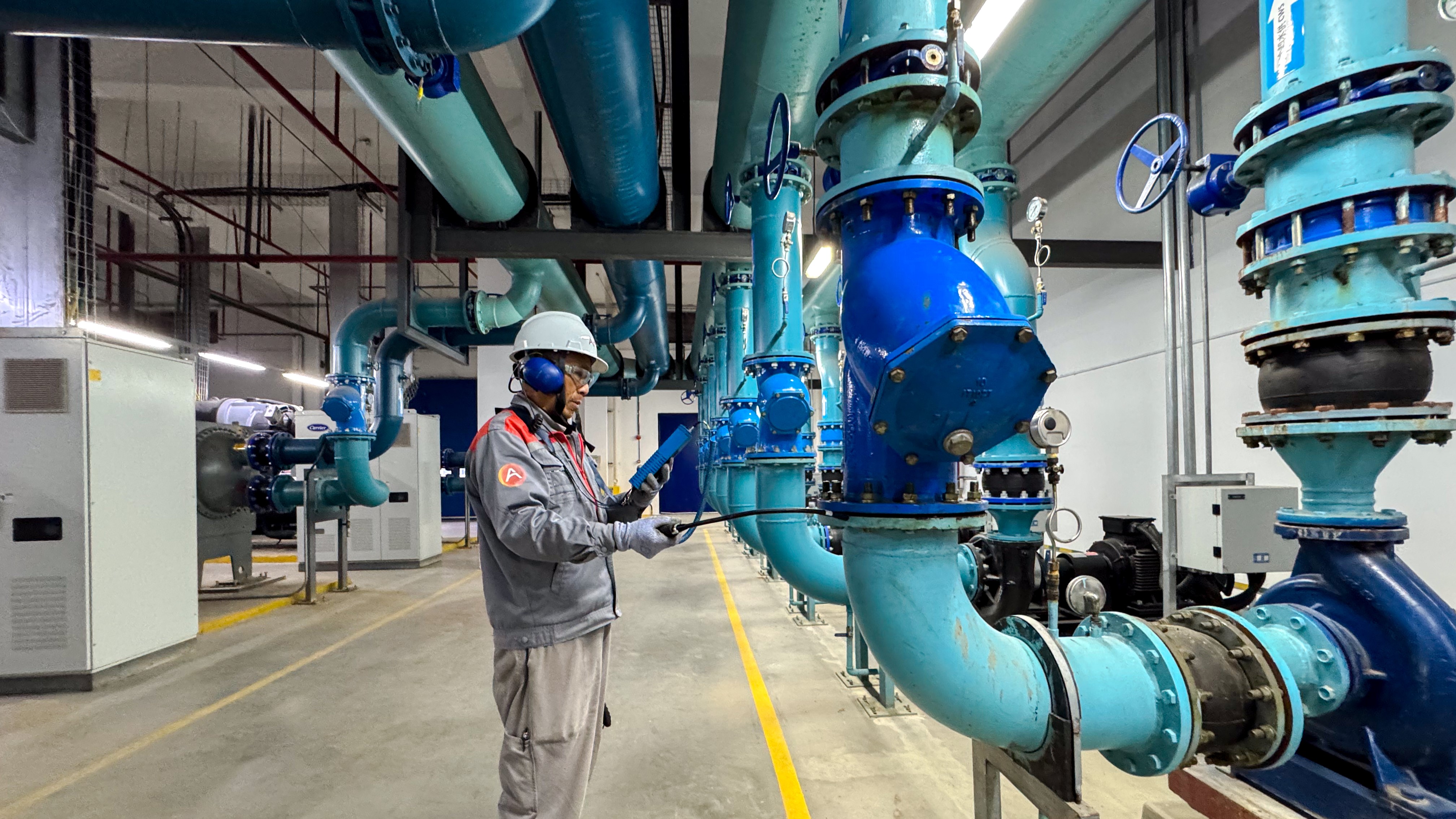
Predictive maintenance uses data, asset history, monitoring systems and condition indicators to anticipate problems before failure occurs. It may involve sensors, IoT data, vibration analysis, thermal monitoring, pressure monitoring, energy data, temperature and humidity tracking, or analysis of historical work orders.

The value of predictive maintenance is responsiveness. Instead of relying only on a fixed calendar, the maintenance team can act when data suggests that an asset is moving toward abnormal performance.

For example, predictive monitoring on a compressed air system may help identify pressure loss, leakage, abnormal energy use or declining performance. Monitoring a cooling system may reveal patterns that indicate fouling, pump stress or inefficient operation. In cleanroom or pharmaceutical environments, environmental data can help protect production quality and compliance.

Predictive maintenance works best when it is connected to clear workflows. Data alone is not enough. The maintenance team needs a process for reviewing alerts, assigning tasks, verifying completion and updating the asset record.

3. Corrective maintenance

Corrective maintenance is repair work carried out after a fault, breakdown or performance issue. It includes emergency repairs, replacement of failed components, troubleshooting, restoration of service and follow-up checks.

Corrective maintenance will always exist. No facility can eliminate every fault. The aim is to reduce unnecessary corrective maintenance by using preventive and predictive approaches well. When a critical system fails unexpectedly, the result may be production slowdown, shutdown, safety exposure, quality issues, excess cost or urgent subcontractor dependency.

In a mature maintenance model, corrective maintenance is tracked carefully. The team should analyze why the fault occurred, whether it was preventable, how fast the response was, what parts were needed and whether the maintenance plan should change.

What systems are included in factory facility maintenance?

The exact scope of factory facility maintenance depends on the sector, site size, production process and regulatory environment. However, most industrial maintenance programs include several core technical systems.

Common factory facility maintenance areas include:

  • Electrical systems: high-voltage and low-voltage distribution, panels, transformers, UPS systems, emergency generators, lighting and power supply.
  • Mechanical and utility systems: HVAC, ventilation, exhaust, compressed air, pumps, boilers, cooling water, chilled water, hot water and refrigerant systems.
  • Water and environmental systems: water supply, drainage, wastewater, sewage treatment, pure water systems, cooling towers and rainwater systems.
  • Safety and building systems: fire-fighting systems, fire alarms, emergency lighting, access control, elevators, building fabric, roofs, doors, windows, external facilities and structural support areas.
  • Specialized production-support systems: cleanroom HVAC, cold storage, medical gas systems, data center cooling, environmental controls, high-purity utilities and other sector-specific infrastructure.

This list is broad because factory maintenance is rarely one discipline. It sits across engineering, facilities management, EHS, compliance, production support and asset performance. That is why the strongest maintenance teams need both technical depth and operational coordination.

What should a factory maintenance plan include?

A good maintenance plan starts with a clear understanding of the site’s assets. Before deciding how often each system should be inspected or which technologies should be deployed, the facility team needs to know what equipment exists, where it is, what condition it is in and how important it is to operations.

The maintenance plan should include:

  • Asset register and equipment mapping: a clear inventory of systems, equipment, location, technical details, service history and ownership.
  • Criticality ranking: classification of assets based on production impact, safety risk, compliance requirements, energy impact and business continuity.
  • Maintenance schedule: planned inspections, servicing, statutory checks, replacement cycles and routine tasks.
  • Digital work order process: task assignment, technician reporting, photos, timestamps, approvals and completion records.
  • KPI and SLA tracking: response time, completion rate, downtime, repeat failures, energy performance and maintenance backlog.
  • Compliance documentation: inspection records, certificates, audit trails, EHS records and traceable handover documents.
  • Emergency response process: escalation routes, spare parts planning, vendor coordination and after-hours support.
  • Continuous improvement: root-cause analysis, recurring issue tracking, energy optimization and maintenance plan updates.

This is where maintenance becomes more than a checklist. The plan should reflect the operating reality of the factory. A high-risk asset may require frequent inspection, digital monitoring and detailed reporting. A lower-risk asset may only need standard scheduled maintenance. The right model is targeted, proportionate and transparent.

Why asset criticality matters

One of the most important decisions in factory maintenance is how to prioritize resources. Not every asset carries the same risk, and the same type of asset can have very different importance from one site to another.

A door is a simple example. In one facility, a door may be a minor building component. In another, it may be a critical access point for daily logistics, production flow, safety separation or shipment of finished goods. The maintenance requirement depends on how the factory actually operates.

The same principle applies to larger technical systems. A cleanroom HVAC system in a semiconductor or pharmaceutical facility is mission-critical because it protects temperature, humidity, air quality and production conditions. A compressed air system may directly affect tools, automation and product quality. A UPS or emergency generator may protect critical operations during a power issue. Fire systems, water treatment, medical gases or high-voltage systems may carry major safety and compliance implications.

This is why effective factory facility maintenance should begin with criticality. The team should understand the flow of work, people, materials and equipment across the site. It should consider production schedules, logistics routes, safety requirements, compliance obligations and the real consequences of asset failure.

The trick is not to apply the same maintenance model everywhere. The trick is to understand the specific mix of assets, risks and operating conditions at a particular site, then build a maintenance plan around that reality.

The role of digitalization and AI in factory maintenance

Digitalization is now central to modern factory maintenance. Many factories are still moving away from informal or fragmented systems: paper records, spreadsheets, email chains, social messaging apps or technician knowledge that sits outside any structured platform. These methods may work for simple coordination, but they become risky when a site needs traceability, audit readiness, performance analysis and long-term asset history.

A maintenance platform changes this by bringing work orders, asset records, inspection tasks, technician reports, photos, timestamps, approvals, spare parts data and performance dashboards into one operating environment. This gives facility managers a clearer view of what has been done, what remains open, which assets are creating repeated issues and where maintenance planning needs to improve.

This is also where AI is becoming increasingly important. Factory maintenance creates large volumes of information: work orders, inspection notes, manuals, equipment history, sensor data, energy data, compliance records and subcontractor reports. In traditional systems, this information can be difficult to search, compare or interpret. AI can help teams process these sources faster, identify patterns, summarize asset history and support better decision-making.

For factory leaders, the opportunity is significant. Sites do not need to remain trapped in slow, manual systems simply because the data is complex or scattered. A platform such as Akila can help structure and interpret maintenance information, connecting daily operations with asset performance, reporting and future optimization.

However, technology only creates value when it is connected to daily work. A dashboard that no one uses will not improve maintenance. A sensor alert that does not trigger a clear workflow will not prevent failure. The real value comes from linking data to action: planning, dispatch, completion, verification and improvement.

Compliance, safety and documentation

Factory facility maintenance also plays a major role in compliance. In regulated and high-risk sectors, maintenance records are part of the site’s operating credibility.

Automotive, electronics, pharmaceutical, medical device, food, healthcare and advanced manufacturing facilities often need strong documentation to support audits, client requirements, insurance, EHS obligations and regulatory inspections. Maintenance teams must be able to prove that inspections were completed, issues were addressed, equipment history was recorded and corrective actions were followed.

This builds directly on digitalization. A structured platform makes maintenance work easier to trace, verify and report. It reduces the risk of missing records, unclear handovers or fragmented documentation. That matters during audits, management changes, supplier changes, expansion projects and emergency investigations.

Without proper documentation, the site can lose technical memory. A digital, traceable maintenance model reduces that risk by preserving records and making asset history easier to access.

What to look for in a factory maintenance partner

A factory maintenance partner should bring more than technicians. The right partner should understand industrial operations, critical systems, compliance pressure, production risk and the need for clear reporting.

For manufacturing sites, useful capabilities include:

  • experience across complex industrial facilities and technical systems;
  • flexible team models, from embedded site teams to targeted technical support;
  • preventive and predictive maintenance capability;
  • digital reporting, asset tracking and transparent work-order management;
  • strong EHS and compliance governance;
  • regional coverage and access to specialist expertise;
  • ability to manage subcontractors, vendors and improvement projects.

This is particularly important across Asian industrial markets, where manufacturing footprints can be spread across multiple cities, industrial parks and supplier ecosystems. A maintenance partner needs local execution capability, but also enough structure to standardize performance across sites.

About Aden Services

Aden Services is the facilities and technical services division of Aden Group, founded in 1997. With almost 30 years of experience supporting complex buildings, industrial sites and mission-critical facilities, Aden Services has built deep operational capability across facilities management, technical maintenance, energy services and industrial environments.

Aden Services supports clients across sectors including automotive, electronics, pharmaceutical manufacturing, healthcare, data centers, commercial buildings, industrial parks and advanced manufacturing. Its technical services teams combine on-site expertise, regional support, standards-based governance and digital tools powered by Akila, Aden Group’s building intelligence platform.

This approach allows Aden Services to support both daily maintenance operations and more advanced technical asset strategies, from preventive maintenance planning and digital work orders to critical system monitoring, compliance reporting and continuous improvement.

Final thoughts

Factory facility maintenance includes much more than repairs. It covers the planned, documented and technically competent management of the systems that keep an industrial site running.

The strongest maintenance programs are built around the right balance of preventive, predictive and corrective maintenance. Preventive maintenance provides structure. Predictive maintenance adds intelligence and responsiveness. Corrective maintenance restores performance when faults occur, but should be reduced through better planning, monitoring and asset management.

For factory leaders, the goal is clear: fewer surprises, better uptime, stronger compliance, lower risk and a more transparent view of technical asset performance. A good maintenance model protects the factory today while building a stronger operating base for the future.

Technical Asset Management
Optimize safety, sustainability & reliability in critical systems like HVAC, compressed air and energy
Predictive Maintenance
Identify and respond to problems in your equipment long before they become serious issues

Why integrated facility management matters in industrial parks

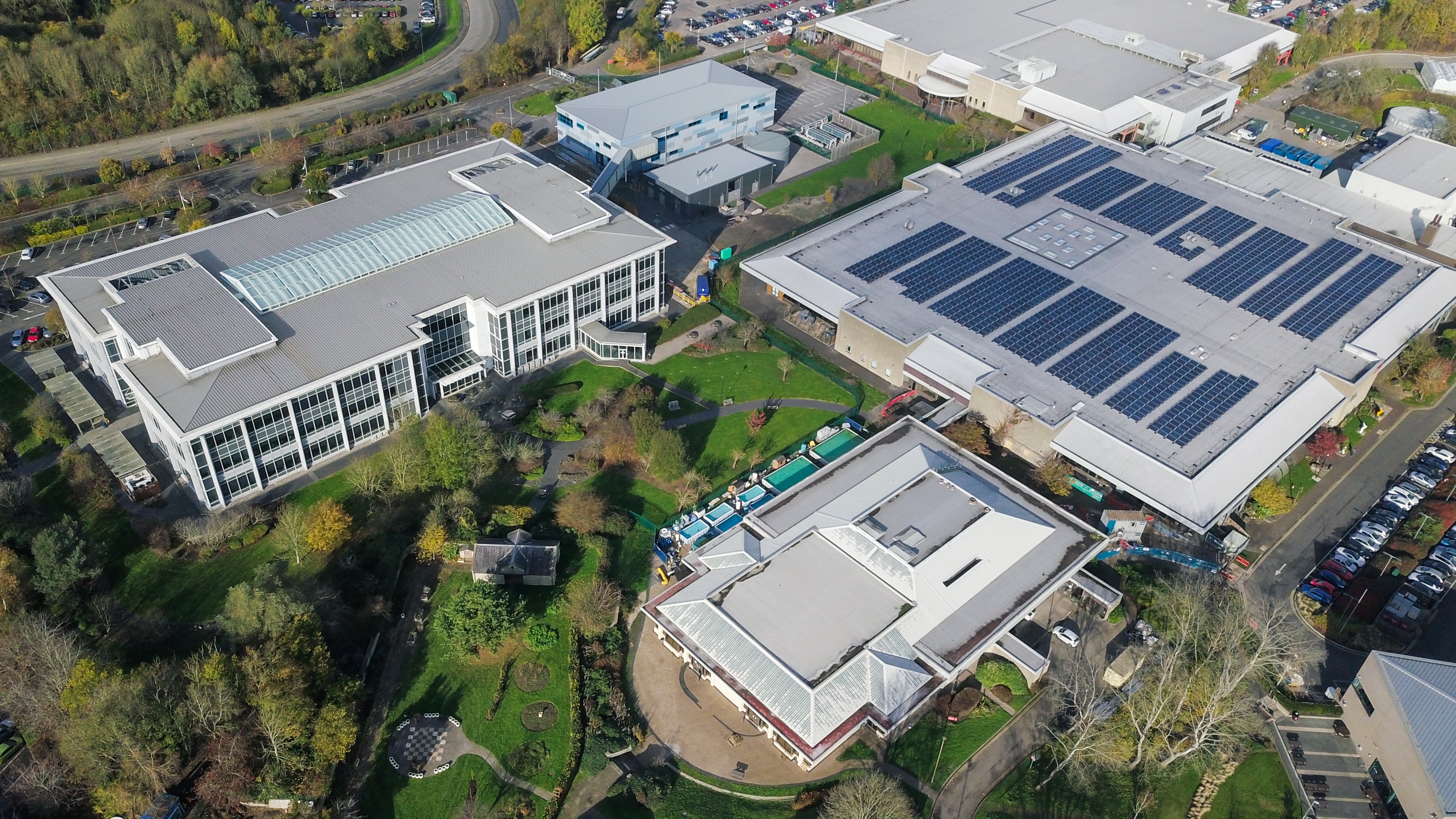
Industrial parks are complex operational environments. This complexity manifests in daily activities: the movement of people and vehicles, production requirements for uninterrupted utilities, and equipment running continuously under pressure. Many sites include dormitories, canteens, and logistics zones, which adds layers of coordination that increase management difficulty.

The challenge is not any single issue, but the cumulative effect of minor operational problems. Delays at access points, inconsistent service standards, and reactive maintenance can quickly create operational inefficiency. Over time, this affects both productivity and perception.

In many parks, these issues are intensified by fragmented service models. When security, cleaning, and maintenance are handled by separate vendors, operational teams must coordinate across multiple layers. This increases workload while making accountability difficult to define.

This is where Integrated Facility Management (IFM) provides a solution. By introducing a single operating framework, IFM aligns standards, reporting, and responsibilities under one structure. The result is improved management clarity, consistent service delivery, and reduced administrative costs for clients.

From fragmented services to one operating framework

IFM is not simply about bundling services. It is about creating a single operating framework across the site, with aligned standards, shared reporting systems, and centralized accountability.

Instead of managing multiple vendors, clients work with one strategic partner responsible for site performance. This reduces the coordination burden on internal teams and ensures consistent service levels. More importantly, it brings predictability. When roles are defined and processes are aligned, issues are easier to identify and resolve. Management teams can spend less time addressing immediate failures and more time focusing on core operations.

What IFM looks like in practice

On site, IFM synchronizes services that are often already in place but lack coordination.

The difference lies in management methodology. A strong IFM setup utilizes clear SOPs, measurable KPIs, and standardized escalation paths. Contractors are managed under the same framework, and HSE practices are applied consistently across the entire site. This reduces variability and gives clients an accurate assessment of site performance.

Why HSE and operational control matter

In industrial environments, safety is closely tied to operational continuity. An incident rarely stays isolated. It can disrupt production, trigger audits and create reputational risk. Maintaining strong HSE performance therefore depends on consistent standards across the whole site.

Fragmented service models make this more difficult. Different vendors may follow different procedures, and responsibility can become unclear.

Under an IFM model, safety is managed as part of a unified system. Procedures are standardised, reporting lines are clearer, and supervision is more consistent. While this does not eliminate risk, it makes it easier to manage. At the same time, stronger operational control helps address issues earlier. Equipment failures, access bottlenecks or service gaps can be identified and resolved before they escalate into larger problems.

Creating a foundation for improvement

Once a site is stable and well managed, further improvements become easier to implement.

Energy management is one example. With better visibility over utilities and operations, it becomes possible to identify inefficiencies and control costs more effectively. Maintenance can also evolve from reactive to predictive approaches, helping reduce downtime and extend the life of critical assets. Digital tools, from video analytics to integrated platforms, are more effective when applied within a coherent operating model rather than across disconnected systems.

In this sense, IFM is not the end goal. It is the foundation that makes ongoing optimisation possible.

A practical view from Aden Services in Xi’an High-Tech Industrial Park

The value of this integrated approach is perfectly illustrated by the NXpark high-end auto parts industrial base in Xi’an. Located in the Xi’an High-tech Zone, this flagship project for Aden’s Industrial New Infrastructure brand spans 82,000 square meters.

At Xi’an High-Tech Industrial Park, Aden Services provides a comprehensive IFM solution that serves as a blueprint for modern industrial management:

  • Technical Asset Management (TAM): Through rigorous daily inspections, annual maintenance, and spare parts management, the team ensures all facilities operate at peak efficiency with zero friction for tenants.
  • Digitalized Security & Safety: The site utilizes a comprehensive digital system covering CCTV monitoring, visitor management, and fire/emergency response to provide 24/7 protection and compliance.
  • Environmental Excellence: By integrating groundskeeping and green space management into the core program, the project enhances both the site’s aesthetic professional environment and its long-term sustainability.

Rethinking industrial management

Industrial parks will continue to grow in scale and complexity. As expectations around safety and efficiency increase, the way these environments are managed becomes more important. For many organizations, the question is how support functions should be managed to maximize efficiency.

IFM offers a practical answer. By bringing structure, accountability, and visibility to site operations, it helps reduce inefficiency and improve consistency. From there, better energy performance, stronger digital oversight, and ongoing operational improvements become attainable.

Smart buildings: from predictive maintenance to AI optimization

Driven by global carbon neutrality goals and the rise of smart cities, buildings are no longer just passive spaces—they are evolving into intelligent systems that can sense, analyze, and make decisions. Through the integration of IoT, big data, and artificial intelligence, smart buildings are moving from predictive maintenance toward full AI-driven optimization. This transformation not only reduces energy consumption and operating costs but also enhances sustainability and user experience.

Market growth and the value of predictive maintenance

The smart building market is undergoing rapid expansion. According to Grand View Research, the global smart building market reached USD 126.58 billion in 2024 and is projected to grow to USD 571.28 billion by 2030, representing a compound annual growth rate (CAGR) of 30.4%. This underscores how digital intelligence has become a core driver of the building industry.

Predictive maintenance, one of the most important applications of smart buildings, leverages sensors and AI models to continuously monitor equipment conditions and issue alerts before failures occur. This proactive approach reduces maintenance costs and minimizes unplanned downtime. Fortune Business Insights reports that the global predictive maintenance market was valued at USD 10.93 billion in 2024 and is expected to reach USD 70.73 billion by 2032, with a CAGR of 26.5%.

The advantages of predictive maintenance are undeniable:

  • Reduced Maintenance Costs: Studies indicate that implementing PdM strategies can cut maintenance expenditures by approximately 25%–30%.
  • Enhanced Operational Stability: It can reduce unexpected equipment downtime by 35%–50%.
  • Extended Asset Lifespan: Timely identification and resolution of potential issues contribute to extending the overall service life of equipment.

For facilities with stringent reliability requirements—such as commercial complexes, hospitals, and industrial parks—this proactive management capability not only lowers costs but also safeguards operational security and service quality.

Aden’s multi-signal predictive maintenance solution:

Leveraging years of industry expertise, Aden Facilities Services has developed a Predictive Maintenance solution based on multi-signal analysis, which includes:

  • Vibration Signal Detection: Professional vibration analyzers evaluate vibration patterns to diagnose equipment, revealing the type and severity of mechanical faults.
  • Temperature Signal Detection: Infrared thermography captures temperature changes to assess equipment health, helping to identify potential overheating issues.
  • Acoustic Signal Detection: Ultrasonic detectors analyze high-frequency sound waves to evaluate equipment condition, including lubrication levels, leaks, and partial discharge issues.

Through this “Vibration + Infrared + Ultrasonic” intelligent diagnostic system, Aden provides enterprises with comprehensive, high-precision, and predictive equipment health management services, helping them achieve “zero unplanned downtime” and highly efficient operations.

AI-driven optimization: moving beyond maintenance to energy and operational synergy

Building upon the equipment health and operational data gathered by predictive maintenance, AI further propels smart buildings from the “fault warning” (reactive) stage toward the “proactive decision-making” (optimizing) stage.

In Energy Management, AI’s core value lies in dynamic balance. It integrates and analyzes indoor occupancy patterns, real-time energy consumption, and weather data to dynamically adjust building control systems (such as HVAC, ventilation, and lighting), thereby minimizing overall energy usage.

According to a review published in the journal Energies, the potential for energy savings can be up to 37% when AI is used to optimize HVAC control in office buildings. In practical applications, such as factories or commercial properties, AI models controlling central air conditioning and energy systems typically achieve energy savings of about 5%–6%. This not only cuts energy expenditure but also provides powerful support for companies to meet their carbon reduction goals.

AI’s application also extends to Space Utilization and Integrated Operations Management. By analyzing personnel flow and room usage, the system can automatically adjust lighting and ventilation to balance energy saving with occupant comfort.

In operations management, AI can combine PdM results, staffing schedules, and spare parts inventory to generate optimal maintenance plans, further reducing labor and resource waste. For managers overseeing multiple buildings or campuses, AI platforms can integrate data from diverse systems—including energy, security, and cleaning—to achieve comprehensive, coordinated optimization. This capability, integrating systems rather than managing single devices, is becoming the core competitive advantage of smart buildings.

Future trends and return on investment

While challenges such as data quality, system compatibility, and initial investment persist in the smart building sector, the industry’s trajectory toward higher-level intelligence is clear. In the coming years, buildings will completely move past the initial “alarming” stage, fully embracing the “decisive and optimizing” intelligence phase, and evolving from single-system automation to whole-lifecycle, cross-system collaborative intelligence.

To capitalize on this trend, Aden will continue to leverage its accumulated experience and technological strengths in predictive maintenance while vigorously promoting the development of its Akila Digital Twin Platform, provides portfolio owners with precise performance insights to help them optimize asset operations, improve financial performance, and drive more data-driven decision-making. Through enhanced visualization and intelligence in asset management, enterprises stand to benefit significantly from clearer returns on investment, energy savings, and better cost control.


The future of cleaning services is digital

How smart tools, data, and intelligent management are transforming an industry long overdue for disruption.

The cleaning services industry is entering a new era—one defined not by mops and brooms, but by smart sensors, AI-enabled machines, and real-time operational data. Long seen as a labor-intensive sector, cleaning is now emerging as a leader in digital transformation, driven by growing expectations for performance, sustainability, and transparency.

In this article, we explore how digital management platforms, intelligent equipment, and data-centric strategies are not just optimizing service delivery—but fundamentally redefining what excellence in cleaning looks like.


Digital Management: The Engine Driving Operational Excellence

At the heart of modern cleaning operations lies digital management—an integrated approach that connects people, processes, and machines. Cloud platforms, IoT, and big data are enabling cleaning teams to plan, monitor, and adapt with unprecedented precision.

The results speak for themselves:

  • 30% boost in workforce productivity through automated task scheduling and real-time oversight.
  • Over 90% customer satisfaction thanks to transparent service tracking and faster response times.
  • 40% quicker task execution driven by smart tools and optimized resource deployment.

But digital transformation is more than a technology upgrade. It requires a strategic rethink: companies must invest in change management, employee upskilling, and end-to-end process redesign. Those that do will unlock scalable efficiencies and stay ahead of competitors still reliant on manual operations.


 Smart Devices: Automating Precision and Consistency

Smart cleaning equipment is now a cornerstone of high-performance operations. From autonomous floor scrubbers to sensor-equipped vacuums, today’s devices do more than clean—they think, adapt, and learn.

Key advantages include:

  • 50% higher operational efficiency than manual cleaning, reducing labor dependency.
  • 95% task accuracy enabled by AI-powered navigation and real-time adjustments.
  • 10,000+ operational hours with predictive maintenance, lowering lifecycle costs.

For many organizations, integrating these devices is a game-changer. But it requires a clear implementation roadmap—one that aligns equipment, digital platforms, and training protocols to maximize return on investment.


Data-Driven Transparency: Building Trust Through Insight

Digital cleaning services are inherently more transparent. Through mobile dashboards and client portals, customers can monitor KPIs in real time—from service status and task completion to incident reports and cost breakdowns.

The impact is measurable:

  • 60% faster order processing, reducing downtime and enhancing responsiveness.
  • 95% customer satisfaction with on-demand reporting and visible service quality.
  • 20% overall efficiency gain through improved coordination with suppliers and partners.

However, with great data comes great responsibility. Robust cybersecurity, encrypted communications, and compliance with data privacy laws are essential to building and maintaining customer trust.


Looking Ahead: A Smarter, Greener, More Responsive Industry

The digitalization of cleaning is still gaining momentum. In the years ahead, we can expect even greater convergence of AI, IoT, and sustainability goals. From carbon tracking and energy-efficient devices to personalized service models powered by predictive analytics, cleaning will become smarter, greener, and more tailored to specific client needs.

For cleaning service providers, the message is clear: adapting now isn’t optional—it’s essential. Those who invest in digital infrastructure today will not only improve service quality but also unlock new business models and long-term competitive advantage.


How big data is transforming facility management into a strategic powerhouse

Once viewed as a cost center, facility management (FM) is rapidly evolving into a data-driven engine for business performance. The digital transformation of the built environment—powered by big data and analytics—is unlocking new levels of efficiency, sustainability, and strategic value.

By harnessing real-time and historical data, FM teams are no longer just responding to problems—they’re anticipating them, optimizing operations, and shaping long-term outcomes. Below, we explore three of the most impactful ways big data is redefining facility management—with proven results and measurable ROI.


1. Smart Energy Management: Real-Time Savings, Continuous Optimization

Energy remains one of the largest operational expenses in facility management. Traditional practices—relying on static reports and manual meter readings—often leave savings untapped and issues unnoticed.

Today, data-driven energy management changes the game. By combining smart meters, real-time monitoring, historical benchmarks, and AI-powered control systems, facilities can identify anomalies, forecast loads, and respond to dynamic electricity pricing automatically.

Proven impact:

  • Smart HVAC controls combined with AI reduced annual electricity costs by ¥1.2 million—a savings of 18%.
  • Load forecasting algorithms cut peak demand charges in factories by 23%.
  • Data-optimized cooling systems improved Power Usage Effectiveness (PUE) from 1.6 to 1.3, saving over 4 million kWh per year.

These aren’t static improvements—they’re part of self-learning systems that adapt to seasonal changes, occupancy patterns, and equipment aging. With granular insight and automation, energy management becomes a continuous performance lever.


2. Predictive Maintenance: From Downtime to Uptime-as-a-Service

Conventional maintenance swings between two costly extremes: servicing assets too early or reacting only when they break. Big data offers a smarter approach—predicting equipment failure before it happens.

By collecting sensor data (vibration, temperature, energy use) and correlating it with historical patterns, predictive models can flag early warning signs and optimize maintenance schedules.

Real-world benefits:

  • Conveyor systems in airports achieved 92% fault prediction accuracy, enabling 70% faster repairs.
  • In hospitals, proactive part replacements in HVAC systems avoided costly downtime and saved ¥800K annually.
  • In manufacturing, predictive models reduced breakdowns by 45% and boosted maintenance efficiency by 60%.

The result is longer asset lifespans, fewer service disruptions, and more strategic maintenance contracts. In fact, predictive insights are paving the way for “performance-based” service models—where providers are paid based on uptime, not time on-site.


3. Space Optimization: Unlocking Hidden Value in the Built Environment

Space is often an underleveraged asset. Big data analytics—powered by occupancy sensors, Wi-Fi tracking, and heatmap visualizations—now allow FM teams to understand how spaces are truly used, and how to make them work harder.

Strategic outcomes:

  • Offices using hot-desking analytics cut unused floor space by 30%, saving ¥5 million annually in rent.
  • Retailers optimized store layouts with customer movement data, increasing premium-zone lease value by 25%.
  • In logistics, AGV route optimization improved warehouse throughput by 40% and cut labor costs by 15%.

Space optimization isn’t just about cost—it’s also about experience. For example, data-driven redesigns of airport security checkpoints reduced passenger wait times by 35%, enhancing both efficiency and satisfaction.


Big Data Is More Than a Tool—It’s a Mindset Shift

Big data doesn’t just improve operations; it redefines the mission of facilities management. With the right digital infrastructure, FM leaders become strategic advisors—impacting cost structures, sustainability targets, employee experience, and even revenue.

The question for organizations is no longer whether to adopt big data in facilities, but how quickly they can build the capability. One thing is clear: in the future of FM, data isn’t a bonus—it’s a baseline.

How Aden Services elevating Santoni’s workplace dining to a strategic asset

As manufacturing leaders elevate their standards not only in production but also in workplace experience, the role of food service is shifting. What was once a functional necessity is now becoming a strategic pillar of employee well-being, brand culture, and operational excellence.

This was the vision behind Santoni’s Shanghai campus—a project that set a new benchmark in the industry. Santoni, an Italian pioneer in circular knitting technology, sought to build a next-generation R&D and manufacturing center that integrated innovation and care into every detail, including food service.

To realize this vision, Santoni turned to Aden Services—a trusted partner in delivering comprehensive, digitally enabled food solutions. The result: a canteen that is not only operationally seamless, but a space of hospitality, wellness, and design-driven efficiency.

From Blueprint to Breakfast: A Full-Scope Food Services Journey

The Santoni project reflects Aden’s integrated approach to food service—from early-stage consulting and design to build-out and daily operation. This 360-degree model ensured that every decision made in planning translated into lasting value on the ground.

The project was delivered in three phases:

1. Concept & Design

  • Tailored kitchen and dining layout aligned with Santoni’s Italian roots
  • Space planning focused on flow, comfort, and operational logic
  • Built-in flexibility to accommodate diverse culinary offerings

2. Construction & Fit-Out

  •  MEP coordination and equipment sourcing for long-term efficiency
  •  Full regulatory compliance and licensing
  •  Quality-focused project management ensuring on-time delivery

3. Daily Operations

  •  On-site nutritionist and menu planning for balanced offerings
  •  Rotating menus with European and Chinese fusion, plus a signature gelato bar
  •  Hospitality-trained staff ensuring a premium daily dining experience

This canteen quickly became more than a place to eat—it became a core space where employees connect, relax, and recharge. Its success is a case study in how infrastructure and service design, when done right, can shape culture and performance.

Elevating Design with Digital Engineering

A defining feature of the Santoni collaboration was the use of 3D digital engineering during the design phase. Aden’s team developed a full digital model of the kitchen and dining area, moving beyond 2D drawings to immersive planning.

This method empowered both client and contractor teams to: • Identify spatial inefficiencies and resolve bottlenecks

  •  Optimize staff workflows before operations begin
  •  Prevent costly change orders or retrofits during construction

“It might sound small, but that early insight is huge. It means no costly changes later, no functional compromises. It’s how you ensure smooth service and create a user-friendly space from day one.”

— Jeroen Caspar Vis, Head of Business Development, Aden Food Service

Redefining Workplace Dining: A Strategic Asset for Manufacturing Leaders

Santoni’s new campus is a testament to how thoughtful investment in food services can deliver impact far beyond the plate. It supports employee satisfaction, brand identity, and operational efficiency, while setting a new standard for what food spaces can offer in the high-end manufacturing sector.

For other manufacturers seeking to enhance their employee environment, the message is clear: food service is no longer a back-end function. It is a visible, strategic touchpoint—and a space where innovation can thrive.

Watch the full story video here:


How circular strategies are transforming facilities management?

The circular economy is no longer just a concept for environmentalists—it’s a game-changer for businesses seeking efficiency, cost reduction, and long-term sustainability. In facilities management, adopting circular economy principles is proving to be a strategic advantage, helping companies optimize resources, reduce waste, and improve energy efficiency. So, what does this transformation look like in practice? Let’s explore how circular strategies are reshaping the way we manage facilities.

The Power of Resource Recycling

One of the core principles of the circular economy is resource efficiency—ensuring that materials are reused, repurposed, or recycled rather than discarded. In facilities management, this translates to smarter waste management and innovative material cycles that reduce dependency on virgin resources.

Consider the shift from a linear “take-make-dispose” model to a closed-loop system where waste materials are reintegrated into production cycles. Data demonstrates the tangible impact of this shift:

  • Replacing virgin resources with recycled materials—such as scrap steel, plastics, and paper—can cut energy consumption by up to 70% and CO₂ emissions by 60%.
  • Companies using circular economy models in solid waste management achieve resource recovery rates exceeding 80%.
  • Businesses implementing recycling initiatives can save millions annually in raw material costs while significantly reducing waste disposal expenses.

The financial and environmental benefits are clear. By investing in resource recycling, companies not only lower operational costs but also contribute to global sustainability goals. With advancing technology and stronger policy support, resource recovery will continue to evolve, becoming even more efficient and intelligent.

Smarter Energy Management: The Key to Efficiency

Energy efficiency has long been a priority in facilities management, but circular economy thinking is pushing companies to go further. Beyond simple energy-saving measures, facilities are now integrating sophisticated energy optimization techniques, including:

  • Smart monitoring systems: Real-time data collection and AI-driven analytics to optimize energy consumption.
  • Waste heat recovery: Transforming excess heat into reusable energy through heat pumps and cogeneration systems.
  • Energy-sharing models: Industrial parks and business districts collaborating to optimize energy distribution and minimize waste.

The numbers speak for themselves:

  • Industrial facilities leveraging waste heat recovery improve energy efficiency by over 30%.
  • Oil and gas companies adopting circular energy strategies cut annual energy consumption by approximately 20%.
  • Shared energy infrastructure projects can slash energy costs by millions while reducing carbon emissions by thousands of tons.

As businesses seek to align with net-zero targets, precise energy management is emerging as a competitive differentiator. Companies that optimize energy use not only cut costs but also future-proof their operations against fluctuating energy prices and carbon regulations.

From Linear to Circular: Rethinking Facility Design and Operations

Adopting a circular economy mindset requires more than just optimizing existing processes—it demands a fundamental shift in how facilities are designed, built, and managed. Forward-thinking organizations are embracing circular models that prioritize:

  • Sustainable facility design: Incorporating energy-efficient materials and green building techniques.
  • Resource-sharing ecosystems: Businesses collaborating within industrial parks to enhance efficiency.
  • Digital transformation: AI-powered facility management tools for smarter operations.

Data shows that cities adopting circular economy practices extend the lifespan of infrastructure by over 20%, while industrial parks implementing circular models improve resource efficiency by approximately 40%. In one eco-industrial park, the establishment of a circular economy supply chain cut waste emissions by 50% while boosting economic returns by 30%.

The Future of Facilities Management is Circular

Facilities management is at a turning point. With climate goals intensifying and businesses under growing pressure to reduce environmental impact, the circular economy is no longer a niche concept—it’s a necessity. By closing resource loops, improving energy efficiency, and rethinking traditional facility models, companies can unlock new levels of sustainability and operational excellence.

The question is no longer if businesses should adopt circular economy principles, but how quickly they can integrate them into their operations. As innovation accelerates and regulatory frameworks evolve, early adopters will gain a significant competitive edge. Are you ready to make the shift?

How does smart facility management transform the workplace and fuel business success?

In today’s fast-evolving business landscape, organizations recognize that employee well-being and productivity are critical to long-term success. A well-designed office environment is more than just a functional workspace—it is a strategic asset that directly influences performance, engagement, and efficiency.

One of the most effective ways to achieve this balance is through Integrated Facility Management (IFM). By leveraging digital tools and smart technologies, IFM optimizes space utilization, streamlines operations, and creates an environment where employees can perform at their best.

This article explores how organizations can enhance both workplace efficiency and employee satisfaction through data-driven facility management.

Why does smart facility management matter?

An inefficient work environment—characterized by frequent equipment failures, poorly planned workspaces, and cumbersome processes—can significantly hinder productivity. IFM addresses these challenges by implementing digital solutions that automate maintenance, optimize resource allocation, and ensure seamless operations.

Key benefits of smart facility management:

  • Reduced downtime and operational disruptions: Digital IFM solutions enable real-time equipment monitoring, reducing failure rates by up to 30%. This minimizes unexpected breakdowns, ensuring that employees can focus on their work without unnecessary interruptions.
  • Optimized workspace utilization: Intelligent space management platforms enhance the efficiency of workstations and meeting rooms, improving utilization rates by up to 40%. This eliminates wasted space and allows employees to work in a structured, well-organized setting.
  • Increased task efficiency: A well-planned office layout, coupled with automated task management, can improve overall work efficiency by 25%. Smart allocation of resources ensures employees have the necessary tools and environment to maximize productivity.

One of the biggest challenges in facility management is maintaining real-time visibility over equipment performance. Traditional maintenance strategies often rely on fixed schedules, leading to either unnecessary servicing or unexpected failures. IoT-enabled predictive maintenance solves this issue by continuously monitoring equipment health and detecting anomalies before they escalate, ultimately reducing repair costs and extending asset lifespan.

Creating a workplace that enhances employee well-being

The quality of the office environment has a profound impact on employee well-being, engagement, and overall performance. Studies indicate that 82% of office workers report experiencing physical discomfort—such as headaches and fatigue—due to suboptimal workplace conditions. Addressing these issues requires a comprehensive approach that integrates smart environmental controls and ergonomic workspace design.

How IFM enhances workplace well-being:

  • Healthier work environments: Smart sensors monitor and regulate indoor air quality, temperature, and lighting in real time, reducing the risk of discomfort and improving focus.
  • Improved space efficiency: Intelligent space solutions increase workspace utilization by 20%, helping reduce stress and fatigue while fostering a more structured and efficient work environment.
  • Personalized workplace adjustments: Adaptive environmental controls use data-driven insights to tailor lighting, temperature, and air circulation based on employee preferences and occupancy patterns.

Furthermore, implementing sustainable building practices benefits both employees and the organization. By integrating energy-efficient systems and smart energy management, companies can reduce energy consumption without compromising comfort, creating an eco-friendly workplace that aligns with corporate sustainability goals.

Stable and well-maintained operation matters

A stable and well-maintained office environment is essential for operational efficiency and employee satisfaction. Frequent system failures—whether in IT infrastructure, HVAC systems, or essential office equipment—can disrupt workflow, reduce morale, and create a stressful work environment.

To address this, companies are increasingly turning to predictive analytics and IoT-driven maintenance strategies that ensure operational reliability. Research shows that implementing data-driven maintenance can extend average equipment uptime by 30%, providing employees with a consistent and dependable work setting.

Key strategies for ensuring workplace stability:

  • Proactive equipment monitoring: IoT sensors provide continuous status updates on critical systems, allowing for early issue detection and preventive action.
  • AI-powered predictive maintenance: Data analytics optimize maintenance schedules, reducing unexpected failures and extending equipment life.
  • Collaboration with facility management experts: Partnering with specialized service providers ensures seamless integration of smart technologies and industry best practices.

When organizations prioritize stable and well-functioning infrastructure, employees can work with confidence, knowing they have the necessary resources to perform efficiently.

Investing in smart facility management is not merely about improving operational efficiency—it is a strategic decision that enhances employee well-being, fosters productivity, and drives long-term business success. Organizations that implement Integrated Facility Management can create an optimized work environment that supports both corporate objectives and employee satisfaction.

By adopting real-time digital monitoring, predictive maintenance, and smart workplace solutions, companies can transform their offices into high-performance workspaces that empower employees and position the organization for sustained growth.

A well-managed workplace is not just an operational necessity—it is a competitive advantage.

3 big benefits of Artificial Intelligence in facility management

As technology continues to advance, artificial intelligence (AI) is finding applications across a growing range of industries, and facility management (FM) is no exception. According to the China Research Institute of Industry, the development of smart cities is creating new opportunities for the FM sector, with IoT, big data, and AI technologies enabling smarter and more efficient services.

This article explores three key advantages of AI in facility management.

1. Predictive Intelligence Reduces Downtime and Costs

AI leverages vast amounts of historical and real-time data to predict equipment failures and maintenance needs. This predictive maintenance reduces unexpected downtime and lowers maintenance costs. For instance, FM systems equipped with machine learning algorithms can anticipate when HVAC systems may fail, enabling preemptive maintenance and uninterrupted operations.

Specifically, AI systems analyze historical and real-time sensor data to identify potential failure patterns, use deep learning models to monitor performance metrics and calculate failure probabilities. These systems also provide detailed diagnostic insights and generate automated maintenance schedules for technicians.

Technicians can prepare tools and spare parts in advance and schedule maintenance during low-impact times, minimizing business disruptions. This approach not only prevents production interruptions but also optimizes maintenance planning, reducing unnecessary work and costs.

Key benefits include enhanced equipment reliability, operational efficiency, and prolonged asset lifespan. Research highlights:

    • Predictive maintenance programs can lower maintenance costs by 30% and eliminate up to 75% of failures.
    • Predictive maintenance reduces downtime by 5-15% and improves labor productivity by 5-20%.


2. Energy Optimization for Cost Reduction

AI-driven energy management systems use smart sensors to monitor energy consumption and equipment performance in real-time. By analyzing this data, AI adjusts equipment parameters to optimize energy use, significantly improving energy efficiency, reducing waste, and lowering costs.

With continuous monitoring and updates to AI models, these systems ensure ongoing optimization of energy usage. AI-enabled energy management allows for precise control, reducing peak energy demands and electricity expenses. Notable results include:

  • AI-powered energy management systems can reduce energy consumption by 15-30%.
  • AI-enabled thermal management can lower data center PUE (Power Usage Effectiveness) from 1.8 to below 1.3.
  • By the end of 2023, energy-efficient buildings in China covered 32.68 billion square meters, with ultra-low and near-zero energy buildings exceeding 43.7 million square meters.

3. Automation Boosts Efficiency and Reduces Labor Dependency

Automation technologies like cleaning robots, drones for building inspections, and AI-driven logistics robots enhance operational efficiency while reducing reliance on manual labor.

  • Cleaning robots handle routine tasks, improving efficiency by over 50% and reducing labor requirements by 30%.
  • Logistics robots optimize material delivery, increasing distribution efficiency by 40% and cutting labor costs by 20%.
  • Overall, automation can reduce labor costs by 40%, minimizing human error and enhancing operational consistency.

With ongoing advancements in robotics, FM will increasingly rely on automation, with robots capable of completing complex tasks independently.

A Transformational Shift in Facility Management

AI is revolutionizing the FM industry by improving efficiency, lowering costs, and enabling smarter, automated operations. As technology evolves, FM will continue to become more intelligent, automated, and efficient, driving sustainable development for businesses and society.


How smart buildings revolutionize facilities management: smarter, greener, and more efficient

With the rapid development of technology, smart buildings have emerged as a shining star in the field of facilities management. Key applications such as automated controls, predictive maintenance, and efficient energy management, significantly enhance management efficiency and living comfort, propelling the construction industry toward a greener and more efficient future.

Key Area 1: The Powerhouse of Automation and Optimization

One of the core strengths of smart buildings lies in their automated control systems, which monitor and manage various equipment within buildings, drastically improving energy efficiency and operational effectiveness. For example:

  • Lighting systems: Automatically adjust brightness based on indoor and outdoor light levels, saving energy while maintaining a comfortable lighting environment.
  • HVAC systems: Intelligently regulate heating or cooling based on indoor temperature, humidity, and occupant distribution, ensuring optimal indoor comfort.

A notable application is in HVAC systems, where cutting-edge technologies like Deep Q-Networks (DQN) allow the system to adjust heating equipment based on environmental inputs such as facial expressions and movements. This approach reduces energy consumption by up to 20% and enhances employee productivity by approximately 15%.

Key Market Insights:

  • The global smart building market was valued at $67.58 billion in 2023.
  • It is expected to reach $404.3 billion by 2032, with a compound annual growth rate (CAGR) of 21.99%.

As IoT, big data, and AI technologies continue to evolve, automated control systems in smart buildings will become increasingly advanced and efficient. Integrating BIM (Building Information Modeling) and digital twin technologies will enable comprehensive control of building systems, further boosting operational efficiency and creating new opportunities for innovation in the construction industry.

Key Area 2: Predictive Maintenance – The Driving Force of Development

Predictive Maintenance (PdM) is a condition-based maintenance strategy that uses IoT devices and sensors to collect data on parameters such as temperature, vibration, pressure, and current. By leveraging big data analytics and machine learning, it predicts the likelihood and timing of equipment failures. Compared to traditional scheduled maintenance, this approach significantly reduces downtime, extends equipment lifespan, and lowers maintenance costs.

Applications Across Industries:

  • Manufacturing: Over 700,000 factories use vibration monitoring to evaluate machine health, identify potential issues, and take timely action.
  • Energy: More than 3,000 power generation facilities rely on vibration monitoring to ensure smooth operations.

In smart buildings, HVAC systems widely adopt predictive maintenance technologies to detect potential failures in advance, reducing downtime and maintenance costs.

 Predictive maintenance is expected to integrate with technologies like blockchain and virtual reality to create comprehensive smart maintenance solutions. By 2026, the global predictive maintenance market is projected to grow from $4 billion in 2023 to $12 billion, reflecting immense growth potential.

Key Area 3: Efficient Energy Management

Real-Time Monitoring:

Energy efficiency hinges on real-time monitoring systems. Smart building energy management systems track consumption across key resources like electricity, water, and gas, providing intuitive analytics to help users identify optimization opportunities.

By considering external factors like real-time energy prices and demand response, the system dynamically adjusts energy usage strategies. During peak demand periods, it proactively reduces non-essential consumption, effectively lowering operational costs. Automation through sensors and actuators further improves energy utilization in HVAC, lighting, elevators, and more.

Predictive Capabilities:

Energy management systems utilize historical data and machine learning to forecast future energy demand and issue timely alerts for potential equipment inefficiencies or failures. This ensures stable and efficient energy system operations, driven by technological advancements, policy support, and growing market demand.

As technology continues to evolve, smart buildings will play an increasingly vital role in creating greener, smarter, and more efficient living spaces. They will also serve as a powerful tool in achieving global climate and sustainability goals.

The widespread adoption of smart buildings is poised to inject fresh vitality into the global construction industry, driving society toward a more intelligent and sustainable future.

Aden’s IFM Solutions: Elevating Campus Experience at Dulwich College Suzhou

The globalization of education has spurred the growth of international schools, where the safety, health, and comfort of campuses have become integral to attracting students and parents. These values align closely with Aden Group’s expertise in providing top-tier IFM services.

With a global presence in nearly 40 locations across 15 major cities, managing over 1.6 million square meters of facilities, and serving nearly 20 million meals annually (as of December 2024), Aden is a trusted partner for educational institutions worldwide.

This case study explores Aden’s collaboration with Dulwich College Suzhou, highlighting innovative solutions that enhance operational efficiency and student experiences.

Digital Innovation in IFM

Pioneering Preventive Maintenance

Aden’s deployment of the Akila data platform at Dulwich College Suzhou has revolutionized campus facility management. Leveraging cutting-edge technologies such as digital twins, IoT, and AI simulations, Akila ensures real-time monitoring and preventive maintenance of critical systems, including HVAC, water supply, and heat pumps. Key features include:

  • Professional Inspections: Ensuring operational efficiency for complex equipment critical to campus safety and comfort.
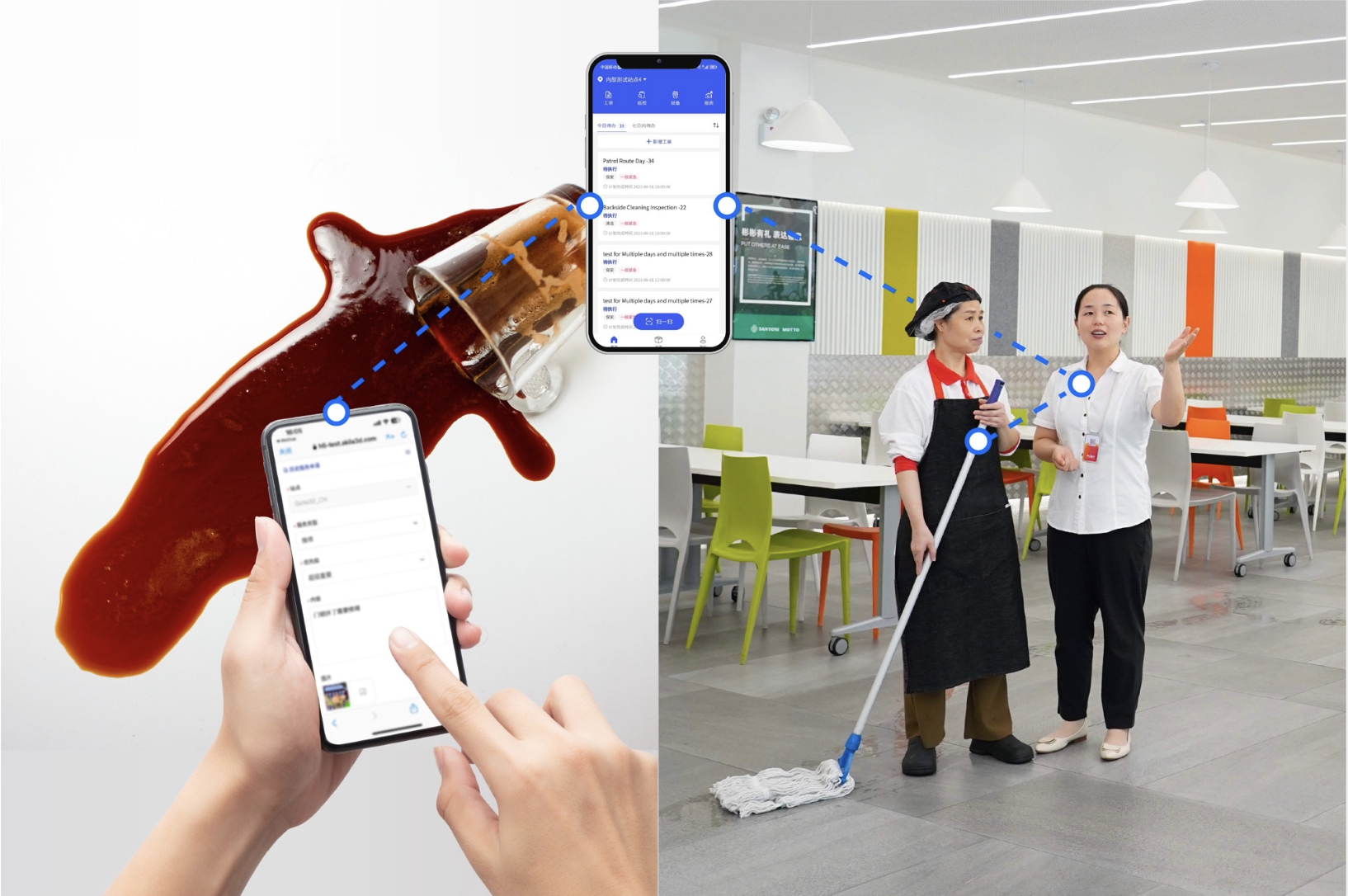
  • Streamlined Daily Repairs: Addressing common issues such as broken furniture or door handles efficiently through automated work orders and technician assignments.

Two-Way Communication for Efficienc

The Akila platform establishes a closed-loop communication channel between school administrators and Aden’s operations team. Clients can track the progress of maintenance requests and receive real-time updates, ensuring swift resolution and enhancing user satisfaction.

Smart Solutions for Cost Efficiency

To maintain the pristine condition of expansive school hallways, Aden employs floor-cleaning robots. This not only guarantees cleanliness but also optimizes resource use, delivering both cost savings and operational efficiency.

Maintaining the “Dulwich Standard”

Aden’s customized IFM strategy aligns with Dulwich College Suzhou’s emphasis on safety, privacy, and educational values. Key initiatives include:

  • Comprehensive Training Programs: Daily on-site training ensures all team members prioritize safety, adhere to strict cleaning protocols, and maintain professionalism.
  • Proactive Risk Management: Aden’s team remains vigilant, addressing unusual situations promptly. For example, if a student’s meal contains medication, the team alerts the school doctor immediately to ensure appropriate action.

This proactive approach ensures that potential risks are identified and mitigated, creating a secure and conducive learning environment.

Aden’s partnership with Dulwich College Suzhou exemplifies how tailored IFM solutions can transform campus operations. Through a combination of advanced digital platforms, professional expertise, and a customer-centric approach, Aden ensures a safe, efficient, and inspiring environment for both students and staff.

Hakim Maaref, Suzhou Area Director, commented, “Dulwich is a world-leading international institution, and for several years, Aden Services has been proud to match their excellence with innovation in facility management.” Together, we are building the future of education—one campus at a time.

About Dulwich College Suzhou

Dulwich College Suzhou is  part of the prestigious Dulwich College network, established in 1619. The institution fosters a global perspective and an open learning environment for students from over 40 countries, ranging from ages 2 to 18. The campus spans 37,813 square meters, complemented by 50,000 square meters of sports fields and advanced air purification systems, ensuring an optimal learning environment.