Risk Optimization: The Secret Weapon of Asset-Centric Maintenance

Welcome back to the second part of our series exploring the unique value of asset-centric technical services. In Part one, we looked at compliance, measurement, and efficiency. Now we move on to Part Two and delve into our second pillar: risk control and risk optimization. Here, we will shed light on:

  • What risk really means for business
  • Why understanding real-site context is key to controlling negative risk
  • How proper control and data around “negative risk” can lead to identification of “positive risk” that actually reduces maintenance costs while keeping your people, assets and business well-protected.

Decoding risk: what it really means for your business

Let’s begin by addressing the big question: What is risk in a business context? In the realm of technical services, risk essentially equates to uncertainty about achieving business objectives. This understanding takes us beyond the traditional notion of risk, which often revolves around tangible outcomes like equipment breakdowns, work stoppages, or penalties.

In technical asset management, our primary focus is mitigating negative outcomes. After all, even the most high-performance machinery doesn’t guarantee top-level performance unless paired with strategies for best practice in O&M. Proactive maintenance, vigilant oversight, and anticipation of breakdowns, paired with the proper data tools are integral to ensuring the smooth continuity of business operations and optimized levels of risk. Without these, businesses expose themselves to substantial dangers from (at the least) unexpected downtime and unnecessary costs, to (at the other extreme) major disruptions to business, reputational damage and accidents with substantial penalties and legal liability.

Why Asset-Centric Maintenance Wins

Before we progress, let’s briefly clarify the difference between traditional “process-oriented maintenance” and our approach of asset-centric maintenance. The former typically involves a one-size-fits-all approach, more often than not paper-based or just barely digitalized. Process-based maintenance tends to assess risk uniformly, regardless of the unique operational context at each facility.

Asset-centric maintenance, on the other hand, starts from principles of resilience and responsiveness, understanding the real conditions and the performance of critical assets must drive the maintenance plan. It also has these key features:

  • It is highly data-driven in execution and decision-making, utilizing AIoT where appropriate and integrating mobile-based tools into the daily work of O&M.
  • It is agile and adaptable, based on the insights and performance patterns revealed by the data
  • It is well-aligned with ESG reporting frameworks, and deeply informed by the principles of ISO 55000:2014 (Asset Management), ISO 45001 (Occupational Health and Safety), and other recognized standards.
  • It takes into account the “third dimension” of maintenance – context. In other words, it understands that the same piece of equipment may be non-critical in one facility, but enormously important in another, requiring a different level of risk management.

Context Counts: A Fresh Look at Risk Management

The asset-centric approach to technical asset maintenance takes a more nuanced view. Recognizing that not all assets are created equal, asset-centric maintenance places a significant emphasis on understanding the real-world context in which assets operate. This is because even seemingly ordinary items can become critical assets in a particular operational context, and require a customized risk management plan.

To take one real example from our clientele, consider an automatic door at an industrial battery plant. On paper, this door might rank among the least essential assets. In theory, a malfunction could cause inconvenience, but unloading and other work could simply be redirected to another bay for a time. This is the likely assessment in traditional process-oriented maintenance, and the door would rank far from critical-asset status.

Enter our factor x: context. In fact, the client had recently transitioned to electric batteries, changing the risk level and the automatic door’s need for attention in the maintenance plan. Left unattended, a malfunction could now lead to overheating and even a potential risk of fire at a critical entry point. In this case and in its specific location, the automatic door was identified for what it actually is: an essential asset requiring appropriate risk management.

This, of course, is just one example among many instances of risk that are easily overlooked but essential to recognize if risk is to be properly managed. The magic formula could read: asset + data + context = risk control
 Managing Your Negative Risks: The First Step

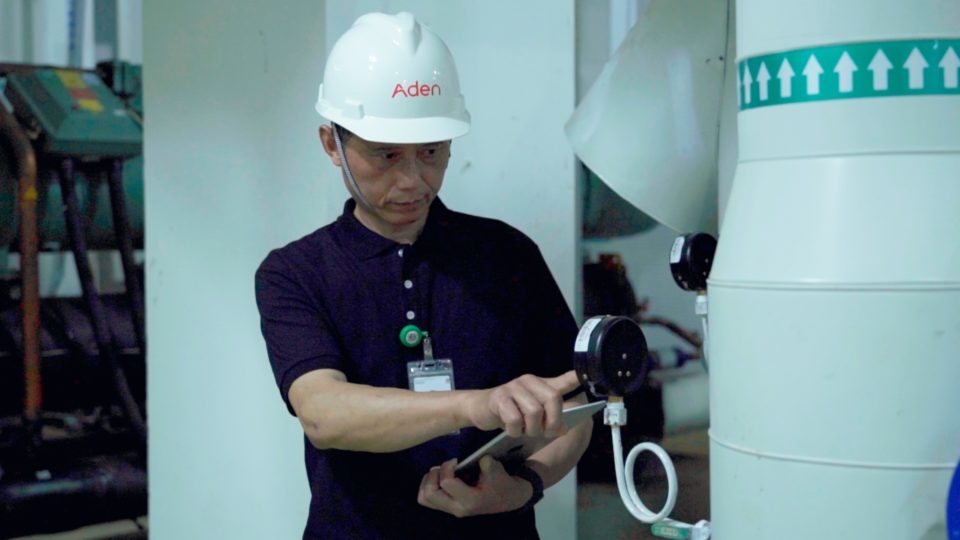
The first part of our risk control strategy focuses on managing negative risk. Powered by our digital platform, we can employ a range of maintenance levels, from inspections and preventive maintenance to, increasingly, predictive maintenance. Our aim is to reassure our clients that they can run their operations safely and efficiently. We turn risk from an unforeseeable threat into a manageable factor in which all relevant contributors to risk are identified, tagged to the specific asset with specific coordinates, and then tracked and serviced according to data-based simulation and conditions.

It is extremely to recognize this process for what it is – not an added cost but essential insurance in business outcomes. The consequences can be appalling if the risk is ignored. For example, there are many instances where the cost of one day-long shutdown has exceeded the company’s annual maintenance budget. Investing in risk prevention and control is never a luxury—it’s a necessary strategy to ensure business continuity and completion of objectives.

Turning to Positive Risk: The Opportunity Uncovered

Once negative risk is under control, we can turn our attention to “positive risk.” This term may sound like a contradiction, but it is very real. Positive risk refers to potential operational cost savings that can be realized when activities become less sensitive to certain risks or assets. It’s not about recklessly seeking risks but rather optimizing the response based on a well-informed understanding of asset behavior and performance.

It is important to understand that leveraging positive risk comes in a sequence. First, negative risk must be controlled, and data must be systemically collected and analyzed. But as the data from the floor drive insight into the assets and their associated risks, we can make informed decisions to optimize operations and potentially reduce costs. A failing pump in a water treatment facility, for instance, might traditionally be replaced immediately. However, with our deep understanding of the asset’s context, we might deduce that a less frequent but higher capacity operation could achieve the same performance, thus reducing overall energy and maintenance costs.

This approach turns the management of negative risk into a virtuous cycle where understanding and control lead to uncovering opportunities associated with positive risk.

In closing: Leveraging risk management for secure operations

In conclusion, risk control is the guiding star of asset-centric maintenance. The optimized management of both negative and positive risks allows businesses to operate more confidently, efficiently, and profitably.

Our asset-centric maintenance approach isn’t just about keeping things running; it’s about understanding the complex interplay of assets within their operational context and using this insight to deliver superior value and resilience.

Stay tuned for part three of our series, where we’ll continue our exploration of the unique value of technical services.



Aden can help your business.

Customized solutions to transform your workplace and improvequality-of-life.

Tell us what you want.

Contact us

Where can businesses take action on climate change? Start with the built environment.

In 2023, global awareness of the climate crisis has never been higher. This has been hammered home by a continuous and alarming spike in environmental catastrophes including fires, droughts, floods and climate-related displacement, as well as rapid decline in biodiversity and other metrics of environmental health. In the APAC region, the need for action is being advanced at the governmental, market and consumer levels through major policy commitments such as China’s net-zero 2060 agenda, and the growing centrality of ESG investing and green funds.

With climate action on the agenda like never before, there is a growing focus on the way buildings, their energy-consuming systems and servicing are contributing to the climate crisis. In fact, the built environment has been rated the top global contributor of carbon, responsible for 40% of all C02 emissions when their total lifespan from construction to operation and decommissioning are factored in.

Leading action on climate, then, means getting serious about optimizing the way buildings are managed. This requires a new approach to facilities management, taking a more holistic approach in which all systems and their data are linked for optimization and the built asset is managed from design, through construction and operation. The tool enabling this change will be building and operational data, collected and centralized in a single source of truth. This includes a number of inputs, including:

  •  BIM modelling from the design, engineering and construction phase of a facility
  • Data collected from pre-existing facility systems such as BMS
  • Data collected through digitalization of the tools and processes technicians and service staff use on-site
  • Automated data collected through sensors, covering areas like asset performance and energy consumption

Understanding the built environment as a contributor to climate change

First, a simple question: what is the built environment? In short, it is a collective term for human made physical structures and the complex infrastructure created to access them, service them, and make them both functional and comfortable for the people who use them. So, the built environment could be a single factory, or a full industrial park; a single office tower or a city district, a hospital or full retirement community, and so forth.
The built environment also must be understood as more than the physical shell of a building – it is also the complex network of utilities, assets and systems which enable it to function including large networks for energy consumption and circulation of heat, gas, water and air. As renewable energies technologies advance, the built environment increasingly integrates building-level hubs of energy generation, storage and distribution (commonly known as a micro-grid)

Finally, it must be remembered that the built environment has an extremely long lifespan, encompassing design, construction and operations, with an commercial properties averaging 70 years of functional use in many countries. As such, maintaining optimal efficiency and performance is critical to the reduction of carbon emissions

By the numbers: how buildings are impacting the environment

While not a comprehensive list, the following ten statistics give some indication of how much is at stake I the proper servicing and optimization of the built environment:

  • The embodied carbon emissions from the construction of new buildings are equivalent to approximately 11% of global greenhouse gas emissions. (World Green Building Council)
  • The total value of waste generated by the construction and demolition industry globally is estimated to be between $410 billion and $460 billion per year. (IFMA)
  • The energy consumption of buildings globally is projected to grow by 50% from 2018 to 2050, with CO2 emissions from buildings increasing to 5.3 GtCO2 by 2050. (McKinsey)
  • The operational energy used by buildings is responsible for approximately 28% of global energy-related CO2 emissions. (Global Alliance for Buildings and Construction)
  •  Green building retrofits can reduce building energy consumption by up to 50%, and retrofits of existing buildings could reduce global greenhouse gas emissions by up to 1.5 GtCO2 per year. (IEA)
  • The use of smart building technologies such as automated lighting and heating systems could reduce global building energy consumption by up to 30%, saving up to $1.2 trillion in energy costs by 2040. (World Economic Forum)

The new glossary of sustainable frontier: net-zero, climate resilient and climate regenerative
As the environmental crisis drives major change in the way buildings are managed, new concepts and ambitions for buildings are emerging. These will be key components in the ongoing decarbonization of the built environment, and achieved through a comprehensive reworking of BIM-based design and construction; new materials; digital twin technologies for advanced simulation, space optimization and data centralization; asset-centric O&M; micro-grid; and more.

Net-zero facilities

Net zero facilities are buildings that produce as much energy as they consume, resulting in a net-zero carbon footprint. These buildings are designed to be energy-efficient and use renewable energy sources such as solar, wind, and geothermal energy to generate their own electricity and heat. Net zero facilities can also utilize energy storage systems to store excess energy for use during times when renewable energy generation is low. By generating their energy, net zero facilities can help to reduce the carbon footprint of the built environment and help mitigate climate change. These facilities are becoming increasingly popular as organizations strive to achieve sustainability goals and reduce their environmental impact.

Climate resilient facilities

A climate resilient building is a structure that is designed to withstand and adapt to the impacts of climate change. These buildings are constructed with materials and systems that can withstand extreme weather events such as floods, hurricanes, and heatwaves. Climate resilient buildings also incorporate features such as energy-efficient designs, natural ventilation, and green roofs that can help to reduce the building’s carbon footprint and improve its overall sustainability. In addition, they can also provide a safe haven during natural disasters and help to minimize the disruption caused by climate-related events. As the impacts of climate change become more severe, the need for climate resilient buildings is growing, and they are becoming an increasingly important part of sustainable development.

Climate regenerative facilities

Climate regenerative facilities are buildings that are designed to not only have a minimal environmental impact but also actively contribute to improving the health of the planet. These buildings are constructed using sustainable materials and are designed to be energy-efficient and carbon-neutral, with a focus on reducing greenhouse gas emissions. Climate regenerative facilities also incorporate features that help to support the local ecosystem, such as green roofs, rainwater harvesting, and natural landscaping. These facilities can help to improve air and water quality, reduce urban heat islands, and promote biodiversity. By using regenerative design principles, climate regenerative facilities can help to create a built environment that actively supports the health of the planet and promotes long-term sustainability.

From commitment to action

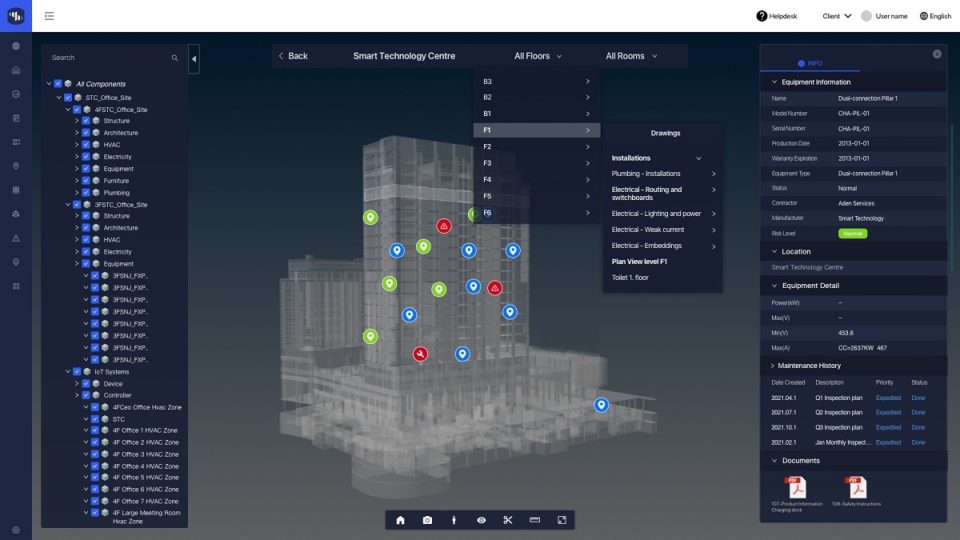
While the battle is far from won, all of the opportunities and breakthroughs listed above are viable, actionable and achievable today. Aden Group has already assisted clients in achieving substantial decarbonization, performance and efficiency gains, as well as the construction and implementation of micro-grids and net-zero facilities in Asia. Powered by its digital platform Akila, and its portfolio of industry specialist teams and businesses, Aden Group is able to deliver facility optimizations that enable better ESG performance, environmental compliance and wellness outcomes for building users.

If you are interested in learning how to reduce your facility or portfolio’s carbon and environmental impact, don’t hesitate to contact us for a meeting and assessment of your needs.


Aden can help your business.

Customized solutions to transform your workplace and improvequality-of-life.

Tell us what you want.

Contact us

Compressed air management: a faster way to energy optimization

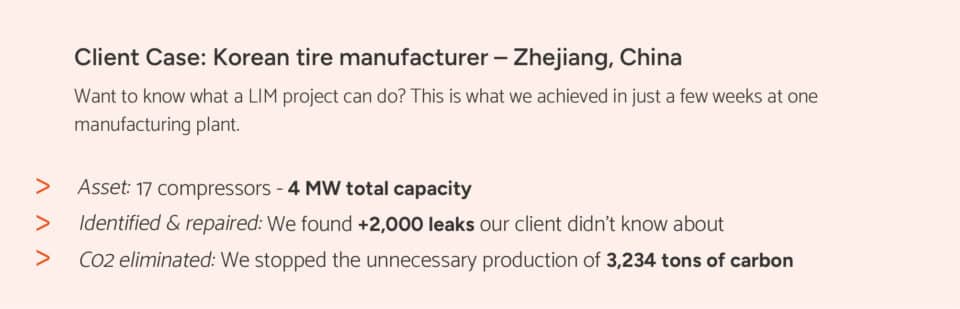
For a utility that is so crucial to industrial processes, it is remarkable how little attention compressed air gets. The nicknames for compressed air even reflect this: “the hidden utility”, “the invisible utility”, and “the fourth utility.” And yet, compressed air accounts for 5-6% of all the electricity consumed in the world – consumption that is often frighteningly inefficient at the factory level because of poor leak management. Our audits have uncovered cases where clients were consuming up to 50% more energy than would normally be required, all because they had failed to identify and manage compressed air leaks.

Are these clients just negligent? So rich they don’t need to worry about energy bills? Certainly not – they lacked the tools and data to answer three critical questions properly:

  • Scope: How many leaks do I have, and how much energy am I losing?
  • Location: Where exactly are these leaks happening?
  • Effectiveness: Did the leak repairs work, and how much did I save afterward?

One big issue is that “the invisible utility” tends to produce invisible problems. Water leaks will, at least, leave noticeable signs (puddles and water damage); compressed air leaks can’t be seen or heard by the human ear. When gas and water flow is disrupted, pressure levels drop; when compressed air is leaking, the pressure stays the same – the compressor simply burns more energy (and client money) to maintain the same levels.

Too many industrial clients carry on, assuming that their large energy bills are just part of the cost of doing business or with a vague sense that they are losing money and wasting energy, but are not equipped to make the needed fixes.

Case study: compressed air leak management

Learn more about our energy management solutions >>>

Kicking off your leakage identification and management (LIM) campaign

Now, the good news: with the right team and tools, all of this can be addressed quickly and cost-effectively. Lack of visibility and measurement can be resolved with smart sensors and an expert-backed digital management platform.

In fact, in very little time, you can begin and finish a compressed-air optimization project at your site (often called a LIM campaign). This will produce:

  • Dramatic improvement in your energy costs
  • Better compliance with environmental regulations and ESG reporting
  • Indisputable before-and-after data to document savings made

While any time can be a good time for energy management optimization, many clients choose November and December. The reasons for this are quite pragmatic – LIM campaigns are one of the most effective ways to direct end-of-year budget overhang towards a high-results/high-impact outcome. Many clients see LIM as a great opportunity to close out the year in a strong position, with a few quick-turnaround wins in energy efficiency and costs.

The missing ingredients: data, baseline, and before-and-after

A traditional LIM process is undertaken in two phases. First, detection, where a technician follows compressed air lines with an ultrasound detector, locating and tagging leaks that cannot otherwise be heard by the human ear. Fixing is precisely what it sounds like and mostly involves tightening or replacing joints, replacing faulty lines, and repairing or replacing fixtures.

Of course, these steps will always be needed. But the missing ingredient is context – how was each asset performing before the repairs and afterward? It is critical to take the proper time to understand this. Historically, getting this picture would be extremely labor and cost-intensive. Today, though, sensor and digitalization technologies let us enormously expand our monitoring power, with a lighter onsite footprint.

Some key differences in the measurement can be summarized as follows:

Old model New model
Error-prone Verifiable
No measurement Measurement by sensors
Arbitrary performance checks Continuous monitoring
Indirect: guess by monthly bills Direct: assess results by data

How we do it: Six steps to compressed-air energy optimization

Let’s dive into the specific steps of compressed air energy optimization.

Step 1: Define energy and business parameters

We always start by understanding your expectations and objectives concerning energy use and health and safety. If you have a stated energy reduction goal, we will help you move toward your objective. We will also take the time to understand your health and safety policies and procedures that will apply on-site when we carry out the detection and repair activities.

Step 2: Identify and register client compressors

This stage establishes the foundation for the continuous monitoring that is vital for understanding and optimizing the energy performance of your compressed air system. We will collect information about the compressors and air systems at your site, including fundamental data such as manufacturer and installation date.

Step 3: Install sensors for continuous monitoring

Before carrying out the LIM, we will install non-intrusive sensors to measure the process data streams for the compressed air system, for example, current, voltage, pressure, and dewpoint. Through machine learning, the data gathered from this initial monitoring will give you a rich picture of the existing performance of your system.

Step 4: Locate leaks

This is the action stage. Our technicians, armed with ultrasound microphones to pick up the sound of leaks undetectable by ear, will detect and tag the leaks and then log them into the register. We expect to detect around 95% of all leaks in your system (and the remaining leaks will be so minor as to be economically insignificant). 

Step 5: Repair leaks

We will then repair each leak as required, by tightening, repairing, or replacing fixtures, connections, and lines, then we will remove the tags and record the work as complete in the register. This step is where the big gains in energy efficiency happen – and we will give you the hard numbers quantifying this improvement in Step 6.

Step 6: Final monitoring

This is the game changer. Once we have repaired the leaks, this final phase of data collection helps us to understand and quantify for you the improvements in the compressed air system that have occurred as a result of the repairs. We will compare this data to that collected in Step 3 to calculate the energy savings that you will have gained. We will also use the data to help you improve your understanding of the optimal energy performance of the system free of leaks. We may also be able to develop recommendations in areas such as operational management to provide further energy optimization.

A fast route to energy savings              

If you are looking for a fast, easy win for energy savings at your site, don’t neglect your compressed air systems. It might be “just air,” but the size and speed of the savings are often quite remarkable. Compressed air leak management will help you see the value by optimizing the performance of your systems. It will give you the “why?” that is missing from the way most managers view compressed air maintenance.

Our solution gives you:

  • A project with measurable returns completed in a short timeframe
  • Hard data for sustainability or ESG reporting and compliance requirements
  • Most importantly, a compressed air system that is working at peak efficiency

Maintenance and R&D center security: three principles for success

Is your maintenance a security liability or strategic asset?

Ask someone who has spent time in an R&D facility what security in that environment looks like, and their description will most likely focus on the places where they had the most direct interaction entry and exit points, with uniformed personnel, scanners, and the like. Or perhaps they knew the staff who monitored their working area. What they probably won’t mention is anything about the site’s technicians, energy engineers, and countless others who ensure the smooth performance of the R&D center.

What if we were to think outside of these familiar boundaries, expanding the scope of “security” to include maintenance teams and technicians as well as electrical and utility rooms and all the other technical assets and equipment that make a site function? What are the implications for a security strategy from this wider perspective?

This is precisely the viewpoint that security planners in R&D should adopt because the work of maintenance departments has a tremendous impact on core security concerns. In any R&D facility, the maintenance plan and standardized protocols (or lack thereof) will directly impact access control, site functionality and the overall reliability of systems.

Managing maintenance operations in a methodological, secure and digitalized way can cement your compound’s security. Conversely, sites with misaligned maintenance and security planning will be exposed to an unnecessarily high risk of IP theft and cyberattacks. Therefore, maintenance planning and execution must be considered a vital aspect of security strategy, and it demands a high degree of coordination and alignment.

Three principles for the alignment of security and maintenance

Through our extensive experience managing high-security and high-risk facilities in Asia and worldwide (R&D centers, several embassies and diplomatic compounds), we have identified three core principles for aligning security and maintenance that have guided our strategy, while also informing the development of Aden Group’s digital twin platform for the built environment, Akila.

1. Be asset-centric and proactive – reactivity is a risk multiplier.

The fundamental goal of maintenance is to make assets perform as well as possible, for as long as possible. In ordinary environments, failure to achieve this brings primarily financial pain. Where the R&D activities where the work undertaken is highly strategic and desirable to other parties, the consequences of breakdowns and extended downtime are even worse, because every technical issue becomes a potential security issue.

For this reason, maintenance of complex, high-security sites should be as scheduled and forward-looking as possible, while also leveraging sensors and AIoT to enable predictive maintenance of critical assets such as HVAC, electricity rooms and water systems.

This asset-centric approach means that maintenance teams can organize their work responsively, in relationship to the real condition and performance of your R&D center’s equipment. As a data-driven approach, it also opens opportunities to apply AI and simulation technologies to performance history, creating much more precise forecasts about optimal levels of maintenance and the best type and timing of service to each asset.

Corrective maintenance (responding to unforeseen problems) may never be entirely avoidable, but every effort should be made to ensure that it is the exception rather than the rule. The risks that come from a heavily reactive approach can manifest themselves at many levels:

  • The physical integrity of the structure: defects such as faulty gates, leaks, etc.
  • Disruption to systems: for example, if a backup diesel generator fails to start in the event of a power outage, continued operations may be negatively affected, and the site’s CCTV and smart cam systems may be compromised.
  • More outside access with less comprehensive vetting: Unforeseen problems can necessitate support vendors accessing the premises at relatively short notice. At a minimum, this will increase the administrative burden, but it can also open the door to targeting by bad actors.

So, how do sites achieve the necessary level of asset-centricity? It is not something that can be improvised. A comprehensive maintenance plan is needed, as well as the technical infrastructure to support it.

2. Don’t let your maintenance plan become a vulnerability – control your information ecosystem.

So, you have set up your maintenance plan – congratulations! But this is not the end of your security needs. The maintenance plan must be made secure, as must all communications between technicians, facility management and outside support. This is because – if intercepted – the maintenance plan and operational communications are a major liability. In the wrong hands, your site’s maintenance plan can:

  • Be exploited by people with the intention of trespassing.
  • Signal when critical systems are weakened, giving critical intelligence to bad actors.

The more unstructured your maintenance team’s operational communications are, the more points of access are vulnerable to interception by bad actors.

One thing is sure: technicians will record and share information. Have they been given the infrastructure to carry out this important communication in a secure manner? Without a secure and centralized platform, technical staff will use the free tools readily available on their phones: SMS, photos, email, attachments, voice messages and video.

To mitigate this, a number of steps can be taken. The core principle, however, must be to establish a secure single source of truth for all relevant information, with careful controls over who can access which information, and when they can access it. This is our core criteria, as built into the Akila platform:

  • All technical maintenance must be secured in a cyber-secure system. This includes not only strong centralized elements but also the ability to manage cybersecurity on mobile phones.
  • The system should be comprehensive enough that you can reasonably ask technical staff to exclusively use that system to manage their operational work while forbidding the use of other (unsecured) communication channels.

A final point to note is that centralizing this information also makes it far easier to share with security staff, allowing more opportunities to prevent incursions by people intent on IP theft.

3. Build your system for execution control and compliance – beware of “weak digitalization”

Our last principle is about ensuring that what is written into the maintenance plan is executed. If a discrepancy is detected, notifications are swift and the center can investigate as needed.

On this point, it is worth stepping back and asking why we digitalize in the first place, rather than continuing with paper-based reporting. Fundamentally, digitalization is about taking large volumes of operational information and making it:

  • Permanent – not subject to physical decay or misplacement.
  • Transparent – easily accessed by those with the appropriate clearance, and not hidden in a file cabinet.
  • Systemic and responsive – Continuously updating, with the collection of data integrated into the process of daily operational work.

But, beware – digitalization can either be deep and transformative or it can be superficial (“weak digitalization”).

What does weak digitalization look like? The main characteristic is that some digital infrastructure has been put in place, but it has quickly become a “junk box” of unstructured information. The most common problem in weak digitalization is that technicians and stakeholders can report information, but the feedback is left too open, with no direct matchup between tasks in the maintenance plan and the resulting operational notes, photos, and screenshots. This results in a lack of execution control for team leaders and site managers – no easy way to validate to what extent or how well the plan is being carried out. And, therefore, little improvement over traditional paper-based systems.

By contrast, where digitalization is highly structured and has direct links from planning to execution, the benefits to asset performance are enormous, enabling far stronger alignment between maintenance and security. For site managers, information can be viewed at either the granular level (task by task and unit by unit) or holistically (compiled into high-level and dashboard views). From the perspective of operational efficiency, the following three metrics are vital:

  • Planned duration vs. actual duration: e.g. “This task was scheduled to take 30 minutes, but it took 60. Why?”
  • Planned date vs. actual date: e.g. “This inspection was supposed to happen on Thursday, but it took place on Friday. Why?”
  • Planned resource vs. actual resource: e.g. “We assigned Jeremy to this task, but it was completed by Luke. Why?”

Note that the examples above are framed negatively, but a system may also provide positive surprises and opportunities to reward high performers and proactive staff. Whether by carrot or stick, digitalization must provide your site with a systematic and clear view of what is really happening from planning to execution.

A cycle of improvement

Every plan, even the best, needs space for adaptation based on real-time developments and new insights. You will need to adjust your risk register and operational routines periodically to ensure optimum performance. While “sticking to the plan” is important, so is learning from the process of operations, the data you have collected, and proposals from your technicians on the ground.

This is not a one-time project, but an ongoing process built on transparency, collaboration and silo-breaking. As the maintenance plan evolves, it will be necessary to coordinate closely with the security team. The success of this process will depend on transparency, cross-team alignment and a focus on the best outcomes for all parties managing your center. Thus, we need to reframe our thinking regarding operational teams and their role in maintaining security. Next time you see technicians at work, think of them as not only the people who make the machinery work but also as strategic allies and partners ensuring the security and performance of your R&D center.

Monitoring and maintaining Indoor Air Quality improves employee wellbeing

The first thing that comes to mind when someone mentions air quality is the air outside and the level of pollution present, particularly particulate matter (PM2.5), which are inhalable particles that have serious effects on public health. Indoor Air Quality, which does not usually receive the same level of attention, is as, if not more, consequential to people’s health. People spend 90% of their time indoors, where pollutants are between 2-5 times higher than the air outside, and a large amount of that time is in the workplace. Additionally, workspaces may not be using the right technology and processes to monitor and upkeep indoor air quality. Regulating air quality indoors is a pillar of creating a healthy, human-centric workplace experience that promotes employee wellbeing.

Sick Building Syndrome

Without a system to monitor, improve and maintain Indoor Air Quality (IAQ), occupant health suffers and overall employee wellbeing declines. The most direct consequence is the effect on the respiratory system of building occupants. Most commonly, people will experience flu-like symptoms. However, prolonged exposure to poor indoor air quality can lead to more serious diseases like asthma and COPD.

Physical health-related issues are the most obvious result of poor air quality. They can also significantly impact mental faculties – leading to a phenomenon known as “sick building syndrome.” In 2021, a Harvard research report found that the air quality in the office significantly affects cognitive functioning, including reaction time and concentration. The study followed 302 office workers in six countries (China, India, Mexico, Thailand, the United States, and the United Kingdom) for one year to see the effects of indoor air quality on their health over time. The researchers installed environmental sensors at their workplaces to monitor fine particulate matter (PM2.5), carbon dioxide, temperature, and relative humidity in real-time.

The subjects took two cognitive ability tests to assess their cognitive speed and working memory. The results of the study showed that an increase of ten micrograms of PM2.5 per cubic meter slowed the reaction speed and accuracy of the subjects by 1% in both tests. For every increase in carbon dioxide concentration by 500ppm, a common level of variation, subjects completed both sets of tests 1% slower and more than 2% less accurate.

Prolonged exposure to PM2.5 was already well known to inflame the central nervous system and cross the blood-brain barrier leading to long-term neurodegenerative disease. What this study demonstrated is that there are serious short-term effects as well.

Measuring and monitoring indoor air quality

Indoor Air Quality involved the monitoring and measuring of various substances (pollution) contained in the air that reach a constant detection value within a certain period and certain area. There are four main categories of indoor air pollution usually measured:

  • Volatile Organic Compounds (VOCs): carbonaceous substances that evaporate at room temperature or higher. This could be something like radon, which occurs naturally, but can become trapped in a building with poor ventilation and filtration. Exposure to VOCs can cause irritation, dizziness, or worsening asthma. Long-term exposure may damage the lungs, liver, kidneys, or nervous system.
  • Biological pollutants: contaminants produced by living things, such as dust mites, mold, pollen, dust as well as bacteria and viruses. Unvented, moist environments such as bathroom areas are where these pollutants usually appear.
  • Combustion byproducts: this includes carbon emissions, nitrogen dioxide and other byproducts of burning that can accumulate in buildings that do not have a proper filtration and ventilation system in place to refresh the air supply.
  • Legacy pollutants: come from the breakdown of certain building materials or other products that accumulate over time in a building. This includes substances like asbestos, formaldehyde, as well as lead and polychlorinated biphenyls (PCBs) that come from sources like industrial glue or chemical cleaners

Keeping pollutants out of the circulating air in a building requires air filters with the necessary Minimum Efficiency Reporting Values, or MERV, rating. The type of filter, which ranges in ratings from 1-16 (the higher the level, the smaller the particle filtration), will vary from building to building. For example, working in an office space might not need as high-rated a filter as an industrial workplace. MERV-rated filters work to remove particles from all four categories of pollutants from entering the air circulation.

Besides pollution, relative humidity is also an important environmental factor to control. First, occupants are most comfortable with a relative humidity between 40-60%. Second, controlling humidity is also necessary for containing mold, mildew and other biological pollutants.

Indoor Air Quality (IAQ) monitoring devices

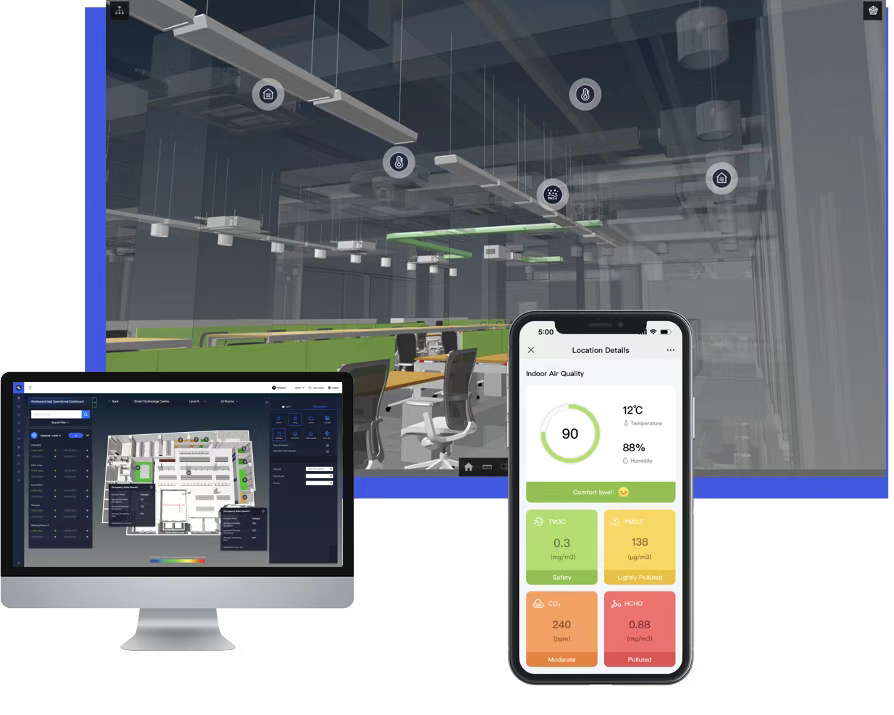
Akila Indoor Air Quality monitoring

Maintaining and improving indoor air quality

Like any good action plan, managing indoor air quality needs to start with the right data. Obtaining an accurate, real-time data stream of indoor air pollution and humidity is impossible without the right system of sensors. Placing sensors throughout the building to collect data in a centralized platform is the first step for building managers to properly monitor and act on IAQ.

Action plans might look different from workplace to workplace, but often it begins with keeping air filtration and ventilation equipment at peak operating conditions. Like any piece of equipment in a building, air filters need to be properly maintained to keep them performing at the right capacity. Well-maintained filters ensure a suitable IAQ and protect occupant health and employee wellbeing. It also helps reduce the pollution created by building operations – with poorly maintained systems consuming 15-20% more energy.

With smart building management systems, many of these processes can be streamlined and automated. After installing IAQ sensors, building managers can choose to install IoT devices on equipment and controllers that monitor and automatically adjust ventilation and temperature to optimize indoor air quality more effectively.

Supplementing a data-driven, tech-backed hard service action plan with other soft operations can also help improve IAQ. For example, opening windows is an easy and effective way to improve ventilation. However, in situations where windows do not open or outdoor air quality is not good, ensuring cleaning regimens are thorough enough to remove potential air polluters and cleaning products do not add VOCs to the air is even more important.

Improving indoor air quality in the workplace is not an option in the post-pandemic world

Putting more focus on the air quality in offices and workplaces (“small environments”) is just as important to public health as the outdoor “big environment.” Poor IAQ impacts respiratory health and mental well-being. Post-pandemic, the last thing any employee or building occupant wants is to face those challenges again due to poor indoor air quality, and it is essential for businesses that wish for employees to return to the office to keep air quality high.

Indoor air quality is just one part of Indoor Environmental Quality (IEQ), which includes lighting, sound, temperature comfort and other factors. Improving and maintaining IAQ is important, but it is even more effective when paired with a comprehensive approach toward IEQ. Creating more comfortable, health and human-centric environments is needed for businesses to succeed in the face of changing expectations and demands by employees, management and investors.

Five ways to reduce the carbon footprint of buildings and facilities

A carbon footprint is the total amount of carbon released into the air by an individual, organization, or community. It considers all activities and processes, such as transportation, operation and consumption of goods. It is no surprise that buildings (industrial, commercial, and residential) account for 40% of global emissions today.

As more and more focus from governments, institutions and the public goes towards reducing global carbon emissions, buildings can no longer remain such big polluters. Now this is not necessarily a choice, with governments enforcing low-carbon initiatives through policy and investors encouraging corporate boards to reduce carbon through ESG-based investment. Even employees and occupants of buildings are playing a role, demanding that their workplace be more environmentally friendly.

The carbon footprint of a building stretches back to the design phase and continues through construction and operation. At every stage, there are decisions that stakeholders can make that set the building on a path towards a lower overall carbon footprint.

Here are five key strategies to reduce carbon footprints in the built environment:

Start low-carbon planning early

For new buildings, the best opportunity to reduce their carbon footprints is to begin by evaluating and measuring the carbon impact of the building design. At this stage, building designers, architects and engineers can plan for optimal floorplans, layouts, materials, sourcing, and timelines that will contribute to reduced carbon footprints at the construction and operational stages of a building. As the design progresses and planning for building systems and utilities gets added into the blueprint, there are even more opportunities to design for smaller carbon footprints.

Building stakeholders need a complete life-cycle assessment of a building, accounting for all the flows in and out of the building system — including energy, water, materials, waste, etc.—to calculate its environmental impact. Such inventory data can specify and quantify the environmental impact of each sector of the building’s operation.

Many different rating systems provide standards for green building design. There are international standards such as LEED and country-specific standards like China’s 3-star System and Singapore’s BCA Green Mark Award. One of the best ways for new projects to start on the right low-carbon footing is to follow guidelines set out by these standards. However, existing structures still have many options to get on top of their emissions.

Low carbon building exterior

Properly maintain carbon-heavy equipment

One of the most effective ways to reduce a building’s carbon footprint is to ensure that all equipment and structures are adequately maintained. Building utility optimization (HVAC, electric, etc.) is essential for reducing the energy input needed to keep your building operational and comfortable.

Regular inspection and maintenance of HVAC systems, air-compressors, and electrical room equipment work to reduce carbon footprints in several ways. First, it can ensure these systems are running efficiently – meaning no leaks or flaws are causing the system to work harder (using more energy) to reach baseline performance. Second, it will reduce the need for replacements, reduce spending, and avoid creating more carbon costs inherent in the production of new materials, transportation, and installation.

A building with a proper maintenance plan reduces the amount of grid power it needs and directly reduces its contributions to carbon emissions while keeping equipment running longer reduces secondary carbon impact.

Low-carbon workplace management

A low-carbon facilities management plan should involve ways to cut emissions from both hard services and soft services. Buildings and workplaces can reduce carbon footprints not only through better equipment and system controls but also by creating a more sustainable workplace through administrative, technology and office amenities management.

Go paperless

According to statistics, 50% of commercial waste is paper. Many businesses have adopted a paperless office policy, which has greatly reduced overall generated waste. For example, replacing one paper letter with an email can reduce carbon dioxide emissions by 52.6 grams. Paperless offices reduce carbon impact by scaling down the demand for paper production, but also by reducing the transportation needed to move the waste to a landfill or recycling plant.

paperless workplace

Maintain and recycle office electronics

Electronic products are essential to office operations, but they are constantly in a state of iteration and upgrading. Both personal and office consumers tend to regularly replace and upgrade outdated electronic devices such as mobile phones, computers, and tablet computers, but this is also stressful for the environment. Most of the e-waste generated around the world comes from small electronic devices, most of which are sent to some developing countries for disposal (i.e., shredding, incineration and dismantling), producing emissions that are harmful to humans and the environment.

With the idea of reducing carbon footprint in mind, office managers should first determine if they need to replace their equipment, or if what they have now will work for a while. If replacement is necessary, electronic waste needs to be recycled appropriately. By recycling 20 pounds of electronics, your building can save 52 pounds of contributed carbon dioxide emissions.

Opt for sustainable catering and food service

Many offices, industrial facilities and remote sites provide food services for employees, guests, and occupants. The choices that they make regarding the type of food they serve and how they source it can have a significant impact on their carbon footprint. To offset this, the managers of canteens, cafes, or pantries at a workplace can scale back the amount of meat on their menus and try to source as locally as possible.

The public is increasingly aware of the impact of industrial meat production on the environment. Factory farming for livestock accounts for 80% of the earth’s agricultural land and 27% of clean water sources, while only accounting for 20% of the world’s supply of calories. Beef farming and production consume 50 times more water than plants, while global livestock produces about as many greenhouse gases as all the cars, trucks, planes and ships on earth combined. Replacing some protein on menus with plant-based protein can therefore reduce the carbon footprint of your facility.

The supply chain for food likewise can take a toll on overall carbon impact. Even beyond the fuels used for transportation, there are factors such as refrigeration and climate-controlled greenhouses necessary for out-of-season produce. Eating locally and seasonally can reduce the carbon footprint of your food by around 10% and is well worth planning menus to do so.

Waste management

Proper waste management can bring value from the three dimensions of sustainable development: environmental, economic and social. In terms of the environment, waste management can reduce environmental impacts on groundwater and air and reduce the threat to ecology and communities. Identifying byproducts or waste with some resell value can also be a source of income. A more holistic approach to managing waste, however, also reduces carbon emissions.

Having a robust recycling and reuse program cuts down on the need to produce more materials, and therefore the emissions inherent in that process. It also reduces the size of landfills – one of the largest sources of methane (another greenhouse gas) released into the atmosphere. Adopting a disposal strategy that cuts down on the need for pick-ups and transportation distance will also cut the emissions caused by (usually) diesel-burning vehicles.

Reducing waste is extremely important because how it pollutes air, water and soil damages local ecology and can hurt communities that depend on the environment near production sites or landfills. However, it is equally important as a way to reduce a facility’s contribution to carbon emissions as well.

digitalize building operations

Digitalization

Digitalization is one of the most effective ways to reduce carbon footprints because it creates the transparency necessary for optimizing carbon-saving operations. From building design to maintenance to waste management, the centralization of a building’s data and processes in a single source of truth enables businesses to reduce carbon footprints more effectively than ever before.

With a mix of hardware (sensors) and software (AI, data processing), a smart building is not only capable of streamlining day-to-day operations but can automate many processes as well. For example, data-driven maintenance can automatically remind relevant responsible persons to conduct timely inspections and assign tasks appropriately, while digital systems can track and collect data and generate reports on maintenance activities and costs.

Most importantly, a smart building gives every party from upper management to building managers and technicians the power to operate their facility in a low-carbon way.

How IFM is key to better ESG compliance

IFM, integrated facility management, is a one-stop solution that brings together asset and equipment maintenance, workplace experience services, supply chain management and more. Because IFM operates in the built environment, from factories to office towers, it influences the overall business operation, which then impacts the economy and environment. It has a direct, effective and visible impact on a company’s ESG performance.

ESG is an investment concept and global standard that focuses on how businesses operate regarding the environment, society and their internal governance. Based on ESG evaluations, investors can assess the overall contribution of a given company towards sustainable development and responsible social practices. Companies with a higher rating carry less investment risk, as they are more likely to remain compliant with environmental regulations and employment policies.

ESG was born out of necessity; it is proactive, forward-looking risk management established upon the planning for real and emerging issues. As IFM spans nearly every industry and business sector and involves operations that touch on a variety of ESG factors, done well – IFM can be an engine to boost ESG performance.

Environment

The “environment” in ESG generally covers corporate practices relating to climate impact, environmental protection, waste prevention and control, green technology, renewable energy and more. In the built environment, it involves carbon emissions and pollution. Co2 emissions produced by the built environment account for approximately 40 percent of total global emissions, 90 percent of which is generated during the actual operation of the facilities (as opposed to construction).

For any company of scale, a corresponding carbon reduction strategy is indispensable, so in what ways can IFM add value to these strategies?

Energy and environmental management dashboard

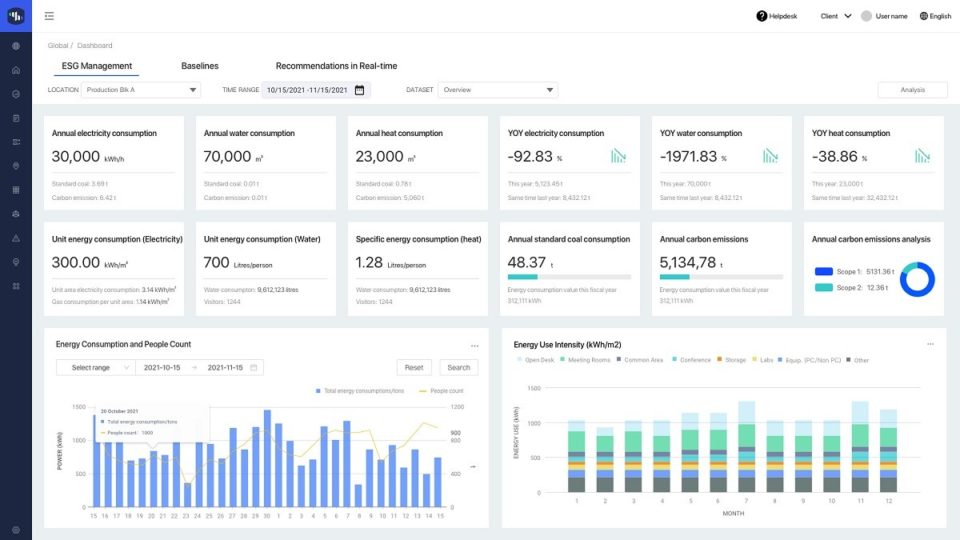
ESG management dashboard in Akila

HVAC optimization

At present, the technology and market development trend of HVAC mainly focuses on energy saving and low consumption, as well as the application of new equipment and technologies such as solar energy, air and water source heat pumps, and energy storage. Digitization is driving HVAC optimization. Innovative technology like IoT and AI is upgrading traditional systems to achieve higher heating and cooling efficiency with lighter environmental impacts.

Smart energy management

In building operation and maintenance, monitoring energy consumption is essential. Building managers need to look at overall energy used as well as consider variables like price fluctuations and weather to plan and predict how to conduct operations in a way that optimizes use and conservation. Meeting energy efficiency targets is core to better ESG performance, but proper management of the energy-using assets themselves is necessary to maintain operational efficiency. A holistic approach to smart energy management needs to integrate a preventive and predictive maintenance plan to avoid unnecessary energy waste in the daily building operation.

Digitalized maintenance management

Sustainable supply chain

A key aspect of ESG ratings is ensuring compliance throughout the supply chain, which requires proactive supplier and vendor management. There are four key features of sustainable supply chains – low carbon, low waste, social responsibility and transparency, which can reduce costs and risks while creating value. Regular evaluation of your supplier’s impact on the environment is needed to maintain higher ESG ratings. 

Digitalized waste management

Waste treatment and management have a complicated governance structure, but digitalization offers improved transparency. Through the application of digital software systems, the integrated collection, reporting and sharing of data offers full life cycle supervision of waste. With deeper analysis, businesses can make more educated and comprehensive action plans to address waste production and treatment. IoT, AI, blockchain and other advanced technologies are being used to digitalize waste management, reducing the complexity, difficulty and danger of improper waste practices, and optimizing governance capabilities.

Localized catering services

Companies that provide on-site food service have to consider a multitude of environmental factors that come from food; ESG metrics will encompass the energy used and waste produced from food service. It will also involve sustainable sourcing – what is the environmental impact of your suppliers and the transportation used to deliver it to your site. 

Cooperating with local suppliers to achieve centralized food purchases can reduce related emissions and pollution and help companies reduce their carbon footprint. Closer proximity to a supplier also offers more transparency into their operations, with site visits as a possibility. Paired with digitalized waste management, on-site catering done the right way can boost ESG compliance. 

Social

The social requirements of ESG standards measures how a company contributes to society, and IFM is naturally inseparable from it. Office occupancy and overall employee satisfaction are two of the key areas measured by ESG standards, and good facility management is integral to performing well on those fronts. A better workplace experience provided by IFM will directly improve scores along with ESG social metrics, and at a secondary level, help contribute to employee retention.

Some of the ways that IFM contributes to a better workplace experience are:

  • Improving the energy efficiency of buildings and facilities can create more comfortable workplaces;
  • Proactive air quality monitoring and excellent indoor air quality contribute to employee health;
  • Adopting an eco-friendly, local, innovative catering service strategy.

It’s not just the policies of the business that affect ESG social scores. Because an IFM provider is part of the supply chain, the IFM company itself must adhere to proper ESG-compliant employment practices, such as fair hiring and pay.

Investing in good IFM is one of the best methods to improve ESG social ratings. Building a better work environment with an ESG-conscious IFM provider can significantly increase employee wellbeing and ensure a more positive social impact.

IFM operations managers building a better work environment

Governance

Corporate governance in facilities management comes down to transparency, trust and ethics. Businesses and IFM providers must work closely to set a structured, sustainable commercial building operation model. A tech-driven IFM solution improves efficiency, optimizes resource utilization and saves time. It also helps companies better comply with ESG guidelines.

Digital transformation places data at the core of corporate business governance and workplace data management is crucial. Today, workplace and facility data systems make corporate governance an actual reality, and the rationalization of facility management processes is supporting the other two pillars of ESG. IFM that strives to be fully digitalized is an IFM that places compliance and transparency at the center of its foundation.

AR technology is broadening the vision and scope of facility management

Augmented/assisted reality technology is finding practical and beneficial applications in IFM, especially in maintenance.

Written by Guillaume Gimonet Aden Group’s Head of Technical Services Solutions.

Making strategic choices in operations and technology applications has been helping Aden tremendously to provide value to our clients, even under harsh conditions like the recent Shanghai lockdown. For many of the sites, the lockdown restrictions are still in place after two months, and this makes the case, once again, for resilience, creativity and strong tech integration facilitating remote team collaboration.

This challenge is a golden opportunity for Aden’s clients to fully appreciate the capabilities we build through our long in-house operation of remote site management, and a disciplined approach to maintenance plans execution and monitoring.

With 25 years of experience, Aden has leading expertise in the built environment and is anchoring the next big revolution in facility management with cutting-edge technologies. Aden’s technical asset management solutions now utilize Akila, the digital twin platform incubated by Aden Group which is at the core of our digital transformation.

AR is future-focused technology

We’re thinking beyond the traditional technical facility management, and new technologies are catalyzing the ways technical assets are maintained and managed. One of the technologies that in particular attracted the attention of our readers is AR (augmented/assisted reality). In an industry where even the most basic steps of digitalization are hardly implemented beyond glossy pictures in company brochures, how can such tools find their place in the IFM arsenal at Aden?

I found the remark extremely interesting. I have been toying with the topic for at least five good years, with many failed attempts on this tough journey. Between solutions providers overconfident in their offering, often overweighting the new product’s benefits, and actual professionals on the ground that must consider switching costs and are prone to status quo bias, the path to adopting AR technology is a bumpy one, riddled with irrational idiosyncrasies blended with real practical challenges to address.

At the onset of 2022 a couple of facts had to be recognized:

  • The tech became significantly more reliable and robust than in pre-Covid times. The main issue that connectivity was is not as salient as before. New powerful algorithms used to process compression and picture stabilization are now mature enough to support work in real conditions.
  • With rising expectations in compliance documentation, and the availability of cloud and digital twin technologies that are creating the right infrastructure to store and handle massive data, recording technicians’ work is becoming both easier and even incentivized. This is especially the case when the work is directly linked to health, environment, safety, security, or reputation.

Covid restrictions added the few incentives that tipped the balance towards the adoption of AR, with collaboration between remote teams (the benefit initially pushed forward by solutions providers, but our experience made us realize that it was secondary in FM business – relative to compliance) becoming a key thing.

As of today, we already identified a couple of practical cases where AR glasses have been useful to us – and valuable to our clients. The most recent case involves a client wishing to relocate a production line from one country to another. Since the relocation expert couldn’t travel physically from his office in Shanghai to the plant in Beijing to inspect the line, there was no way to even consider a quote. All the client’s plans were stuck.

At Aden though, we wouldn’t accept the status quo easily. We decided to ship our AR glasses to Beijing and let one of our engineers wear them and visit the site. The relocation experts have been able to guide the on-site engineer around the machines, and verify important details regarding surroundings, availability of cranes and other handling equipment, connections, and shape and form of the various equipment of the line. Two days later, we were able to provide a quote.

These quick wins are important as they are normalizing the technology, increasing the number of technicians and engineers familiar with it, and ultimately reducing behavioral switching costs while redefining the status quo.

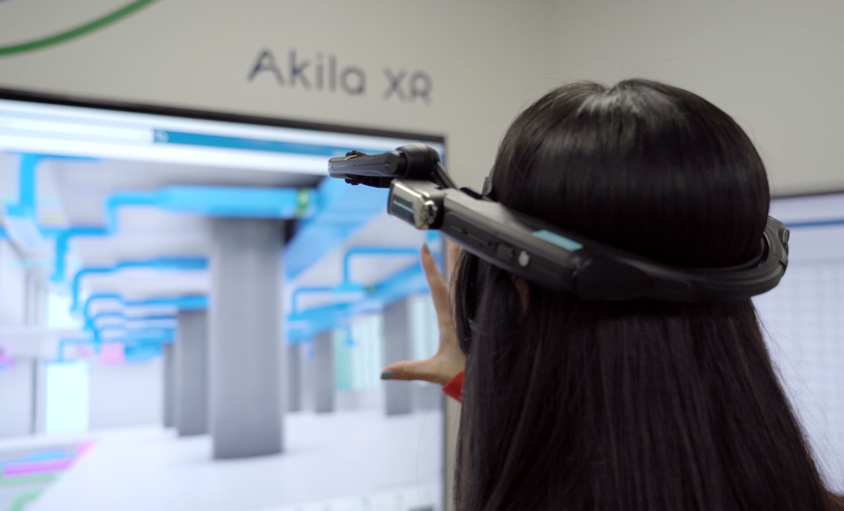
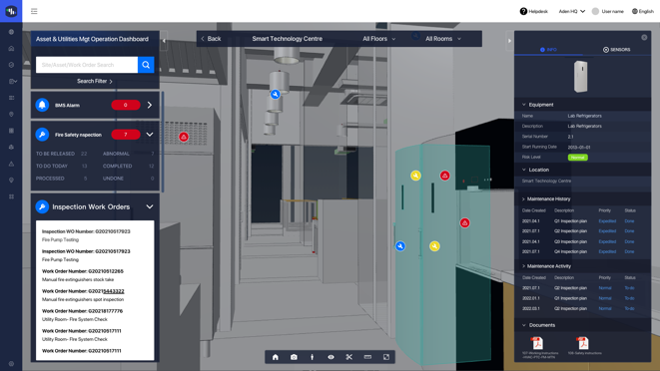
In parallel, we’re now going a step further with inspections. For the most critical ones related to fire risk control, we are setting the stage for our technicians to wear the AR glasses and use the technology to record the inspection, while scanning QR codes displayed on site to link the digital records to the physical world in the facilities digital twin.

We’re pushing on this use case since it requires minimal disruption for the technician (we are already making QR codes-based inspections with the Akila App), and we have a strong justification for imposing the new tool – fire safety, which is a top concern for everyone. We are getting good results that are inviting us to explore further steps such as displaying asset health scores coming directly from the digital twin, creating incident notices that would be posted directly to the digital twin, or feeding-back information to the technician about task achievement.

Building a business metaverse

This effectively forms an IFM metaverse with persistent digital information being created and shared in context with the real world. Our clients can step in the shoes of our technicians when they execute critical inspections. Experts borrow the eyes of on-site engineers when they evaluate the size and shape of a large production line before relocation. Those experiences are not unlike a 4th Industrial Revolution version of the “Avatar” movie.

Focusing on value-oriented use cases touching on the topics of risk management, compliance, and increasing transparent conversations with our client on performance management, while crafting ways to make these transitions as painless as possible for our staff, we are making this new reality a daily habit, one practical use case at a time.

Stepping forward in the mission to provide transparent, efficient, and digitalized solutions for our clients, earlier this year, Akila has formalized a partnership with AMA, a world leader in AR wearable technology, to integrate AR as a powerful tool to assist in facility management. Aden engineers can equip with AMA ExpertEye glasses to perform inspection works and provide remote assistance.

Localism and sustainability are key in Indonesia’s growing economy

Indonesia is the largest economy in ASEAN by nominal GDP and continues to push forward aggressively in commercial, industrial, and mining sectors. With a recent carbon tax policy, Indonesia has signaled that this growth need not be at the expense of the environment.

The push towards sustainability and ESG is happening all over Asia, Indonesia included. Domestic and multinational organizations that fuel the Indonesian economy still strive to be greener and more responsible for investors and employees. Businesses operating in Indonesia – especially in the built environment – should pay close attention to the developments concerning carbon emissions, ESG and digitalization.

A strong signal for low carbon development

One of Indonesia’s biggest sustainability signals is a recent set of regulations calling for carbon pricing mechanisms. This new regulation makes it the second country in Southeast Asia to establish a carbon valuation scheme. Indonesia has tried to balance the growing trend of improved environmental regulation to meet COP21 goals with its desire and need to attract FDI and foreign technology. Increasingly, to qualify in the eyes of some investors, companies must be able to meet investor ESG criteria—and while this new policy is a positive development, history has shown that there are challenges turning regulation into action. This is even more reason businesses must lead the way in low carbon development.

To fully realize Indonesia’s potential, partnerships are key

Indonesia isn’t waiting to embrace the digital and green revolutions. The country has even stated its intent to relocate and build a brand new capital city to be a haven for sustainability and foreign investment. Commodities and raw goods, which account for a large part of the Indonesian economy, have, up until recently, been offshored for manufacturing purposes, but that is shifting as well. Indonesia is taking its resource-richness and access to strategic metals and minerals like nickel and lithium to build itself into an EV battery powerhouse. As the country broadly progresses from commodity extraction to manufacturing and technology, the old way of doing business won’t be viable for much longer.

There are huge amounts of opportunities for newer, upmarket businesses in Indonesia, but without the right partnerships, several challenges remain. The nation’s dynamism, diversity, and scale—more than 17,000 islands in its large archipelago—means deploying in this dynamic and diverse environment requires strong local cultural knowledge as well as an established supply chain network. Being able to understand the environment, stay up to date with regional policies, work with local communities by hiring locally, and meet changing demands from both consumers and labor means clients have effective, uninterrupted, locally compliant service.

Facility management: the frontline of sustainability

Facilities management provides businesses an everyday opportunity to make progress in sustainability: it’s where the battle is fought and won. But, until recently, businesses in Indonesia have taken a traditional view of FM—single soft services or hard services often with multiple suppliers. A more modern FM approach recognizes that a broader, more holistic approach is needed to create more sustainable facilities.

Waste and water management, for example, is a major problem in Indonesia, where open dumpsites predominate the waste management system and have led to pollution and environmental degradation. Likewise, utility assets like electricity, HVAC and compressed air are run inefficiently – leading to increased carbon emissions. Meeting increased pressures to stay sustainable and low carbon from the government, investors and clients means that managing facilities must address environmental and carbon impacts. The best way to do so is to have a single integrated supplier who can provide a holistic approach to more sustainable and responsible corporate practices.

Furthermore, digitalization is a key element of ensuring transparency. Any modern approach to facility management will be smart, digitalized and managed by experts who use tech like digital twins to make data-driven decisions about how buildings can operate more efficiently. Integrating modern FM and data offers businesses powerful new insights into performance and sustainability, alongside verifiable ESG benefits.

Indonesia’s next generation

Indonesia is still a young country—and the new generation won’t settle for business as usual. The economy is moving up the value chain with tech deals booming and the EV battery sector on track to expand rapidly. As the economy strengthens and more skilled labor starts to enter the workforce, there will be a real demand from the employee base to work for companies that are more environmentally conscious. They will also expect higher standards of workplace experience, and businesses that can offer those will have a distinct advantage for attracting better talent.

Embracing the challenges of a changing Indonesian economy

Looking at the current trends in Indonesia and the greater ASEAN business world, we can see that to be successful requires more than great staff and powerful tools—it requires a mindset that takes every challenge seriously. Greenwashing business practices no longer work in the ESG age. Knowledge and experience in the local business culture are a must for international companies as technology improves how a generation of more skilled workers communicate. Sustainability efforts like carbon reduction, community-forward policies like hiring locally, and a deep understanding of creating lasting supply chain infrastructure are all instrumental to the success of businesses in a changing Indonesia.

Robotics is already a reality in China’s facility management market

Workplace robots have been with us for a long time. Manufacturers have used them for decades in the assembly line, revolutionizing industrial processes. Over the years, the robotics industry has produced innovation after innovation, resulting in advances in the agility, precision, and functional intelligence of robots.

Now, with China’s recognition of robotics as a strategic industry, and personnel pressures on the horizon, there is no question we will start to see them moving into a wider range of facility management functions, technical services and other operations for the built environment.

China’s five-year development plan for robotics

The transformational opportunities of robotics are being recognized at the highest levels. For instance, one can look to China’s recent development plan for the robotics industry, unveiled by the Ministry of Industry and Information Technology 14 other government departments as part of China’s 14th five-year plan. The plan sets out detailed targets and priorities for robotics between now and 2025, with an overarching ambition to make China the center of global robotics innovation. The plan outlines five key points on its agenda:

  • Boost innovation in the Chinese robotics industry
  • Consolidate the foundations of the robotics industry’s further development
  • Increase the supply of high-end products
  • Expand the depth and breadth of applications
  • Optimize the innovation structures of the Chinese robotics industry

China already leads the rankings for robotics patents, and over the next five years, the government expects to average more than 20% annual growth in the robotics industry’s operating income.

There is more at stake here than impressing neighbors; robotics will increasingly be needed to answer growing economic and social challenges. Labor costs are growing, and will only continue to grow, creating a challenge for every business in the coming years. Since 2016, wages have grown an average of 8% annually in China – with a considerable 10% bump in the private manufacturing sector in 2020. China’s slowing population growth rate is also exacerbating this problem. As China’s population becomes more and more educated, the supply of young employees willing to take on unskilled work will only shrink. Put together, it is not hard to see that labor shortages will continue in traditionally man-powered roles, or that there will be a great need for new solutions in automation.

Robots to the rescue in the built environment: transforming facility management

With a variety of factors driving the need for robotics, and support from a government that considers it a strategic industry, the integration of robots into the built environment will continue to accelerate. Robots are already proving useful in a variety of applications in buildings – from soft services up to more complex technical procedures. When combined with smart building technology such as IoT and digital twins, they have the potential to do a whole lot more.

Here are just some of the most impactful ways robotics can transform facility management:

Maintenance and inspection

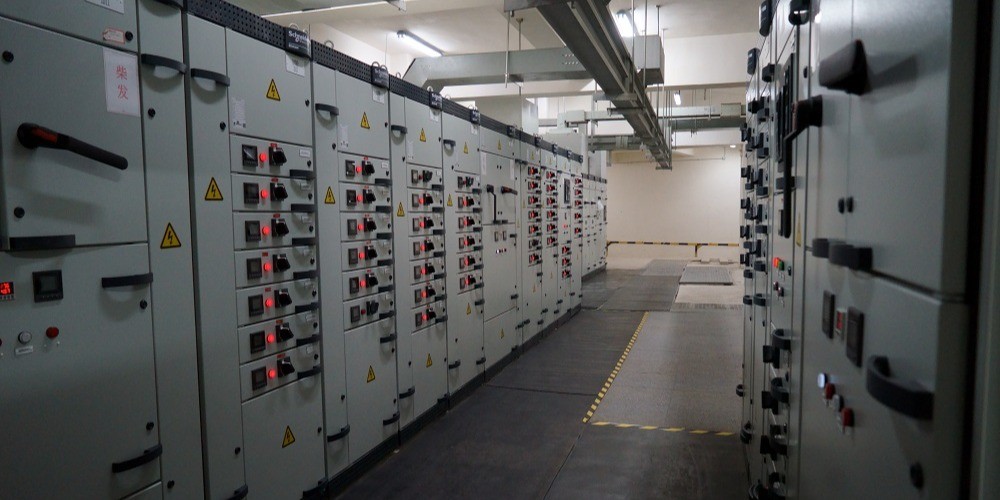
The monitoring and maintenance of critical utility assets (such as electricity) are among the most important process in a building. However, it is still heavily reliant on 24-hour rotating on-site teams. Additionally, these teams may be put in dangerous situations due to environmental conditions or machine and material-based hazards. Robotics not only reduces the need for round-the-clock manpower but also reduces cost and removes people out of harm’s way while allowing personnel to focus on higher-level tasks.

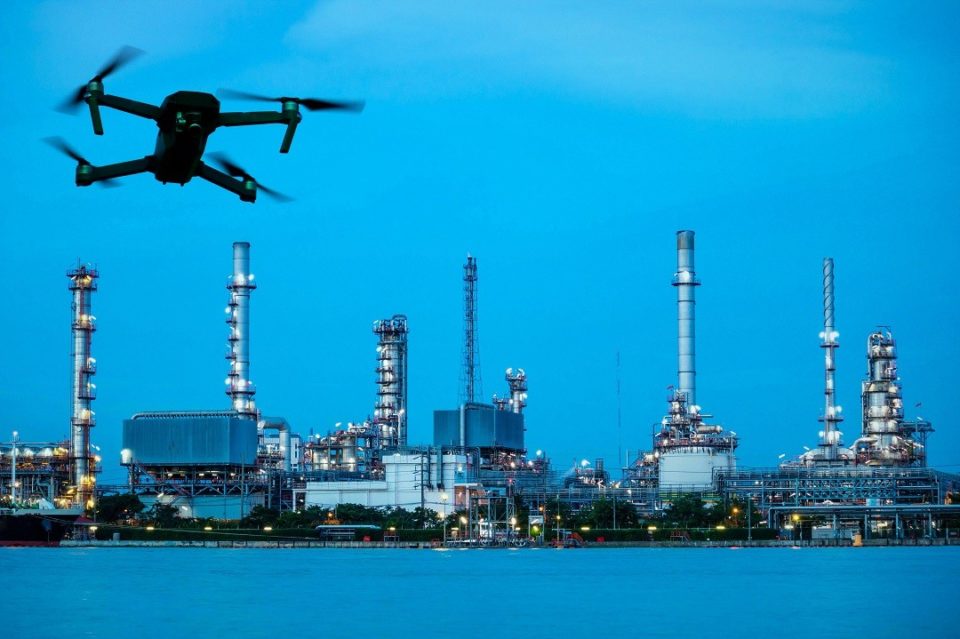
Drone working at industrial facility

Inspection robots can be ground-based or air-based (like drones) and come equipped with advanced cameras and sensors. Technicians program the robots to take photographs of gauges, thermal imaging, and video recordings and send the data back to a centralized monitoring station. Meanwhile, the onboard sensors can detect anomalies in machinery through sound or heat. When used together with a digital twin or smart building management platform, they can even predict when a fault might happen to the facility or equipment.

Beyond sensing, robots equipped with robotic arms can operate physically in the environment by handling dangerous operations, performing high-precision tasks on machinery, or repairing components. From this perspective, robots are more than just replacement eyes and ears but highly customizable workers that can cover routine tasks.

Cleaning and disinfection

Cleaning and disinfection robots were already being integrated into buildings before the break of COVID-19. Since then, however, they have become more and more in demand. Cleaning went from a topic discussed at the operational level to one discussed by top leadership. Executives now take an active interest in how their organization cleans, including how frequently, with what resources and efficacy, and how performance is measured. Customers, employees and partners now demand a safe and clean environment free of dust, dirt, debris and biological contaminants—meaning cleaning protocols have increased across industries.

In terms of value proposition, a cleaning robot is a fully autonomous floor care solution that delivers an efficient, consistent and measurably clean environment. A robotic scrubber is ready to clean 24x7x365. It can clean up to 4000 square meters an hour with a single charge lasting up to 6 hours. In theory, with interchangeable batteries, an organization could clean its facility non-stop. Cleaning efficacy is also measurable. Using sensors, we can obtain metrics to optimize floor care operation over time.

Every facility needs cleaning, whether schools, offices or factories. Organizations that choose cleaning robots or disinfection robots can reallocate labor to higher-value tasks, moving cleaning from a cost to a source of revenue.

Security and surveillance

The use of security robots in business is downstream from the defense industry, which has been using robotics with proven results for well over a decade. One of the most powerful features of security robots is advanced facial and vehicle recognition attachments, which allow robots can identify intruders. If linked to a smart security platform, any detections will trigger alarms or notifications to personnel who can respond more quickly.

Robotics positively disrupt the current arrangement of building security – which relies heavily on patrol. Enhancing or fully replacing patrol duties with robots can provide 24/7 continuous and unpredictable surveillance (a deterrent to thieves). Instead of guards assigned to repetitive tasks, they can focus more on management and response. Through a combination of ground and air devices, site security and surveillance can be managed more efficiently with fewer people.

Food, delivery and service

Robots are excellent at taking care of rote and repetitive tasks, but they are also proving useful when it comes to responsive service-based tasks as well. That task might be as simple as those for fixed-location delivery robots or information kiosk-style robots, which help guests navigate through spaces like malls, aquariums or large corporate offices. On the more complex side, service tasks for robots could even cooking and delivery.

Delivery robot on the street

While navigating as a guide or on delivery, robots can sense space accurately and move in a more precise way due to a stereo camera system, seamlessly meshing with built environments. This allows them to navigate busy streets, sidewalks, hallways, and floors quickly, avoiding obstacles in its path due to sophisticated sensor systems. Outside, they can even reduce congestion caused by delivery vehicles, with the added benefits of reduced pollution. Inside, they increase safety for all due to less human contact.

One example of a largely robotic service force is what was deployed at the 2022 Beijing Winter Olympics. The Olympic Village set up an autonomous workforce, who provided service ranging from guest information to fully robotic dining halls, where robots prepared food, cocktails or coffee and delivered it to tables or rooms.

New trajectories in robotics: AI, data and multifunctionality

While we can expect continuing advances in the physical capabilities of robots such as agility, precision, battery life and durability; the biggest jump for robotics will be seen in the realm of data & IoT. The biggest value of autonomous robots is multifunctionality and modularity. Robots can perform their main tasks in the facility while simultaneously carrying out advanced data collection. Depending on the needs of the facility manager, robots can be equipped with AI-integrated sensors and cameras to gather environmental and operational data metrics related to air quality, occupancy, acoustics.

A cloud platform is a fundamental component to support and manage a fleet of facility robots. This platform centralizes and processes the valuable data collected by robots and plugs it into any smart building management platform to be made accessible for key stakeholders from anywhere across the world.

MRO is more than spare parts: it’s an insurance policy for your assets

MRO. Spare-parts supply. Supply-chain optimization. Whatever you call it, keeping your site properly stocked is a core business concern for any industrial facility. While the term “MRO” (standing for maintenance, repair and operations) may sound like technical jargon, the consequences of good or bad MRO strategy directly affect your bottom line. Lacking the right spare parts when needed can have devastating consequences for asset owners or operators. MRO is essential to technical asset management and is best seen as insurance against various risks threatening facility operations.

Bad MRO is a cost you don’t want to pay

Take one instance from a retail store in Ningbo, East China. Recently, during a power outage, the diesel engine on the site’s backup generator failed to start. Discovering that they lacked the needed spare parts for a repair, and would need 24 hours to source a replacement, the facility was forced to shut down for a full workday, with all fresh and frozen food thrown away. For lack of proper MRO strategy, the site lost huge sums of money on revenue and inventory – a disaster that could have been reduced enormously by having the MRO inventory on hand and combined with a solid preventive maintenance plan.

Good MRO is increasingly digitalized & strategic

Optimizing MRO is a highly specialized inventory management task, requiring deep understanding of each asset’s operational context and its contributions to overall plant performance. In short, different assets have different levels of criticality and the best MRO strategy draws on principles of ISO 55000 to identify the strategy for each spare part. As seen in the case from Ningbo, the single biggest source of savings lies in harmonizing your site’s level of MRO inventory against the criticality of various assets they serve.

For MRO, risk analysis usually takes precedence over logistics and direct cost reduction considerations. A good MRO team can conduct this important task jointly with the client, facilitating the whole process through a digital platform, such as Akila.

Integration with a digital platform brings many advantages. Among two of the biggest:

  • Providing a single source of truth on information about asset criticality, asset health & maintenance plans, as well as spare parts movement based on data (either collected from a fresh audit or from clients’ existing system).
  • Continuous running of advanced marketplace analytics. These can proactively point out optimization opportunities.

Through this continuous analysis, substantial performance improvements are identified & captured:

  • Better protection against unanticipated breakdowns whose costs can quickly reach millions.
  • Reduction of “ghost stock” and an immediate clean-up of inventory not related to critical or important use.
  • An opportunity to integrate multiple teams doing MRO on their own as “small fish” with little pooling or coordination.
  • Definition of an MRO care plan. This typically avoiding 5-10% write-off yearly through the proper preventive care of stored items.

Business benefits from an MRO plan

Once the risk & opportunities are clearly established within the framework of the overall asset performance, and the MRO stock is managed accordingly, the following optimization strategies – or a combination of those – can be executed:

Cost control

Optimizing MRO procurement has a measurable impact on your bottom line. Too many businesses underestimate the total amount they’re spending on MRO due to hidden costs within the procurement process. While individual products are typically inexpensive, research suggests that the average organization spends twice as much on procurement as on the product itself.  With the right strategy, you can find and eliminate those inefficiencies and maximize your purchasing power.

Strategic partnership keeps your costs down in several ways:

  • Supply chain consolidation
  • Price deflation – volume leverage, global supplier network
  • Inventory optimization – inventory reduction, buyback, etc.
  • Reduced downtime

Easy plugin, easy scale-up

When you shift from decentralized to unified MRO, getting all teams on board can take time. The fact is, different teams may have different levels of readiness for change, and some may hesitate to disrupt familiar purchasing networks.

The good news is that nothing speaks like results. One of MRO partnership’s greatest advantages is how easy it is to run a pilot that plugs just one team into the global MRO network and then scale up after value has been proven and wider acceptance begins building up.

Aden’s MRO team has done just this for hundreds of MRO customers in Asia. But, by linking one team into our wider MRO services by being on-site for collaboration every week, and delivering concrete value in a short time, we were able to produce an immediate gain that opened the door to further gains on other teams.

More time for core business

MRO is a high mix, low-volume business. If you do it on your own, that means continually making small orders, with plenty of time drain on various teams. Remember, switching to a strategic MRO partner isn’t just about what we’ll do for you. It’s about what we free your people up to do after we come in.

The fact is, many companies only realize how much of a time and energy burden doing their own MRO is after they have outsourced to a strategic partner. The numbers can be staggering – hundreds of suppliers and thousands of purchases at a time.

With a strategic partner, that’s all shifted away from your employees, with your teams seeing a marked freeing of resources and attention to detail in work.

Sustainability & waste reduction

Good MRO is about pinpoint accuracy: forecasting maintenance needs and parts replacement, then buying just the right amount – no more, no less.

This leanness isn’t just a financial win, it’s an environmental win. With every surplus purchase comes extra packaging, energy consumption and carbon burning through the shipping and transport process.

With a strategic MRO partner, you can improve sustainability and reduce your carbon footprint by:

  • Streamlining your supplier network – ship more parts in fewer C02-burning trips.
  • Cutting out redundant purchases.
  • Specifying what kind of suppliers you want to buy from and making sure all purchases meet your in-house sustainability commitments.

Technical asset management: more than maintenance

We tend not to think very much about the equipment that keeps workplaces comfortable and functional. Technical assets can be described as a sort of “invisible infrastructure” under a building, behind the walls and over one’s head, but not often noticed. Yet, this infrastructure is absolutely central to the experience of a building. How would you feel working in a building with poor heating, lighting and air circulation?

It is also critical to the carbon footprint of a facility and the total cost of ownership (TCO) for building owners. Technical asset management is a strategy designed to optimize performance and reduce carbon impact with data-backed transparency.

What is a “technical asset” anyway?

According to ISO 55000 GB/T 33172 an asset is anything that can create value for your organization. Technical assets, in this regard, are highly critical equipment and machinery that power the most essential systems in a building, such as electricity, heating and water. In other words, technical assets are the bedrock of your entire operations. If any one of these assets went offline – your production and operations would have to stop, leading to potentially disastrous financial impact.

Technical asset management (TAM) is a holistic and comprehensive approach to keeping critical machinery and systems running reliably and efficiently. It covers the spectrum of needs regarding upkeep, namely:

  • Corrective, preventive & predictive maintenance
  • Flying teams & remote asset management
  • MRO (Maintenance, repair and overhaul) & spare parts
  • OEM (Original equipment manufacturer) & asset installation

All these services rely on robust documentation, equipment data & processes; the whole operational chain is highly digitalized. Aden clients see the results & monitor in real-time the asset management performance through digital dashboards.

TAM is a service that provides businesses with comfort and safety in the office, a controlled production environment and creates a context in which businesses are freed up to focus more on their core needs.

CMMS, MRO, OEM… why are there so many acronyms?

Engineers and technicians love acronyms, but too often they are used as magic words to solve operational and industrial problems. Most of the time, the real answer lies in a deep understanding of the operational and material situation of the client, long experience, and healthy work discipline based on international standards. Never let your service provider hide behind jargon!

Is TAM only used at manufacturing and industrial sites?

Wherever an organization is relying on an asset to perform well and sustainably, TAM has a role to play. We all need high-performing office buildings, schools and hospitals as much as industrial clients need a reliable supply of compressed airHVAC and electricity. Technical asset management is a service needed across the built environment. By ensuring assets are running properly, TAM ensures the safety, comfort and performance of those relying on them to do their daily work.

What is the difference between predictive, preventive and corrective maintenance? And which one is best?

Corrective maintenance is the basic form of maintenance. In short, it means responding to problems after an issue or a breakdown has occurred. If your maintenance plan is heavily reliant on corrective maintenance, you probably have a problem – but that said, corrective maintenance has its place and is often sufficient for rudimentary and less essential assets. Paired with a good maintenance management system, corrective maintenance work orders can also happen in a timely and efficient manner. For critical assets, however, corrective maintenance is something you want to avoid.

Preventive maintenance relates to upkeep before a breakdown happens; it includes inspections and regulatory visits to standard exchange. Highly critical assets at your site should all have a preventive maintenance plan and MRO strategy in place to ensure that assets perform more reliably and at their peak for as long as possible.

Finally, predictive maintenance sits somewhere in the middle, where patterns of wear & tear are identified (often detected through high-level expertise and devices) and used to predict the breakdown potential of an asset before it impacts operations. Using a combination of IoT devices, vibration analysis, and even AI, engineers can pinpoint red flags and act on them to avoid costly downtime or asset failures.

But which one is best? Don’t get fooled by companies that say you need all predictive maintenance, all the time. Proper technical asset management uses a mix of all three types of maintenance, according to the risk profile of the client (operational, reputational and regulatory). The goal is to strike the right balance between the three to optimally use available manpower and to keep systems functioning better and without interruption.

Good asset management vs. bad asset management

In simple terms, a bad TAM provider thinks in day-to-day terms, while a good TAM partner builds a strategy based on where a client wants to be in the coming months and years, proactively finding ways to bring the organization to that point, whether the goals are financial, environmental, or both.

The best asset management takes a deep dive into a client’s operations to understand the criticality and risk level of each piece of equipment, machinery or system. It comprehensively documents which assets are linked to strict governmental regulations, compliance requirements, or ESG targets. All of this information is then used to craft a customized and responsive TAM strategy.

Good technical asset management systemically ensures transparency of this process by digitizing and centralizing all information, making it easily accessible for all stakeholders as required by ISO 55000.

Finally, technical asset management relies on its teams. TAM professionals should be certified, trained and evaluated using a standardized framework focused on the client’s success and asset lifecycle performance.

What’s the connection between technical asset management and Net Zero World Initiative?

TAM combined with digitalization is one of the most concrete areas for action for net-zero efforts. It’s estimated that the building sector accounts for 39% of global C02 emissions. A huge share of this can be traced back to technical assets such as chillers, boilers, compressors, HVAC systems and more.

The lowest carbon-emitting assets are the ones that have been properly designed or selected, correctly installed and tested, and given the proper amount of care throughout their lives. This is the fundamental work of technical asset management. Selecting a TAM partner rather than a simple provider is a critical investment in your organization’s impact and future.

What are the main business outcomes of good TAM strategy?

Businesses with a successful TAM strategy consistently outperform their peers in terms of supply chain agility, operational efficiency and financial profile. Most importantly, they can sustain their performance over long stretches of time, benefitting in the long term from all the value created.

Better performing assets means more comfortable facilities and more reliable business operations, which leads to higher performing employees, steadier business development and stronger relationships with clients. It also makes you more prepared to present operational data for clients, governments and investors. This puts your business at a distinct advantage over your competitors.